VRF Branch Selector Box: Zone Faults and Checks
The VRF branch selector box (multi-port distribution box) is a ceiling-mounted refrigerant distribution unit on VRF and VRV systems that directs gas flow through internal solenoid and expansion valves to individual indoor zones.
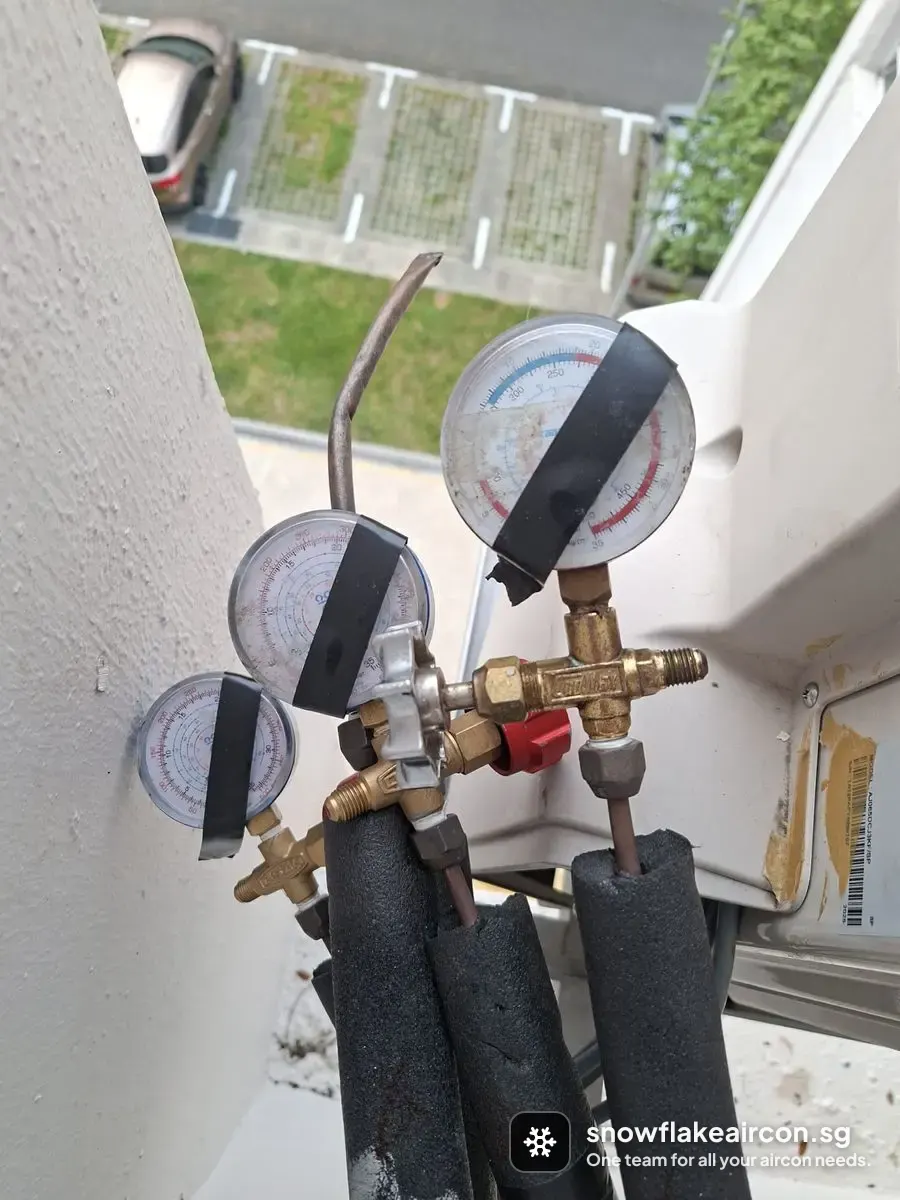
What the VRF branch selector box does
Installed in the false ceiling between the outdoor condensing unit and multiple indoor FCUs, the branch selector box houses electronic expansion valves, solenoid valves, thermistors, and an addressable control PCB. It meters refrigerant to each connected port and communicates continuously with both the outdoor unit and its downstream indoor units.
Refrigerant component
VRF branch selector box failure signs
Match the symptom, then see what a technician checks to confirm the cause.
| What you observe | Likely causes | How we verify |
|---|---|---|
| Multiple rooms fed by one ceiling branch stop cooling while other zones work normally | Stuck solenoid or electronic expansion valve inside the branch box, Faulty branch-box control PCB or blown internal power fuse, Loose communication bus wire isolating the branch box from the outdoor unit | Read the sub-code on the central or wired controller, verify power and bus voltage at the branch box, and check port pipe temperatures. |
| Hissing, whistling, or frost forming on one port of the ceiling branch box | Internal EEV coil open-circuit or valve body stuck partially closed, Torn vapour-barrier lagging around the branch port flare or braze joints | Measure EEV coil winding resistance across all phases and compare inlet versus outlet superheat on the frosted port. |
| Water dripping from the ceiling where no indoor unit sits | Sweating uninsulated branch ports or saturated internal drain tray inside the branch box, Blocked condensate line on heat-recovery branch boxes that carry a drain pan | Inspect the branch box casing and port lagging through the ceiling hatch while downstream indoor units run at full load. |
- What you observe
- Multiple rooms fed by one ceiling branch stop cooling while other zones work normally
- Likely causes
- Stuck solenoid or electronic expansion valve inside the branch box, Faulty branch-box control PCB or blown internal power fuse, Loose communication bus wire isolating the branch box from the outdoor unit
- How we verify
- Read the sub-code on the central or wired controller, verify power and bus voltage at the branch box, and check port pipe temperatures.
- What you observe
- Hissing, whistling, or frost forming on one port of the ceiling branch box
- Likely causes
- Internal EEV coil open-circuit or valve body stuck partially closed, Torn vapour-barrier lagging around the branch port flare or braze joints
- How we verify
- Measure EEV coil winding resistance across all phases and compare inlet versus outlet superheat on the frosted port.
- What you observe
- Water dripping from the ceiling where no indoor unit sits
- Likely causes
- Sweating uninsulated branch ports or saturated internal drain tray inside the branch box, Blocked condensate line on heat-recovery branch boxes that carry a drain pan
- How we verify
- Inspect the branch box casing and port lagging through the ceiling hatch while downstream indoor units run at full load.
Replacing the VRF branch selector box
Replace
Replace individual EEV coils, thermistors, or the branch-box PCB first; replace the entire branch selector box only if internal brazed manifold valves leak or seize beyond repair.
You can wait
Minor condensation on exterior port lagging can be re-insulated promptly without taking the full VRF system offline.
Do not wait
Refrigerant leaks at branch manifolds, burnt PCB smells, or communication faults taking down critical office or retail zones need specialist VRF diagnosis immediately.
If you proceed
- Typical replacement cost
- S$450–S$2200
- Replacement timeline
- 1–5 working days depending on OEM brand stock and ceiling access
Faulty EEV coils and PCBs inside a branch box can be replaced without recovering refrigerant. Replacing a leaking manifold or complete branch box requires full VRF refrigerant recovery, nitrogen-purged brazing, pressure testing, and deep vacuum commissioning.
Confirm whether only a clip-on EEV coil or PCB is faulty before approving a full branch-box replacement, which involves much heavier refrigerant and brazing labour.
Source: How the HVAC refrigeration cycle works?, Daikin Middle East and Africa, checked .
Repair service: VRF / VRV aircon repair.
How we verify a VRF branch selector box fault
These are technician checks to confirm whether the part is at fault.
Retrieve exact fault codes and branch port addresses from the VRF wired or central controller.
Tools: Service checker or wired controller
Healthy reading: All branch ports register online with matching indoor addresses and zero communication retries.
Measure power supply, communication bus signal, and EEV/solenoid coil resistances at the branch box PCB.
Tools: Multimeter
Healthy reading: Supply voltage is stable and stepper/solenoid coil windings match manufacturer ohm specs.
Compare liquid and suction pipe temperatures on each outgoing branch port under cooling demand.
Tools: Digital surface thermometer
Healthy reading: Active cooling ports show steady cold suction lines without frost buildup or excessive superheat.
Frequently asked questions about the aircon VRF branch selector box
What are the first signs of a VRF branch selector box problem?
The first sign of a VRF branch selector box problem is this: multiple rooms fed by one ceiling branch stop cooling while other zones work normally, and the same fault can also show as hissing, whistling, or frost forming on one port of the ceiling branch box.
How does the VRF branch selector box fail?
Common causes of a VRF branch selector box fault include stuck solenoid or electronic expansion valve inside the branch box and faulty branch-box control PCB or blown internal power fuse. You can wait in this case: minor condensation on exterior port lagging can be re-insulated promptly without taking the full VRF system offline.
Is replacing the VRF branch selector box always necessary?
Replace individual EEV coils, thermistors, or the branch-box PCB first; replace the entire branch selector box only if internal brazed manifold valves leak or seize beyond repair. You can wait in this case: minor condensation on exterior port lagging can be re-insulated promptly without taking the full VRF system offline.