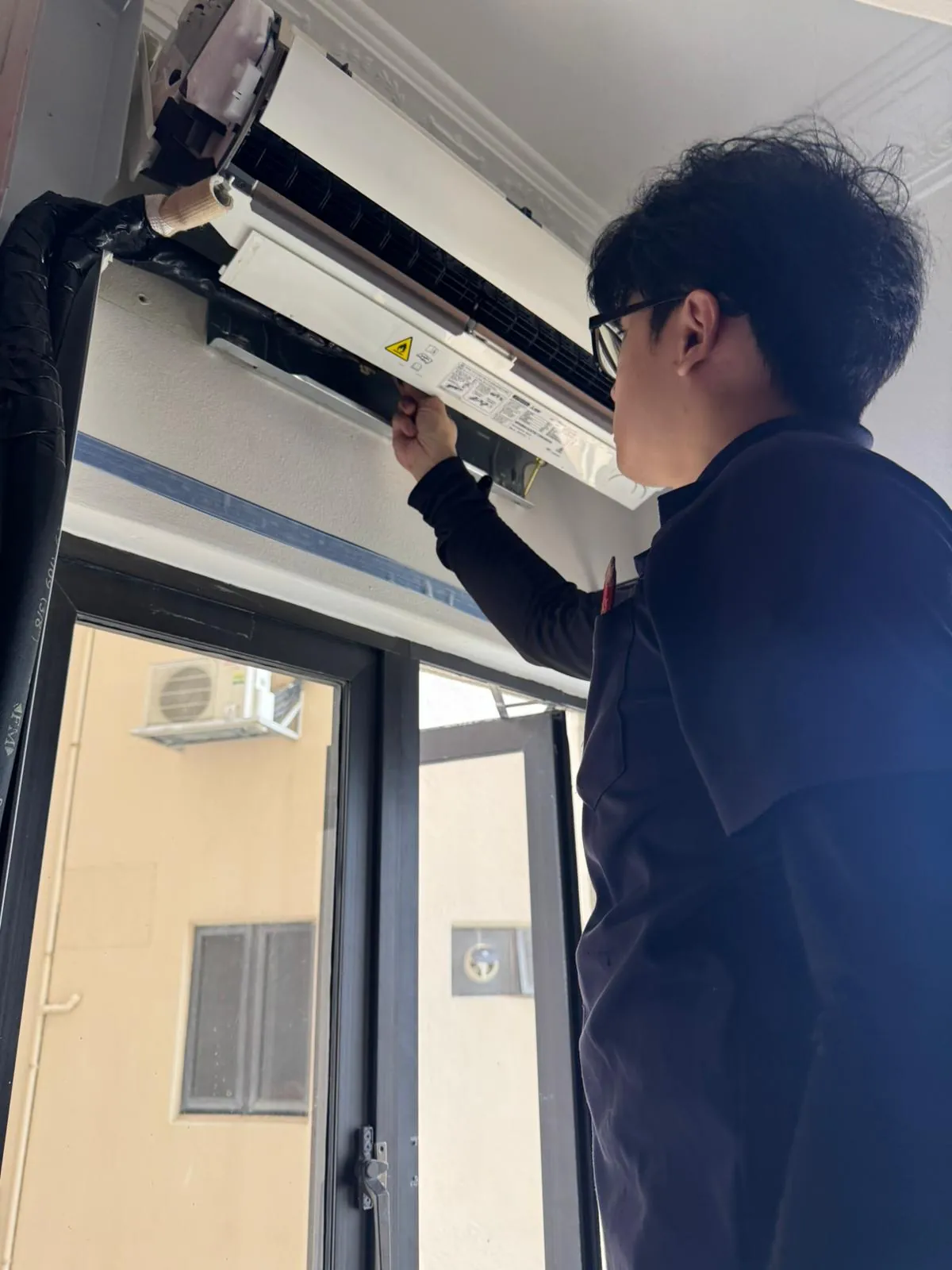
Hitachi aircon indoor thermistor repair in Singapore
A Hitachi room, coil or pipe sensor code can mean a failed thermistor, a connector or harness fault, or a genuinely abnormal temperature. We test the thermistor, connector, harness and indoor-PCB input, explain what failed and quote after diagnosis.
BCA-registered10,000+ jobs completed
Signs your Hitachi aircon needs an indoor-thermistor check
These symptoms can involve an indoor temperature sensor, but they can also come from its connector, harness, indoor PCB, airflow or a genuine coil-temperature condition.
A room, coil or indoor pipe sensor code appears
A Hitachi indoor-sensor code identifies the circuit to test.The unit short cycles or reads the room incorrectly
An incorrect air-temperature signal can make the unit stop too early, run too long or fail to hold the set temperature.The indoor coil ices or behaves abnormally
A coil or pipe sensor may be involved, but airflow, fan and refrigerant conditions must be checked at the same time.
Examples of Hitachi systems we check
RAS residential wall-mounted systems
RAK / RAS-X Frost Wash systems
RAM residential multi-split outdoor systems
Model not listed
Send photos of the indoor and outdoor model labels, plus the error code or a short video of the symptom.
It may not be the indoor thermistor
Before ordering a model-specific indoor sensor, we check three problems that can create the same code, icing or temperature behaviour.
Connector or harness fault
A loose, corroded, open or shorted sensor wire can produce the same electrical reading as a failed thermistor.Indoor-PCB input fault
The sensor may measure correctly while the indoor control board reads or processes the signal incorrectly.Airflow, icing or refrigerant condition
The thermistor may be reporting a genuine abnormal coil or pipe temperature caused by a fan, airflow or refrigerant problem.
We match the code to the exact indoor room, air, coil or pipe temperature circuit, inspect the connector and harness, measure the thermistor at the current temperature, and verify the indoor-PCB input. How a job runs, from first message to booking.
What is different on Hitachi systems
Hitachi codes 11 to 14 separate inlet-air, outlet-air, freeze-protection and gas-pipe thermistors, while code 09 can also involve the indoor main board. We test both stages.
Hitachi error codes related to indoor thermistor problems
Open the group that matches where the code appeared on your unit.
Codes can mean different things across model and system families. Every code is in the full lookup for this brand. Last reviewed 2026-08-22.
Is Hitachi indoor thermistor repair worth it?
Parts and timing
The correct Hitachi indoor room, air, coil or pipe thermistor is model- and location-specific. We confirm the indoor model, sensor position, connector, part number and distributor lead time before you approve work.Our recommendation
Indoor-thermistor repair is usually a contained job when the exact room, air, coil or pipe sensor circuit is confirmed, the correct model-specific part is available, and the indoor PCB and refrigerant system remain healthy. Hitachi systems commonly have a service life of 10–15 years. For a system over 12 years, hitachi units can last well beyond 12 years with maintenance, but parts sourcing becomes the bottleneck. If the specific component is hard to find, replacement may be the pragmatic choice.
If replacement makes more sense, we compare the repair quote with a suitable new system. See our aircon system replacement process.
Other Hitachi repair checks
If testing rules out this part, these are the next checks on the same system.
Workmanship warranty
We stand behind the repair we carry out, and we are straight about the part of the cover we do not set ourselves.
Labour
30-day workmanship warranty. If the same fault returns from our repair, we come back and the labour is on us, with no second diagnostic visit fee.
Parts
Parts carry the distributor's warranty for that component, so the term varies by part. We tell you both terms before you approve the work.
Frequently asked questions about Hitachi indoor thermistor repair in Singapore
What are the signs of a Hitachi indoor thermistor problem?
How do you confirm a Hitachi indoor thermistor fault?
Does a Hitachi indoor-sensor code prove the thermistor has failed?
Should I repair or replace my Hitachi aircon?
We cover all of Singapore. Find aircon services in your area.
Describe your situation
Tell us what’s going on. Symptoms, setup, photos, anything we should know. We’ll assess and come back with the right next step.