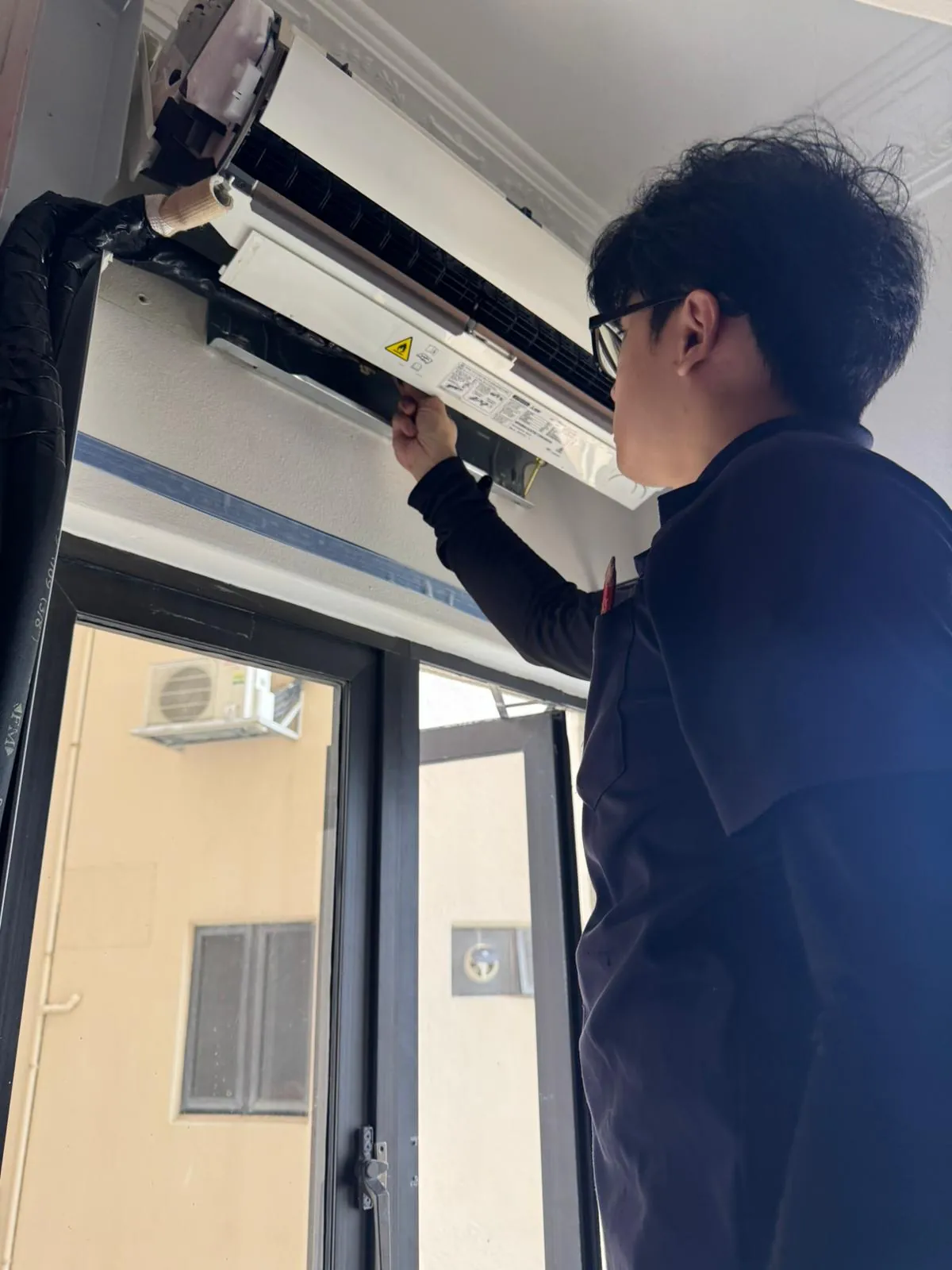
Panasonic aircon fan motor repair in Singapore
Weak airflow or a stopped fan on a Panasonic unit can come from the motor, the fan wheel, a blocked airflow path or the board signal. We check the motor, fan wheel, airflow path and board signal, explain what failed and quote after diagnosis.
BCA-registered10,000+ jobs completed
Signs your Panasonic aircon needs a fan motor check
Weak airflow or fan noise does not always mean the motor has failed. The airflow path, fan wheel and control signal need to be checked together.
Airflow has become weak or uneven
The unit may feel less cold, take longer to cool the room or move noticeably less air than before.The fan starts, stops or does not spin
Intermittent running can come from the motor, its speed feedback, the board command or a mechanical obstruction.A new rattling, scraping or fan error appears
A Panasonic code, changed sound or visible fan movement helps us separate the motor from the wheel and surrounding parts.
Examples of Panasonic systems we check
CS-PU and CS-MPU standard inverter systems
CS-XU X-Premium residential systems
CS-MU slim ducted or PACi systems, with scope confirmed from the exact model
Model not listed
Send photos of the indoor and outdoor model labels, plus the error code or a short video of the symptom.
It may not be the fan motor
Before ordering a motor, we check three common causes of weak airflow, fan noise and speed errors.
Restricted airflow
Loaded filters, a fouled coil or a blocked panel can make airflow weak while the motor still operates correctly.PCB command or feedback fault
The motor may be healthy but not receiving the correct drive signal, or the board may not read its speed feedback.Fan wheel or mechanical load
Debris, bearing wear or an imbalanced wheel can create noise, slow running and protection trips.
We check the airflow path, fan wheel, motor supply, board command and speed feedback before deciding which part is responsible. How a job runs, from first message to booking.
What is different on Panasonic systems
Panasonic manufacturer fault tables list 7 codes for fan motor faults, among them H19, H50, H51.
Panasonic error codes related to fan motor problems
Open the group that matches where the code appeared on your unit.
Indoor unit or controller1 guide
Outdoor unit1 guide
Codes can mean different things across model and system families. Every code is in the full lookup for this brand. Last reviewed 2026-08-23.
Is Panasonic fan motor repair worth it?
Parts and timing
Current Panasonic residential parts have strong local support. Pre-2016 PCB and motor variants can require a model-specific availability check.Our recommendation
Fan motor repair is usually a contained job when the coil, control board and rest of the system are healthy; ceiling access and parts lead time can affect the quote. Panasonic systems commonly have a service life of 8–12 years. For a system over 10 years, major component failures usually favour replacement. Efficiency has dropped, parts for older CS series may need longer sourcing, and a new unit pays for itself in energy savings.
If replacement makes more sense, we compare the repair quote with a suitable new system. See our aircon system replacement process.
Other Panasonic repair checks
If testing rules out this part, these are the next checks on the same system.
Workmanship warranty
We stand behind the repair we carry out, and we are straight about the part of the cover we do not set ourselves.
Labour
30-day workmanship warranty. If the same fault returns from our repair, we come back and the labour is on us, with no second diagnostic visit fee.
Parts
Parts carry the distributor's warranty for that component, so the term varies by part. We tell you both terms before you approve the work.
Frequently asked questions about Panasonic fan motor repair in Singapore
What are the signs of a Panasonic fan motor problem?
How do you confirm a Panasonic fan motor fault?
Is a Panasonic error code enough to order the fan motor?
Should I repair or replace my Panasonic aircon?
We cover all of Singapore. Find aircon services in your area.
Describe your situation
Tell us what’s going on. Symptoms, setup, photos, anything we should know. We’ll assess and come back with the right next step.