On this page
How This Presents
Living-room cooling starts briskly from the linear ceiling slot, then drops to fan-only circulation within minutes while the sofa stays clammy. Lowering the wall thermostat restarts cold air briefly before another early cut-out. Zero blinking fault lights appear on the bulkhead receiver.
- Setup
- Daikin Ducted4-6 yearsCondoBukit Timah
- Misread as
- Paying for a concealed indoor control board swap after repeated warm afternoons in a condo living room.
- Check first
- Comparing live wall-controller room readout against an independent thermometer placed across the seating area
What Else Produces This
Rapid cycling without error codes separates an electronic controller fault from false room temperature feedback. Checking live sensor readings against actual living-zone warmth rules out board failure before removing ceiling hatches.
Supply air leaving the linear grille measures briskly cold during active cooling, confirming healthy refrigerant flow and coil heat transfer.
Within minutes of startup, the controller room reading plunges several degrees below an independent thermometer held at sofa height.
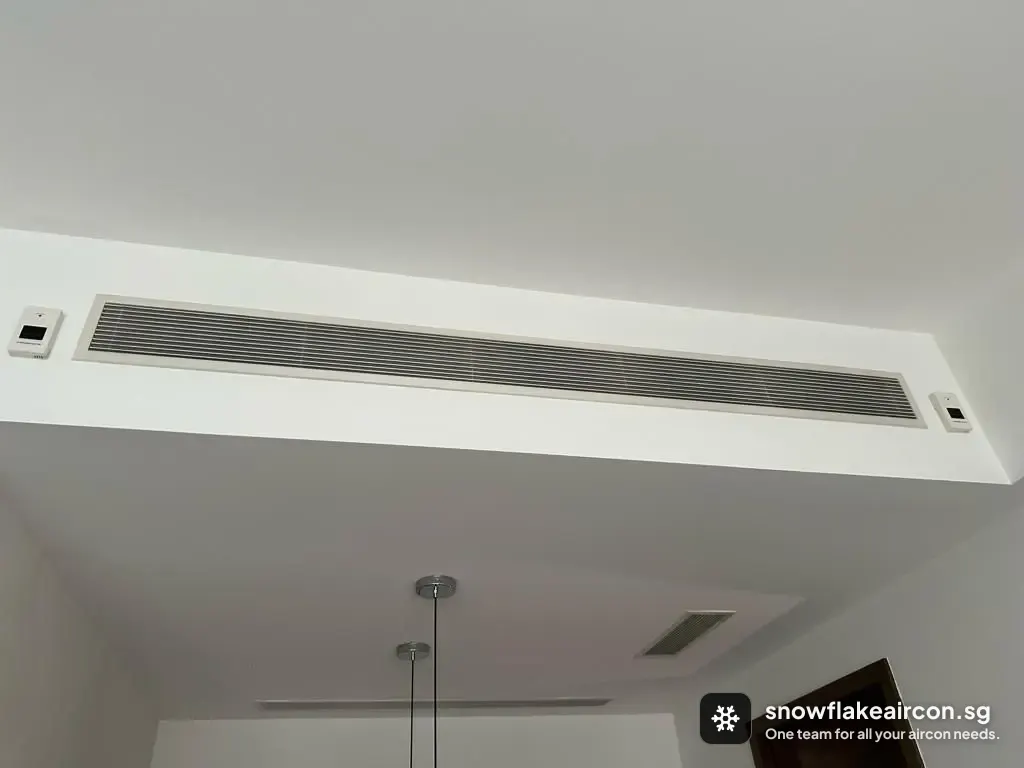
Inspecting the plaster bulkhead locates the remote sensor bead mounted directly beneath the supply grille edge inside chilled downdraught.
Testing sensor resistance at ambient temperature matches factory curves, clearing both the probe element and indoor control board.
Why It Happens
Chilled supply air hugs the Bukit Timah condo bulkhead surface and washes directly across the exposed remote sensor. Because the sensing tip cools inside that cold boundary pocket, the controller thinks the entire living room has reached setpoint. Cooling stops prematurely while tropical humidity lingers across the open floor plan.
What Resolution Involves
Disconnect the exposed bulkhead sensor lead from the cold supply zone and relocate sensing into the main return-air path through the ceiling hatch. Seal the small bulkhead opening neatly so cool plenum air cannot bleed onto the trim. Re-verify controller sensing selection so the system tracks true room air.
How to Tell It Worked
Run the living room across a full tropical afternoon and track supply temperature alongside wall-controller readings. Compressor modulation stays smooth without rapid cut-outs, and thermometer readings at seating level match the wall display closely. Even comfort returns across the entire condo lounge.
Before You Approve a Quote
A thermostat reading cold supply spill fools a healthy system
- A sensor sitting near a linear ceiling grille chills far faster than the sofa zone across a humid Singapore living room.
- Frequent compressor cut-outs with zero error codes point toward misleading room feedback rather than an electronic board failure.
- Shifting the sensing point into true return air lets the existing equipment hold steady comfort with zero board swaps.