On this page
How This Presents
Steady water drips fall from the outdoor aircon ledge of a Clementi HDB flat onto the downstairs window hood every humid night. Indoor rooms cool briskly with zero indoor dripping, yet neighbours below report persistent splashes after bedtime. Peering out the service yard shows wet streaks pooling directly beneath the outdoor pipe connections.
- Setup
- Mitsubishi Heavy Industries Multi-split7-9 yearsHDBClementi
- Misread as
- Fearing a costly refrigerant pipe leak or receiving Town Council drip complaints from downstairs neighbours over constant ledge water.
- Check first
- Verifying healthy indoor cooling and tracing clear water droplets straight to exposed copper pipe bends on the ledge
What Else Produces This
Outdoor ledge dripping while indoor rooms stay cold separates refrigerant trouble from external surface condensation. Inspecting the valve connections and foam sleeves during active cooling pinpoints the water source immediately.
All connected indoor bedrooms reach target temperature cleanly, ruling out low refrigerant pressure or frozen evaporator icing.
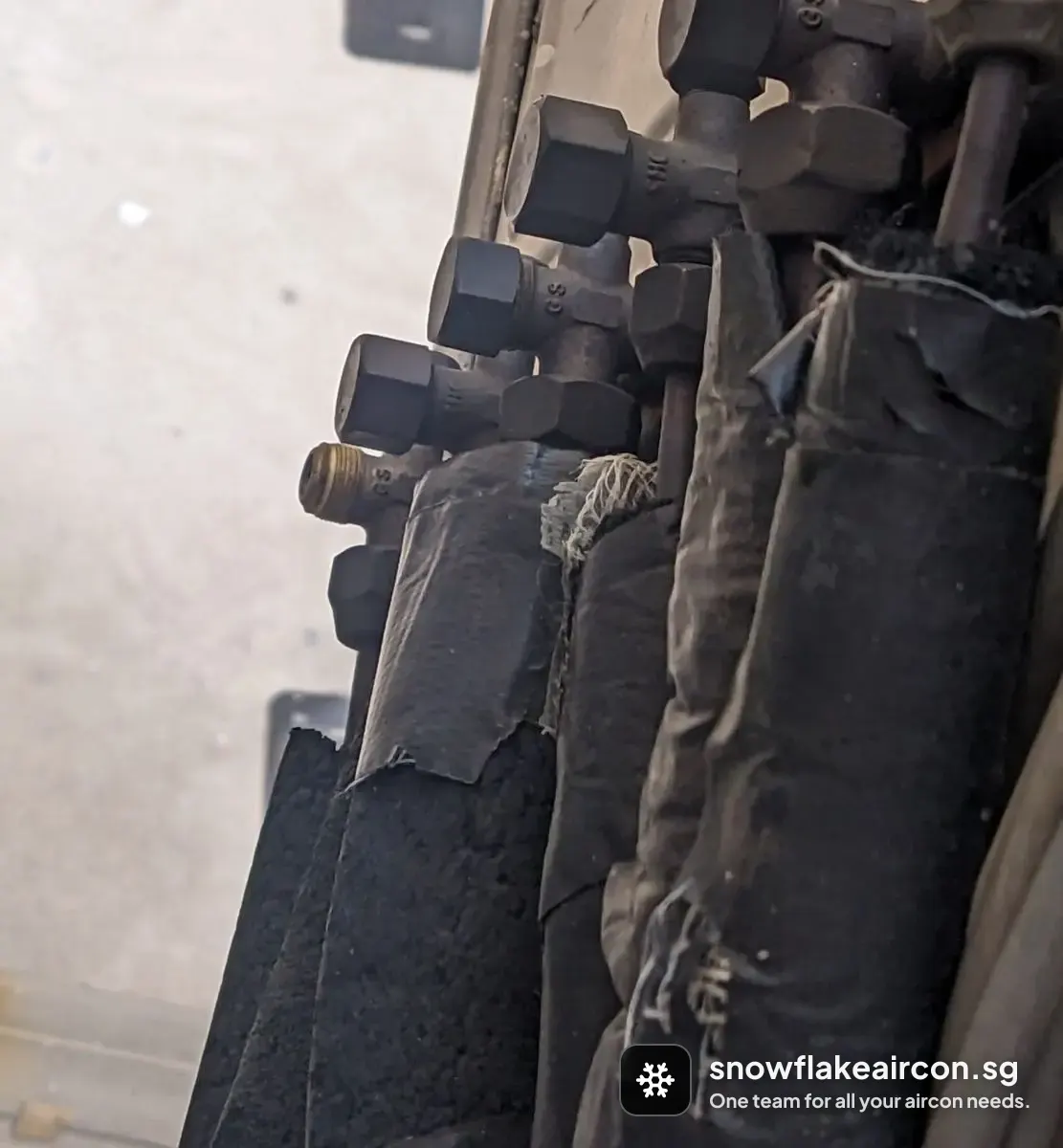
Black foam lagging entering the outdoor valve ports is torn open in chunks, leaving several centimetres of cold copper uncovered.
Thick clear condensation beads continuously along the exposed metal bends and drips straight down past the ledge edge.
Brass flare nuts show zero oily film, confirming the sealed refrigerant circuit remains intact.
Why It Happens
Outdoor aircon ledges in Clementi flats face harsh afternoon sun, driving rain, and nesting birds that peck at soft black foam sleeves. Once outer tape splits and insulation crumbles away near the valve bends, freezing return lines sit directly in humid Singapore night air. Continuous condensation then turns those exposed pipe elbows into steady water spouts dripping onto lower floors.
What Resolution Involves
Leave the sealed refrigerant circuit untouched and focus cleanly on weatherproof thermal insulation. Strip all brittle, waterlogged lagging back to sound dry sleeves inside the trunking entry. Wipe every copper bend dry, fit thick closed-cell foam sleeves tightly over each pipe with glued seams, and overwrap the entire outdoor section with overlapping UV-resistant tape right up to the brass valve body.
How to Tell It Worked
Run two Clementi bedrooms at 22 degrees Celsius for thirty minutes during humid evening air. Feel along every newly taped bend and valve entry on the ledge to confirm cool, completely dry outer wrapping. Verify the concrete ledge beneath the pipes stays dry with zero droplets falling to lower floors.
Before You Approve a Quote
Re-insulate exposed ledge pipes before chasing gas faults
- Clear cold droplets forming on uncovered outdoor copper pipes while rooms stay icy point to humid air condensation, not gas loss.
- Sun, rain, and birds on Singapore HDB ledges shred thin foam lagging near outdoor valve bends within several years.
- Fitting thick closed-cell insulation with weatherproof tape stops downstairs drips cleanly without opening the sealed pipework.