On this page
How This Presents
A bedroom split in an Ang Mo Kio flat blows faintly cool for an hour, then loses airflow as white frost creeps across the fins. Switching off triggers heavy water drips down the front casing. Adding gas looks tempting.
- Setup
- Daikin Wall-mounted4-6 yearsHDBAng Mo Kio
- Misread as
- Fearing a concealed refrigerant leak and an expensive gas refill whenever frost coats the indoor coil and water drips onto the bedroom floor.
- Check first
- Lifting the front intake cover to pull both dust-caked filters and verifying healthy suction pressure once airflow cleared
- Actual finding
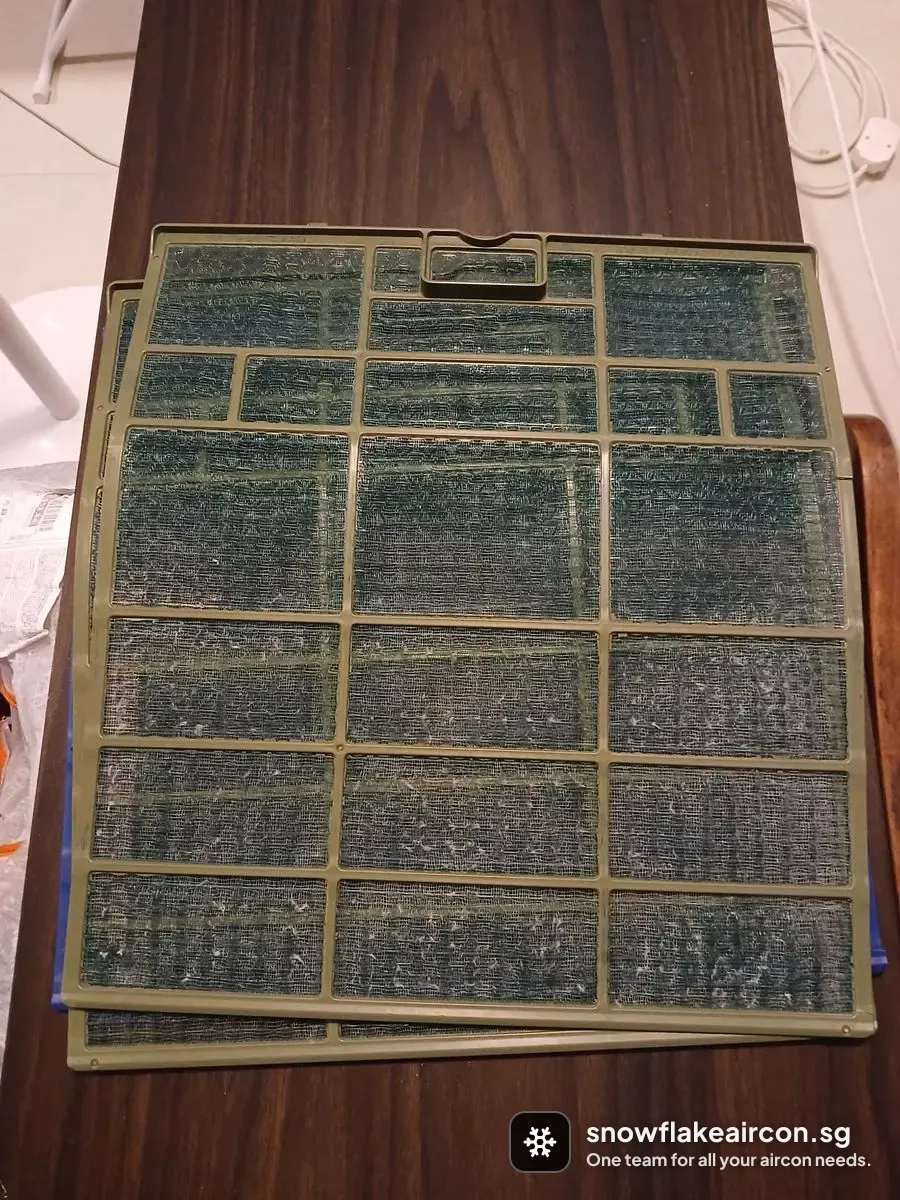
- Felt-thick lint sealing both mesh filters and matting the upper evaporator fins, starving warm return air until coil frost formed and melted down the casing
- Scope saved
- Targeted repair instead of full replacement
What Else Produces This
Coil frost appears under two distinct conditions: missing refrigerant or choked intake air. Inspecting the return air path takes seconds and prevents unnecessary gas top-ups.
Opening the front grille exposes two mesh filters completely sealed in thick grey lint with almost zero open weave.
Shining a torch behind the filters shows damp lint compacted across the upper evaporator fins and a lightly coated blower drum.
Running the fan on high with the filters removed lifts air output sharply and clears the remaining ice sheet within minutes.
Checking outdoor service-valve pressure and pipe temperature after defrost confirms a normal refrigerant charge with no leak.
Why It Happens
Months of nightly bedroom use in an Ang Mo Kio flat pull fabric lint and skin dust onto both intake screens. Once dust seals the mesh completely, warm room air stops crossing the cold fins. The evaporator drops below zero, traps moisture as ice, and spills meltwater past the tray.
What Resolution Involves
Skip gas top-ups and clean the airflow path properly. Scrub both mesh filters thoroughly, strip loose lint from the intake grille, and perform a S$80 chemical wash for one unit to flush matted grime between the Daikin evaporator fins and clear the drain tray.
How to Tell It Worked
Refit dry filters, close the casing, and run the Ang Mo Kio bedroom split on 23°C cool mode across half an hour. Airflow stays crisp across the full vent width, the coil stays damp without ice crystals, and the drip tray drains steadily.
Before You Approve a Quote
Pull both intake filters before blaming refrigerant on an iced coil
- A solid dust blanket across two bedroom filters blocks room air from reaching the cold fins, causing surface moisture to freeze solid.
- Once the ice block thaws after switching off, meltwater spills past the drip tray and mimics a drain blockage or gas fault.
- Washing clogged filters and chemically cleaning matted fins fixes airflow icing cleanly in Singapore HDB bedrooms without touching refrigerant.