On this page
How This Presents
Workstation airflow inside a Marina South office shifts between crisp chill and mild breeze across busy weekday afternoons. Indoor blower wheels spin evenly without blinking warning lamps, error chimes, or damp tray overflow. Clean mesh screens stay clear of dust, raising mistaken doubts about faulty indoor room sensing parts across the workspace.
- Setup
- Daikin Wall-mounted4-6 yearsOfficeMarina South
- Misread as
- Paying to swap working indoor control sensors across a Marina South office suite while cooling keeps fading mid-afternoon.
- Check first
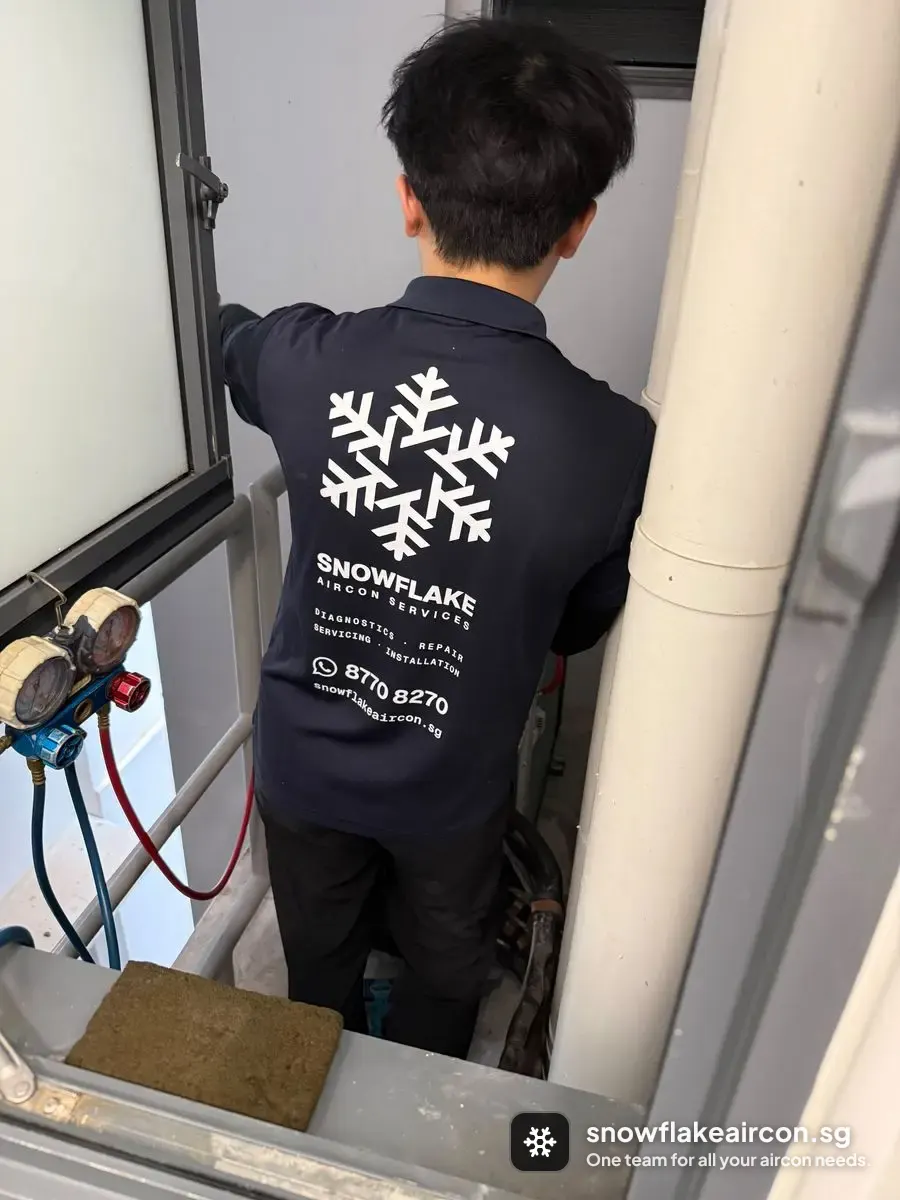
- Coupling twin manifold gauges in the Marina South condenser shaft to track slow liquid-line pressure drift before condemning indoor room thermistors
- Actual finding
- Micro-weeping brass liquid-line flare union inside a Marina South office condenser alcove causing slow pressure drop while indoor sensors read accurately
- Scope saved
- Targeted repair instead of full replacement
What Else Produces This
Intermittent office warmth without fault lights frequently gets blamed on drifted indoor air sensors. Coupling twin manifold hoses inside the outdoor shaft tests whether liquid supply pressure slowly fades while indoor electronics track room heat accurately.
Clipping twin manifold dials onto the Marina South alcove railing records normal standing pressure before compressor startup.
Fifteen minutes into full weekday office load, liquid-line pressure drifts steadily downward while supply air turns mild.
Checking indoor coil and air sensors with a calibrated probe confirms accurate readings matching wall controller targets cleanly.
Pulling back split black lagging outside uncovers tacky dark oil residue clinging around the smaller brass liquid-line union.
Brushing leak soap across the oiled liquid flare collar raises slow pinhead bubbles right beneath the seated nut.
Why It Happens
Trapped shaft warmth and constant weekday compressor shake inside the Marina South alcove fatigued a slightly scored copper liquid-line lip. Rising afternoon head pressure forced trace refrigerant mist past that tiny notch until liquid feeding dropped off. Healthy indoor sensors were merely reporting warmer office air caused by starved refrigerant delivery.
What Resolution Involves
Leave every intact indoor room sensor untouched inside the Marina South office units. Recover remaining gas cleanly into a bottle, cut back a short bruised pipe tip, and flare a clean new seat. Tighten the liquid-line nut squarely, check tightness with dry nitrogen, evacuate lines deeply, and meter exact R32 by scale.
How to Tell It Worked
Apply soapy water across the rebuilt liquid-line joint under active running load until zero foam forms. Twin manifold needles stay rock-steady across twenty continuous minutes of Marina South office cooling. Crisp cold air reaches every workstation evenly with zero pipe frost, oil mist, wet marks, or afternoon temperature swings.
Before You Approve a Quote
Track outdoor liquid line drops before swapping indoor sensors
- Healthy indoor room sensors report warm air honestly whenever outdoor cooling liquid slows down behind them.
- Tight commercial alcoves across Singapore trap afternoon condenser heat that loosens tiny liquid pipe flare joints.
- Remaking the weeping outdoor pipe cone brings crisp office comfort back without replacing working indoor parts.