On this page
How This Presents
Living-space cooling inside a Southern Islands condo drops out smoothly ten minutes after startup while indoor vents keep pushing room air. Stepping out to the screened service cove reveals quiet outdoor fan blades and warm outer metal casing. Repeated wall resets restore cold breeze briefly before another sudden lockout hits.
- Setup
- Daikin Wall-mounted7-9 yearsCondoSouthern Islands
- Misread as
- Paying over S$600 for a full outdoor inverter board replacement inside a sheltered Southern Islands condo cove.
- Check first
- Reading the Southern Islands outdoor board blink light sequence under cove lighting and continuity-checking the unplugged thermistor harness before replacing the PCB
- Actual finding
- Corroded two-pin thermistor harness plug inside a Southern Islands condo outdoor box triggering protective board blink lockouts while the inverter PCB stayed intact
- Scope saved
- Targeted repair instead of full replacement
What Else Produces This
Silent condensers tucked behind condo cove screens often draw fast board-swap quotes. Opening the outdoor cover under cove lighting lets a tech read diagnostic lamps and test sensor leads directly before ordering new parts.
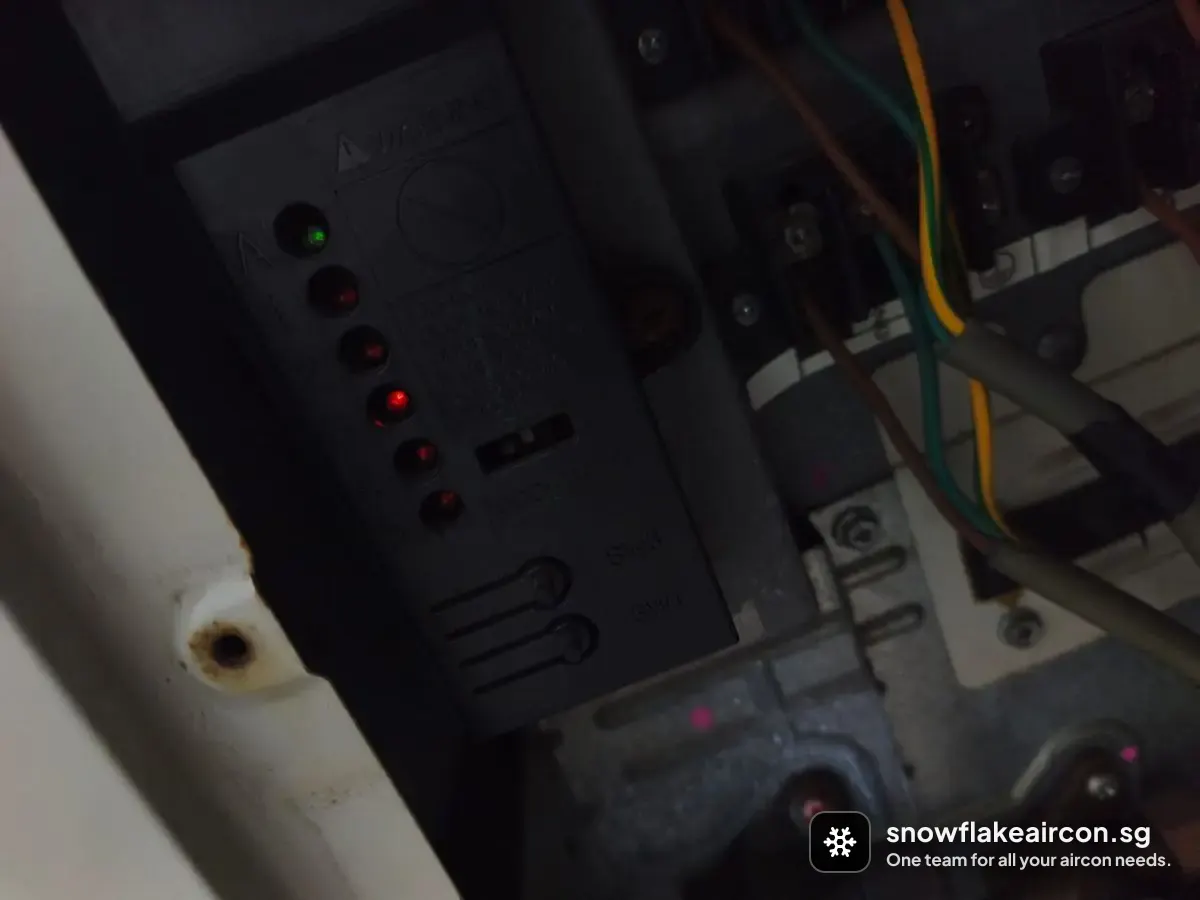
Removing the steel panel inside the Southern Islands service box shows a steady green power light beside a lit red fault lamp.
Decoding the red indicator position and pressing board check buttons isolates an outdoor coil sensor circuit fault.
Unplugging the thin thermistor connector uncovers greenish salt tarnish inside the white two-pin harness plug.
Testing the sensor tip directly shows healthy heat-sensitive readings while flexing the tarnished harness breaks contact completely.
Inspecting the main outdoor board confirms clean dry solder joints and balanced compressor phase readings across all three terminals.
Why It Happens
Salty sea mist drifting across Southern Islands condo balconies crept past damp cable grommets inside the sheltered outdoor box. Coastal humidity oxidised fine metal pins inside the two-pin thermistor harness plug over several cooling seasons. Erratic open-circuit pauses forced the healthy inverter processor to trigger protective lockouts to guard the compressor.
What Resolution Involves
Retain the healthy Daikin outdoor control board already mounted inside the housing. Isolate cove mains power completely, clip out the corroded two-pin sensor plug, and fit a sealed replacement thermistor harness cleanly onto the copper sensing clip. Route slack wire neatly clear of sharp metal edges before shutting the box.
How to Tell It Worked
Restore ledge breaker mains and verify the red warning light stays completely dark beside a steady green status lamp. Run Southern Islands living-room cooling past thirty continuous minutes under warm afternoon load. Cold air flows smoothly throughout the luxury suite without warning lockouts, board errors, or noisy restarts.
Before You Approve a Quote
Decode outdoor fault lights before buying a new board
- Blinking or lit red lamps on an outdoor panel show the main board is catching an outside wiring fault.
- Coastal salt air around Singapore waterfront condos tarnishes tiny sensor plug pins long before solid electronics fail.
- Fitting a fresh sensor wire lead keeps condo cooling reliable without buying costly outdoor electronics.