On this page
How This Presents
A bedroom wall unit in a Yishun HDB flat keeps weeping water straight down the painted wall behind the casing. Two routine general vacuum flushes cleared the front outlet, yet stains returned within days. Front louvres stay dry while the lower rear wall turns wet overnight.
- Setup
- Panasonic Wall-mounted7-9 yearsHDBYishun
- Misread as
- Paying repeatedly for surface vacuum flushes that never stopped bedroom water from tracking down the wall behind the unit.
- Check first
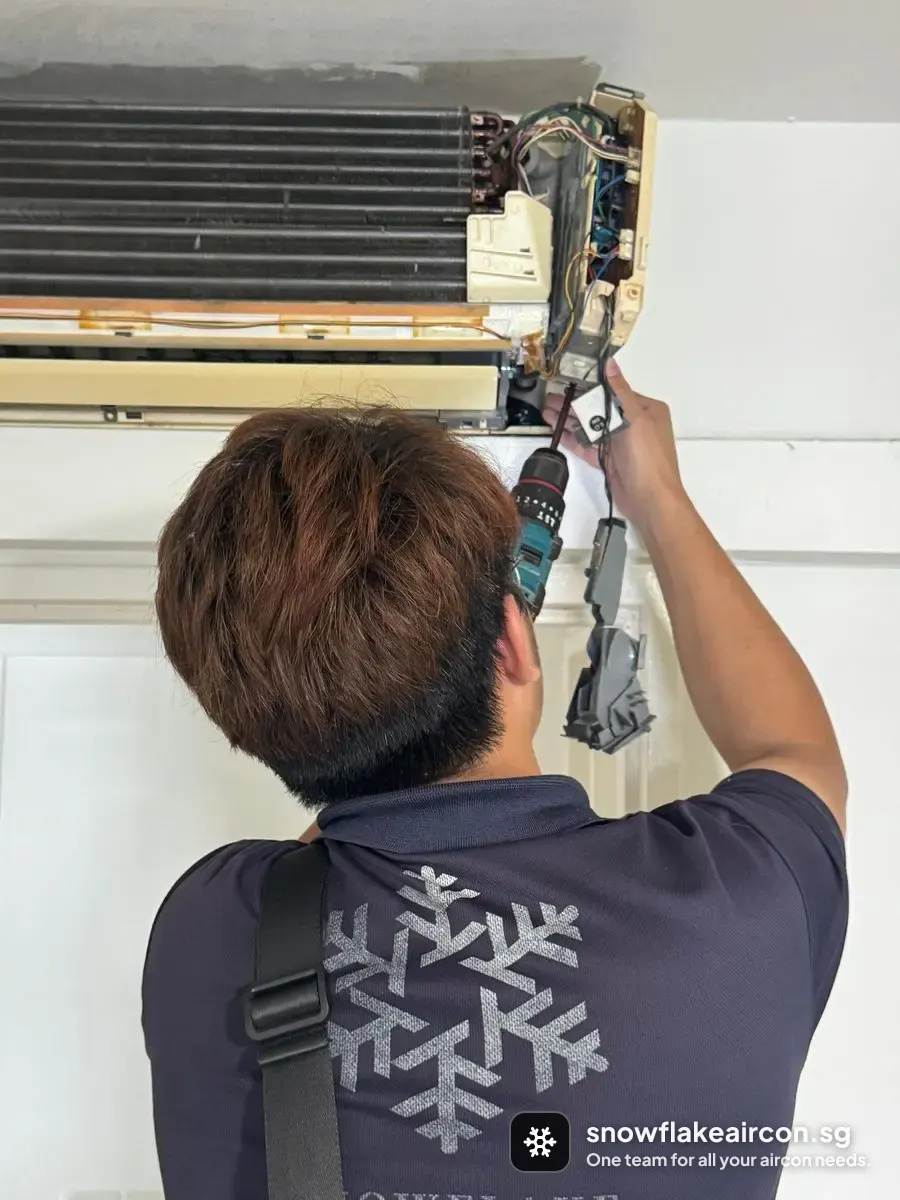
- Unmounting and dismantling the indoor fan coil assembly to inspect and flush the rear auxiliary drain trough directly
What Else Produces This
Water coming from behind the indoor mounting plate after repeated front-drain flushes rarely comes from the main drain pipe. Opening the casing checks whether the rear secondary drain channel has backed up.
Pouring test water into the front pan drains swiftly through the PVC pipe, confirming the main run is open.
Shining a torch past the upper evaporator bend reveals standing water brimming inside the molded rear trough.
Unfastening the chassis screws and unmounting the fan coil exposes thick grey biofilm jelly wedging the rear weep slot shut.
Moisture marks down the plastic backplate match the exact stain line on the Yishun bedroom wall.
Why It Happens
Seven to nine years of nightly bedroom use in humid Singapore air allow fine dust and mould spores to wash down the back side of the evaporator coil. That sludge collects in the narrow rear auxiliary channel where a vacuum hose cannot reach. Once the tiny transfer slot clogs, water overflows behind the unit.
What Resolution Involves
Carry out a full chemical overhaul at S$150 for the single unit instead of another surface flush. Dismantle the casing, blower wheel, and evaporator assembly off the wall, scrub the plugged rear channel and transfer slot clear, chemically wash the coil and drum, and flush the entire PVC drain line cleanly.
How to Tell It Worked
Remount the Panasonic fan coil level on the Yishun bedroom wall and test both front and rear coil faces with water. Every drop routes straight into the drain pipe with zero seepage behind the backplate, and overnight cooling leaves the wall completely dry.
Before You Approve a Quote
Dismantle the fan coil when water tracks behind the casing
- Standard on-wall vacuuming clears only the front drain pan and main outlet stub, leaving the rear secondary trough untouched.
- Over seven to nine humid Singapore years, grey jelly settles in the narrow back channel behind the evaporator coil.
- Unmounting the indoor assembly for a full chemical overhaul at S$150 clears both drain channels permanently in one visit.