On this page
How This Presents
Inside a Sengkang HDB living room, the wall aircon blows sluggish, barely cool wind even on top fan speed. Rinsing both front mesh screens under the tap produces almost zero relief. By late afternoon, the living area never cools down comfortably.
- Setup
- Panasonic Wall-mounted4-6 yearsHDBSengkang
- Misread as
- Thinking the four-year-old living-room Panasonic was low on gas or losing compressor strength when fresh filter washes failed to restore cool wind.
- Check first
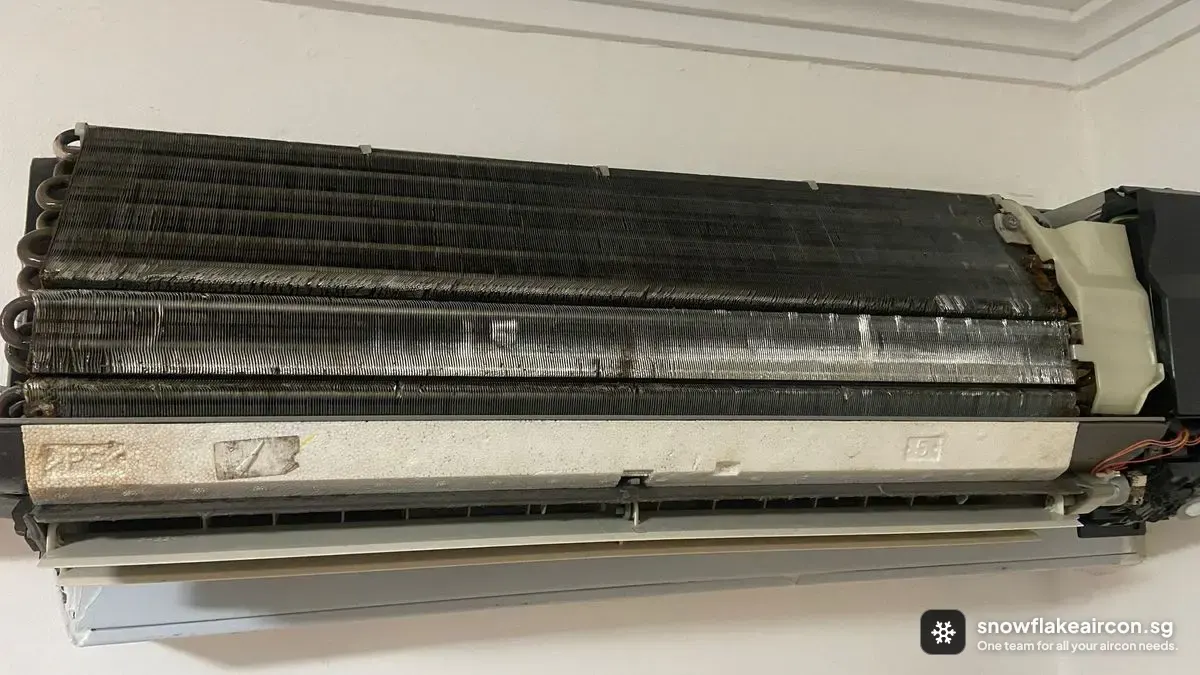
- Stripping the indoor casing to expose lint wedged across the fin rows while logging a shallow inlet-to-outlet temperature drop
What Else Produces This
Weak throw immediately after a filter wash points away from surface dust toward either deep coil blockage or a failing indoor blower motor. Pulling the casing off gives an immediate visual answer.
Measuring air temperatures at the intake grille and discharge louvre records a narrow drop well short of a healthy 10°C split.
Checking the outdoor condenser confirms the compressor ramps smoothly and the suction copper line feels briskly cold.
Removing the indoor plastic shell exposes thick grey lint matted tightly deep between the aluminium evaporator fins.
Inspecting the rear blower drum confirms strong motor torque, proving restricted coil passage is starving the room of wind.
Why It Happens
Across four to six years of daily Sengkang living-room cooling near an open kitchen and sofa fabrics, fine lint drifted past the mesh filters onto the damp coil face. Moisture bound the fibres into a felt layer wedged deep between the aluminium fins, blocking return air before it could chill.
What Resolution Involves
Skip gas charging and book a bench chemical overhaul (S$150 single, or S$115 each for 3+ rooms, 90-day warranty). Lift the indoor unit off its wall plate and soak the packed fins in coil cleaner. Rinse both sides at high flow until light passes cleanly through every fin row, then flush the pan and blower wheel.
How to Tell It Worked
Reinstall the overhauled Sengkang living-room unit and run cool mode for steady operating readings. Supply air velocity jumps back to full room throw, and the thermometer confirms a crisp 10°C temperature drop across the cleaned fins.
Before You Approve a Quote
Inspect deep between evaporator fins when filter rinsing stops helping
- Fine textile lint and kitchen haze slip past standard nylon mesh screens over several years of Singapore HDB living-room use.
- Wet dust turns into a dense paste deep between aluminium fins, choking airflow even when the removable filters look spotless.
- Bench chemical dismantling flushes both front and rear fin banks completely and restores full cooling transfer.