On this page
Quick summary
Stepping bedroom aircon setpoints from 24°C up to 26°C around 2 am matches falling nocturnal human metabolism and cooler Singapore predawn air. That two-degree sleep curve reduces overnight compressor draw by roughly 12% to 18% under late-2026 SP Group regulated billing rates.
Wall-mounted general servicing $25–$50/unit · chemical wash $60–$80/unit · View servicing rates
Why a 2 Am Two-Degree Rise Keeps Bedrooms Comfortable
Human resting metabolism and core body heat dip steadily between midnight and 5 am during deep sleep. Holding 24°C till sunrise forces sleepers beneath thick blankets while compressors pull excess wattage.
Concrete HDB and condo bedrooms also shed daytime solar heat gradually past midnight. Starting bedtime at 24°C dries humid air fast, while 26°C after 2 am stays crisp with gentle ceiling fan motion.
West-facing Singapore bedrooms capture the strongest savings from this two-step approach. Running an efficient ceiling fan on speed one preserves skin evaporation so 26°C feels comfortably cool till morning.
Estimate Overnight kWh Drops at SP Group Rates
Compare fixed 24°C cooling against a 2 am step-up across eight sleep hours using the regulated SP Group late-2026 residential tariff of 31.16 cents every kWh (GST included). Figures below reflect typical 9,000 BTU bedroom inverter draws:
Scroll to see more columns
| Nighttime setting pattern | 8-hour bedroom draw | Monthly single-room cost | Annual two-room cost |
|---|---|---|---|
| Steady 24°C till morning | 3.0 to 3.4 kWh | S$28 to S$32 | S$672 to S$768 |
| 24°C then 26°C at 2 am | 2.5 to 2.9 kWh | S$23 to S$27 | S$552 to S$648 |
| Sleep-curve saving margin | 0.4 to 0.5 kWh less | S$4 to S$5 saved | S$96 to S$120 saved |
| 26°C plus fan all night | 2.1 to 2.5 kWh | S$20 to S$23 | S$480 to S$552 |
Set Remote Sleep Curves Without Hurting Humidity
Built-in sleep functions on modern remotes nudge setpoints upward by 1°C per hour across two hours automatically. Older remotes without curve buttons replicate this pattern using a scheduled 2 am timer scene.
Keep cooling active on low fan speed instead of programming an early midnight power-off. Cutting cooling completely lets tropical humidity climb past 70%, whereas 26°C holds gentle dehumidification steady till morning.
Check NEA registered 5-tick models if your bedroom compressor lacks smooth inverter modulation. Part-load COP ratings matter most during quiet 2 am cruising.
Keep Coils Clean to Verify Sleep-Curve Power Savings
Dust-clogged meshes and mouldy fan drums force inverter compressors into high speeds even at 26°C:
- Rinse nylon screens cleanly from floor level every fortnight so soft 2 am airflow covers the entire mattress.
- Keep bedrooms clean with periodic servicing when fins darken. One room runs S$50, pairs bill S$30 per head, and visits covering three or more blowers charge S$25 per head, guaranteed for 14 days.
- Mouldy blower wheels needing deeper flushing warrant chemical servicing. Expect S$80 for a solo unit, S$70 each across two bedrooms, or S$60 per room on three-unit jobs backed by 60-day cover.
- Book a S$30 efficiency check if raising nocturnal targets leaves outdoor compressors loud. Repair invoices absorb that visit charge under 30-day warranty terms.
Diagnostic Cases for This Fault
Singapore jobs showing what we checked on-site before quoting parts or gas.
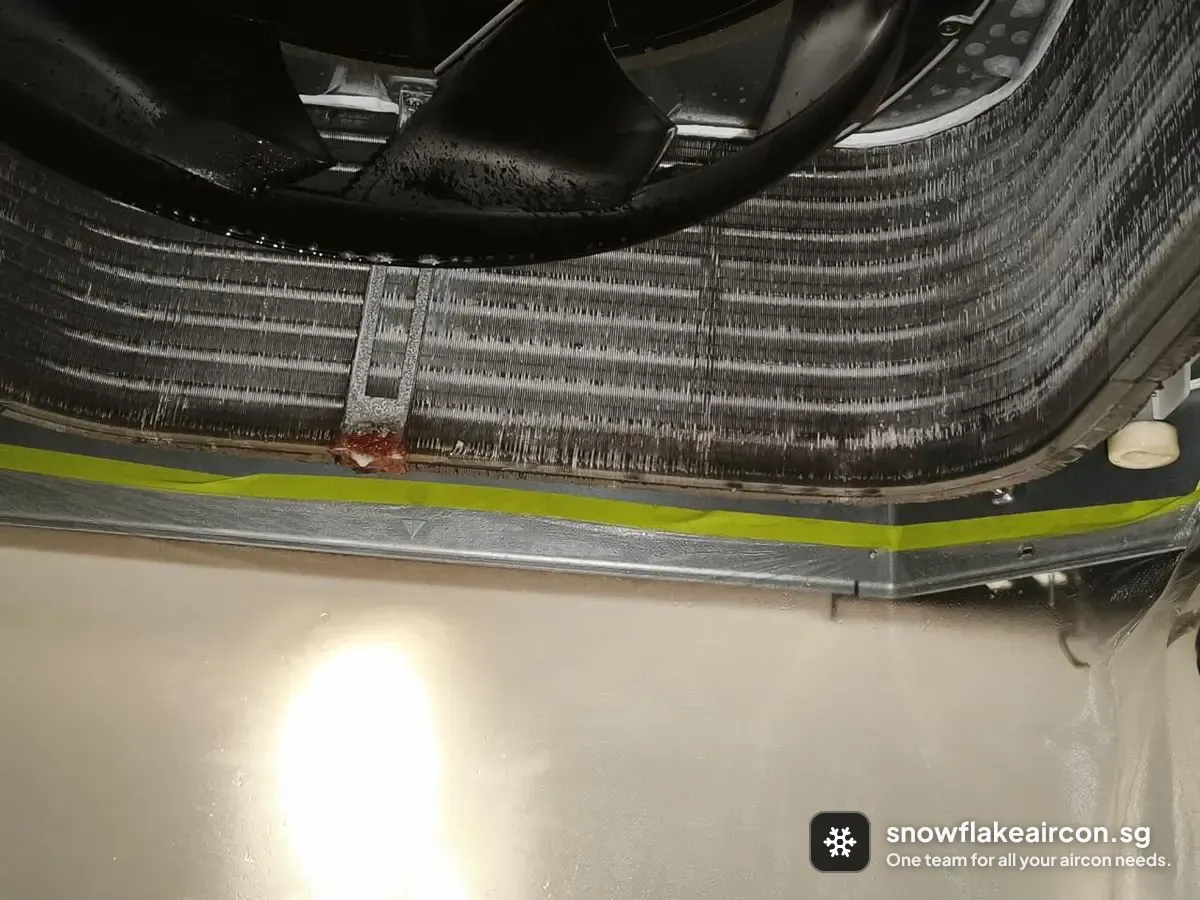
Hitachi · Cassette
Cassette weak on two sides: coil fouled behind outlets
Compacted deposit on the coil sections behind two cassette outlets
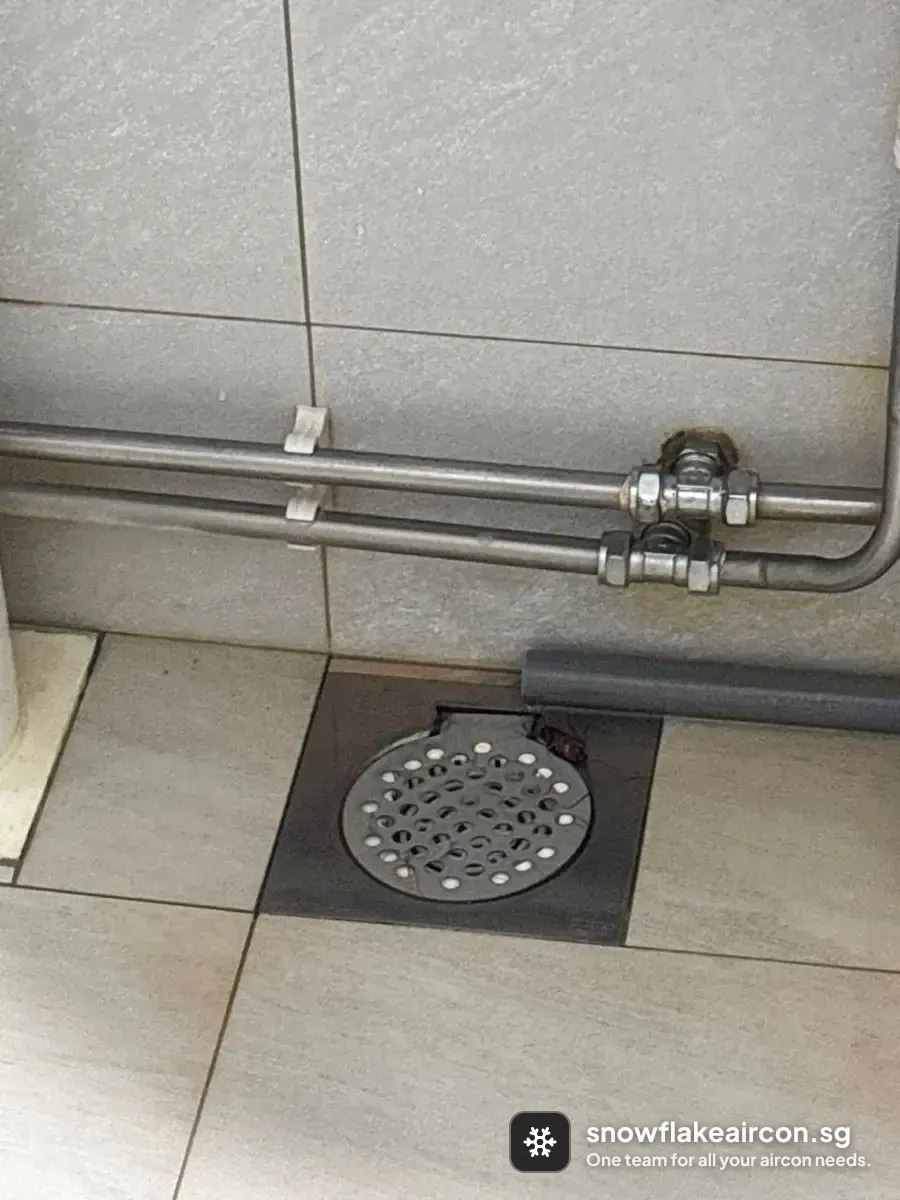
Daikin · Wall-mounted
Quoted an overhaul on every unit: one blocked drain
One choked drain line on a single unit, with ordinary dust loading everywhere else
Common Questions
Does a 2 am setpoint rise wake sleepers up warm in humid Singapore flats?
How much does a two-degree sleep curve save across two Singapore bedrooms each year?
Is turning the aircon off completely at 2 am better than raising it to 26°C?
Why does raising bedtime setpoints fail to lower electricity bills on older units?
Sources
Sources checked 27 Nov 2026