On this page
Quick summary
Wall aircon rattles come from loose plastic trim or worn blower drum bearings. Pressing front seams gently at floor level stops cover buzz fast. Deep rumble that resists palm pressure and changes with fan speed calls for a S$30 technician check.
On-site fault check: $30 ($80 VRV), waived if you proceed with repair · See diagnosis & repair
Observe EMA, HDB, and MOM Safety Limits Before Testing
EMA, HDB, and MOM safety rules limit home checks strictly to indoor floor level or a steady household step. Never climb onto external ledges, undo casing screws, or open 230V electrical covers.
Press only dry outer plastic edges with flat fingertips while keeping hands away from moving louvre blades. Turn off the wall switch before clicking any loose cover tab back shut.
Stop right away if you feel hot plastic or smell burnt dust near the side control box.
Run a Pass or Fail Hand Press Check Across Four Seams
Hold light palm pressure on these four outer casing spots for three seconds each to separate loose trim from inner rotor wear:
Scroll to see more columns
| Zone pressed | Pass finding | Fail finding | Next decision |
|---|---|---|---|
| Upper cover latches | Buzz stops when top tabs click shut | Plastic stays tight yet hum persists | Seat top tabs or continue test |
| Lower intake grille frame | Chatter fades under light upward lift | Deep rumble continues from rear wall | Clip base edge or check mount |
| Left blower hub side | Smooth airflow with zero frame tremor | Grinding or scraping pulses steadily | Fail: book S$30 bearing check |
| Right control box casing | Quiet casing without harmonic buzz | Metallic rattle shifts with fan speed | Fail: arrange S$30 motor test |
Separate Plastic Cover Rattle from Worn Blower Drum Bearings
Front doors often sit slightly loose after filter rinsing when one corner hinge misses its frame slot. Steady palm pressure quiets that sharp buzz immediately because cool airflow stops flapping the seam.
Dry sleeve bearings or cracked rubber bushings on the spinning blower wheel sound much deeper. Raising remote fan speeds quickens that metallic beat and proves outer trim is fine.
Decide When to Call for a S$30 Casing Check
Skip wedging paper shims into rattling seams or forcing sticky covers closed. Book skilled help once inner noise fails your hand press test:
- A standard S$30 diagnostic check (S$80 on VRV homes) pinpoints worn blower hubs or mounts. Proceeding with repair waives that fee under a 30-day warranty.
- Light dust imbalance on rotor blades clears with general cleaning at S$50 for a solitary wall unit. Two units cost S$30 apiece, and booking three or more cuts pricing to S$25 per wall unit (14-day warranty).
- Sticky film weighting down indoor wheels clears through chemical washing at S$80 for one indoor unit. Two units run S$70 apiece, whereas three units or more drop to S$60 per wall unit (60-day warranty).
- Stubborn mould or gummy drum tracks need full strip-down teardowns priced at S$150 for one coil. Pairs bill S$125 per coil, while groups of three plus cost S$115 per coil with a 90-day warranty.
Diagnostic Cases for This Fault
Singapore jobs showing what we checked on-site before quoting parts or gas.
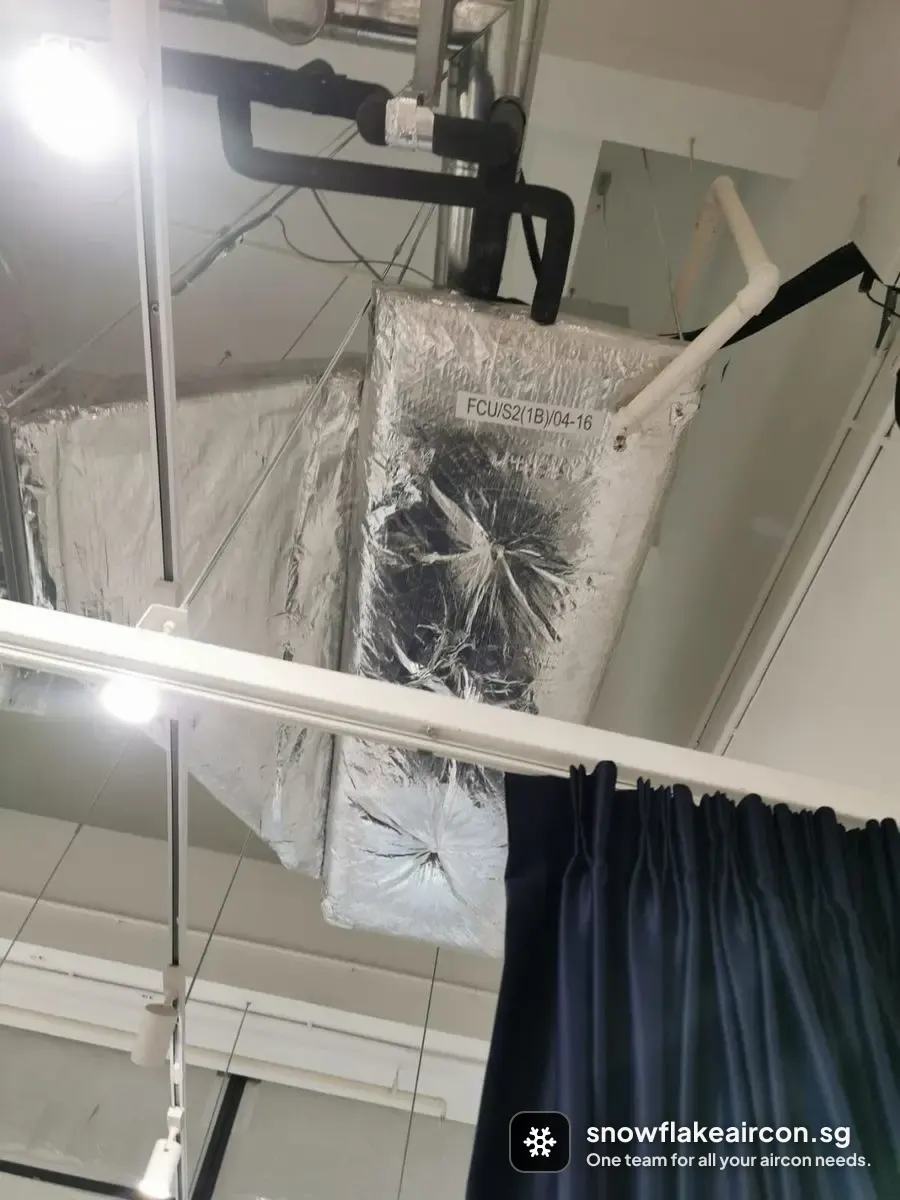
Carrier · Ducted
Shop ducted FCU losing airflow: lint-choked coil
Apparel textile lint compacted across the concealed ducted FCU coil face and blower blades
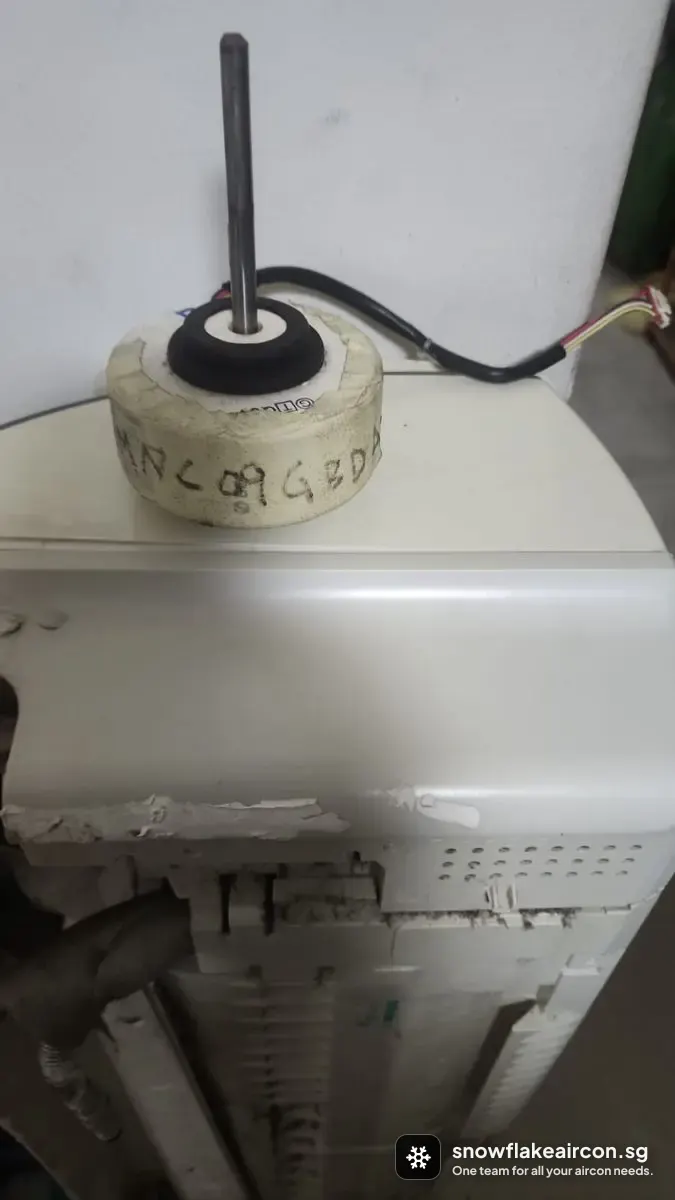
Sharp · Wall-mounted
Sharp 6-0 grinding then shutdown: worn fan motor bearings
Worn indoor fan motor bearings on a unit past its usual service life
Common Questions
Why does pressing the front aircon cover stop a rattling noise immediately?
How does a worn indoor blower bearing sound compared to loose plastic trim?
Can homeowners open screws on the indoor casing to inspect the blower barrel?
What happens if a rattling indoor blower drum continues running unserviced?
Sources
Sources checked 27 Nov 2026