On this page
Quick summary
Fading remote screens and missed indoor beeps usually point to leaked AAA cells. Swapping oxidised batteries, cleaning dry springs, and filming infrared pulses on a phone camera safely separates handset trouble from wall receiver faults.
Wall-mounted general servicing $25–$50/unit · chemical wash $60–$80/unit · View servicing rates
Spot Battery Leaks Behind Dim Remote Screens
Humid Singapore rooms cause alkaline AAA cells to leak white crust onto metal springs. That powdery film drops battery voltage. Digits turn faint while infrared signals lose range.
Remove both cells right away while wearing dry household gloves. Wipe battery springs gently using a cotton bud dampened with vinegar or rubbing alcohol. Let springs dry fully before loading fresh cells.
Follow a Safe Floor-Level Remote and Infrared Check
Keep every check strictly inside on floor level under EMA, HDB, and MOM rules. Never climb onto chairs near windows or exterior ledges. Leave all 230V wall switches and indoor terminal covers sealed:
Scroll to see more columns
| Safe home test | Pass result | Fail sign | Next safe move |
|---|---|---|---|
| Spring contact check | Clean silver springs and crisp digits | Green rust or broken spring wire | Clean dry residue or replace handset |
| Selfie camera IR pulse | Steady purple-white flash on screen | No light pulse when pressing Power | Fault lies inside remote emitter LED |
| Close 2-metre wall aim | Indoor blower chimes and opens flap | Remote flashes purple but unit stays mute | Book S$30 check on indoor receiver |
| Wall power indicator | Standby LED glows steady without blinking | No standby light despite switched isolator | Stop DIY work and call technician |
Distinguish Handset Faults from Indoor Receiver Failure
Modern rear phone cameras often filter out infrared wavelengths. Open your front selfie camera instead when testing. Aim the remote tip at the lens and press Power to spot faint purple flashes.
Bright purple flashes paired with a silent wall unit point toward the indoor receiver. Moisture condensation or grime over the indoor display PCB blocks signals even when batteries work fine.
Decide Between Replacement Remotes and a Diagnostic Visit
Split handset defects cleanly from wall-mounted receiver faults before buying spare parts:
- Buy a replacement remote only if the phone camera stays completely dark with fresh cells.
- Schedule a S$30 fault inspection when verified infrared flashes trigger zero unit response. That fee disappears once repairs go ahead under 30-day warranty cover.
- Clear grime over indoor sensor lenses during routine general cleaning. Maintenance runs S$50 on a lone unit, S$30 per blower for two units, or S$25 per FCU when servicing three blowers together (14-day cover).
Diagnostic Cases for This Fault
Singapore jobs showing what we checked on-site before quoting parts or gas.
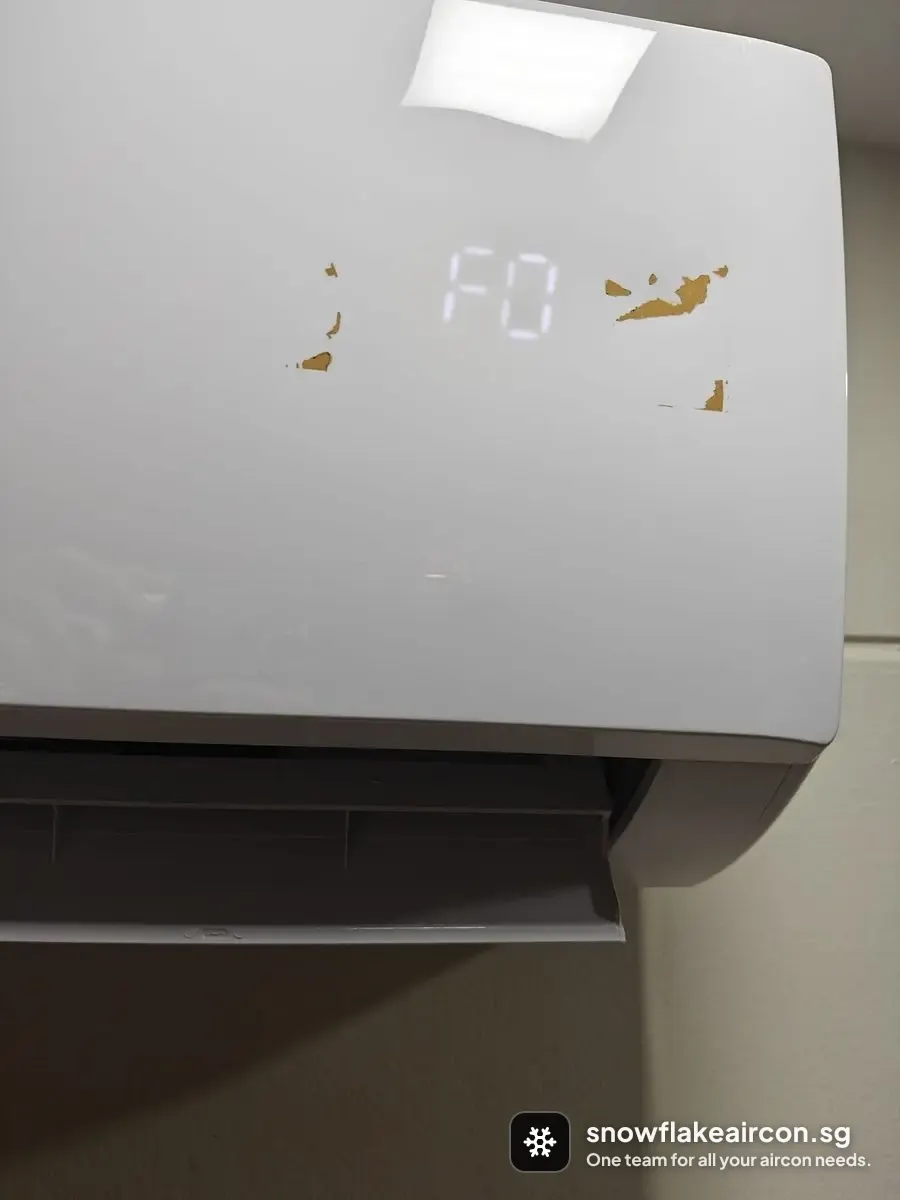
Gree · Wall-mounted
Gree F0 on a rusted condenser: refrigerant shortage
R32 refrigerant shortage triggering Gree F0 protection from corroded evaporator return bends
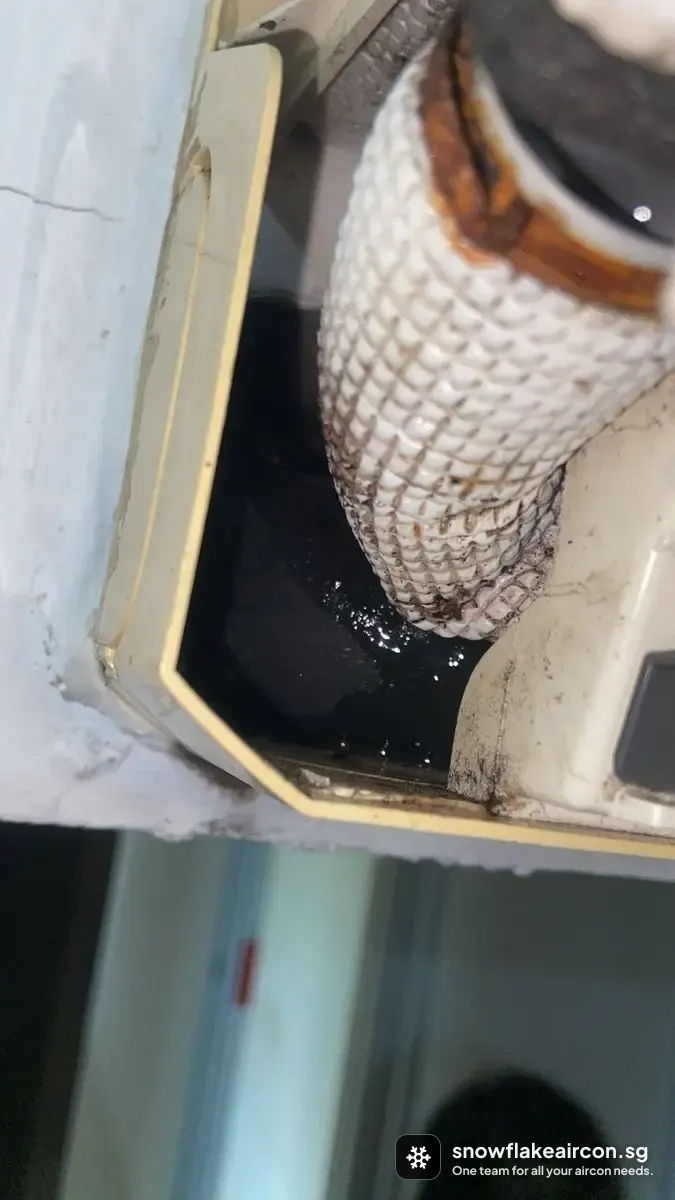
Panasonic · Wall-mounted
Dripping after renovation: fine plaster dust choked the drain
Fine renovation dust bound with moisture into a choke in the drain path
Common Questions
Why does my aircon remote screen look sharp but still fail to beep the indoor unit?
Why should residents test aircon remotes with a front selfie camera instead of the rear lens?
Can leaking AAA battery acid permanently ruin an aircon remote circuit board?
When is an indoor aircon sensor issue unsafe for homeowners to open themselves?
Sources
Sources checked 27 Nov 2026