On this page
Quick summary
Kallang, Whampoa, and Boon Keng PLH and Plus BTO towers face cramped ledge airflow, heavy expressway soot, and strict beam limits. Planning removable pelmet access, continuous floor-trap drain slope, and regular condenser fin care prevents trunking drips and high-head trips.
System 2 installed from $2,600 (22 SWG copper) · $30 site survey waived on install · View packages
Manage Tight City-Fringe Ledges and Expressway Dust in Kallang
High-density PLH and Plus BTO towers in Kallang, Whampoa, and Boon Keng place outdoor condensers inside recessed louvered niches. Shallow ledges bounce hot exhaust air back across condenser coils whenever louver slats or wall gaps sit too close.
Blocks bordering the PIE and CTE also pull dark tyre soot and road grit directly through outdoor fans. Oily highway dust mats indoor filters and outdoor fins faster than quiet suburban estates, raising operating amps by late afternoon.
Keep clear front airflow around the condenser chassis. Engage BCA-trained crews using MOM safety gear so outdoor maintenance stays safe and legal.
Compare Concealed Pelmet vs Surface Trunking for Boon Keng Flats
Hidden ceiling boxes and exposed PVC pipes trade tidy looks against easy inspection access. Compare how each piping choice fits new Boon Keng BTOs and mature Whampoa flats:
Scroll to see more columns
| Installation choice | New PLH or Plus BTO fit | Mature Whampoa resale fit | Servicing and access impact |
|---|---|---|---|
| Removable ceiling pelmet | Hides lines cleanly above wardrobes | Adds false-ceiling drop around beams | Requires access hatches for pipe checks |
| Surface PVC trunking | Fast routing below concrete beams | Best when rewiring older walls | Easy visual inspection for damp spots |
| Floor-trap drain slope | Direct fall to service-yard trap | May route via bathroom vanity | Zero pump noise or standing trap slime |
| Recessed ledge spacing | Verify outdoor chassis depth first | Check stainless bracket clearance | Stops hot exhaust looping back inside |
Route Floor-Trap Drains Cleanly past Beams Without Backfall
HDB rules bar hacking structural concrete beams or columns to bury refrigerant pipes inside Kallang and Boon Keng flats. Always route insulated copper and 16 mm PVC drain runs neatly along walls or inside accessible ceiling drops.
Maintain steady downward gradient along the entire drain run to the nearest bathroom or service-yard floor trap. Flat dips near structural beams hold condensed water, encouraging dark biofilm jams and sudden bedroom leaks.
Terminate the drain outlet cleanly over the floor trap grating with an air break rather than sealing it deep inside sewer risers. Ensure your BCA-trained installer lodges HDB Form AC-02 within 14 days of commissioning.
Decide on Pre-Renovation Surveys and Expressway Dust Upkeep
Pairing a pre-piping layout walk with expressway-paced servicing keeps city-fringe flats running reliably without soaked walls:
- Book a S$30 layout survey ahead of ceiling closure to confirm condenser depth, drain fall, and bracket sizing. Proceeding with quoted work drops the S$30 fee.
- Rinse bedroom screens fortnightly near the PIE or CTE corridor. General fan-coil cleans cost S$50 solo, S$30 apiece for two units, or S$25 per head across three-plus blowers (14-day warranty).
- Oily highway soot washes off coils with chemical servicing: S$80 on one head, S$140 combined for two, or S$60 each on three or more (60-day warranty).
- Choked blower wheels need full strip-down overhauls at S$150 (one), S$125 each (two), or S$115 per head (three-plus) with 90-day cover. Diagnostic checks run S$30 (S$80 VRV) with 30-day repair cover.
Diagnostic Cases for This Fault
Singapore jobs showing what we checked on-site before quoting parts or gas.
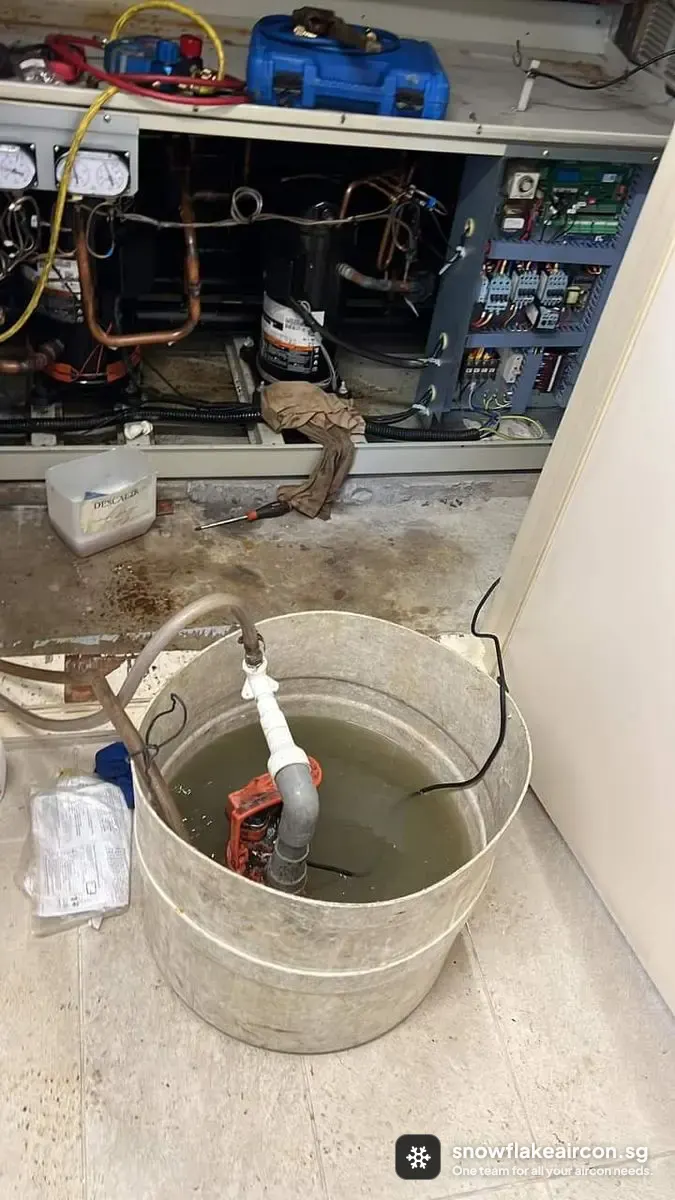
Mitsubishi Electric · Multi-split
Outdoor ledge dripping downstairs: split drain pipe stub
Split outdoor PVC condensate drain stub spilling backed-up water across the ledge
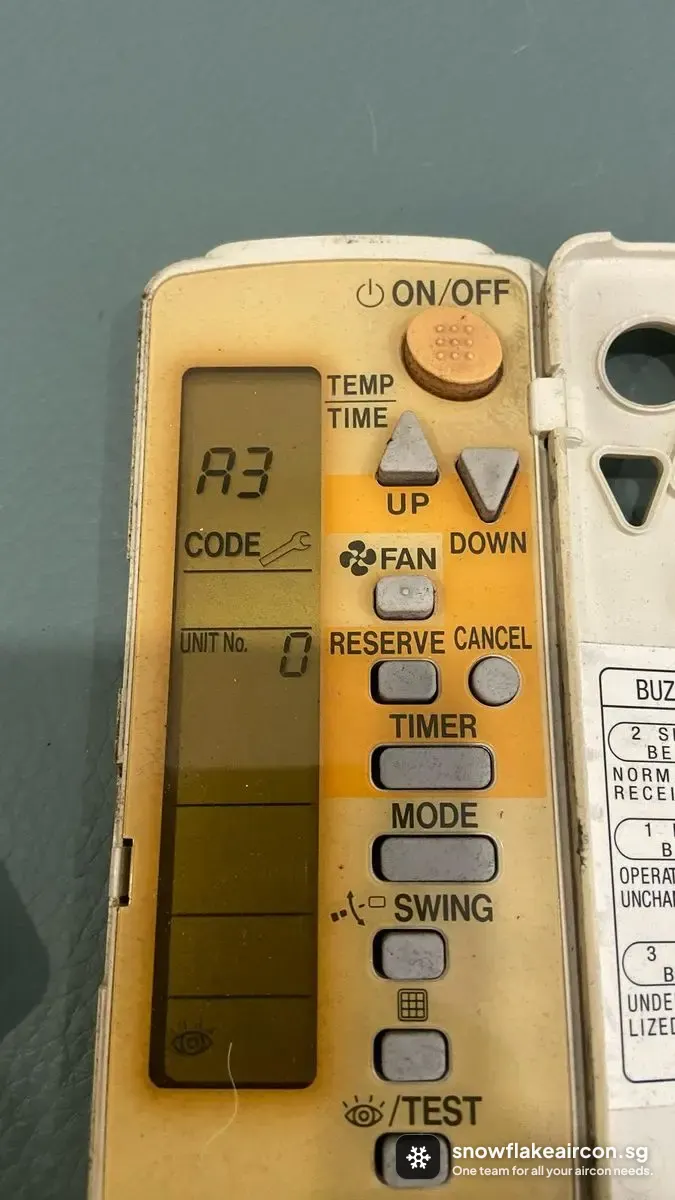
Daikin · Wall-mounted
Daikin A3 returning after clearing: sagging pipe traps mud
A sagging section holding water and collecting deposit above a false ceiling