On this page
Summary
If the breaker or isolator has tripped, leave it off. Every indoor unit stopping at once points to a fault on the shared outdoor circuit, and resetting it re-energises whatever caused the trip.
Likely Causes
- A failed communication circuit on the outdoor board stops every indoor unit at once.
- Power not reaching the outdoor unit leaves the indoor units running warm.
- An outdoor unit at the end of its life takes the whole system down with it.
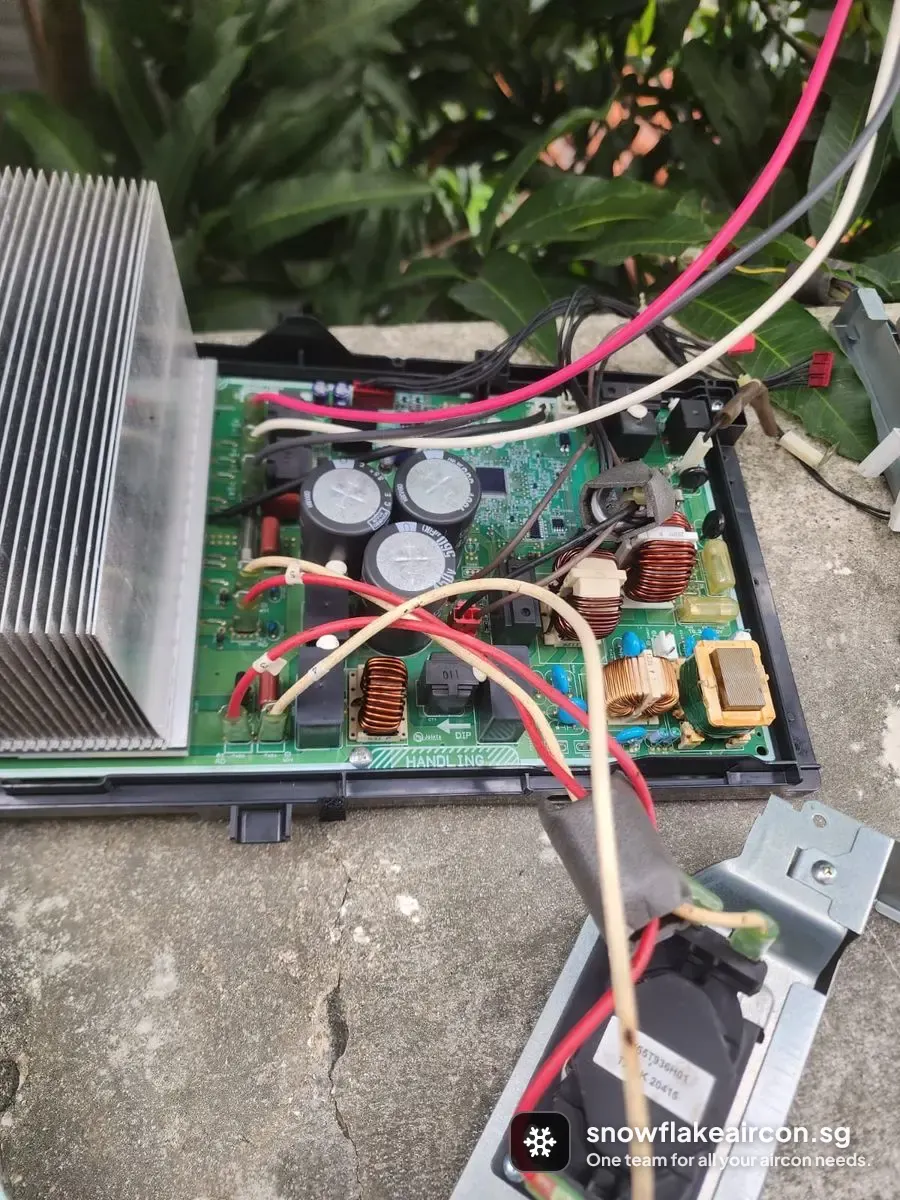
Quick Fault Summary
| Likely cause | What to check | Typical next step |
|---|---|---|
| Outdoor control board no longer communicating | Every indoor unit shows the same error code. | A technician checks the shared wiring and tests whether the outdoor board receives and returns the signal. |
| Power not reaching the outdoor unit | No error code anywhere, the units just blow warm air. | A technician traces the power supply through the breaker, isolator and outdoor connection. |
| The outdoor unit has reached the end of its life | The outdoor unit is older and sits in an exposed spot. | A technician tests the indoor and outdoor units separately to find what has failed. |
- Likely cause
- Outdoor control board no longer communicating
- What to check
- Every indoor unit shows the same error code.
- Typical next step
- A technician checks the shared wiring and tests whether the outdoor board receives and returns the signal.
- Likely cause
- Power not reaching the outdoor unit
- What to check
- No error code anywhere, the units just blow warm air.
- Typical next step
- A technician traces the power supply through the breaker, isolator and outdoor connection.
- Likely cause
- The outdoor unit has reached the end of its life
- What to check
- The outdoor unit is older and sits in an exposed spot.
- Typical next step
- A technician tests the indoor and outdoor units separately to find what has failed.
1. Outdoor Control Board No Longer Communicating
Every indoor unit showing the same error at once usually means the outdoor board has stopped replying. The indoor units still work; without a reply, they all stop together.
How to Tell
The same error on every indoor unit at the same moment points to the board. No error with warm air means lost power, and cooling that faded for months means wear.
- Every indoor unit shows the same error code.
- The indoor units power up and respond to the remote.
- The outdoor unit is silent and never kicks in.
- It happened to all of them at the same moment.
How We Confirm It
A technician checks the shared wiring and tests whether the outdoor board receives and returns the signal. The board is tested once the wiring is cleared.
Replacing indoor units for matching codes changes nothing while the outdoor board stays silent.
Related Cases
2. Power Not Reaching the Outdoor Unit
Indoor fans blowing warm air with no error point to an outdoor unit with no power: a switched-off service yard isolator, a tripped breaker or a failed supply.
How to Tell
No error code, indoor fans running and a completely silent outdoor unit mean the supply is cut. A technician confirms where power stops.
- No error code anywhere, the units just blow warm air.
- The indoor fans run normally and respond to the remote.
- The outdoor unit is completely silent, not even a hum.
- Someone has recently worked near the isolator or the board.
How We Confirm It
A technician traces the power supply through the breaker, isolator and outdoor connection. They find the cause of any trip before restoring the supply.
Do not reset a tripped breaker to see whether the outdoor unit starts. It cut the supply for a reason, and resetting it feeds the same fault.
Related Cases
3. The Outdoor Unit Has Reached the End of Its Life
An older outdoor unit on an exposed HDB or condo ledge wears out faster. Humid coastal or industrial air corrodes the coil over years while indoor units stay sound.
How to Tell
Cooling that faded for months before it stopped, with a corroded coil, is wear. A sudden shared error points to communication or power instead.
- The outdoor unit is older and sits in an exposed spot.
- Corrosion or damaged coil fins are visible without opening the unit.
- Cooling had weakened for some time before it stopped.
- The indoor units show less visible wear.
How We Confirm It
A technician tests the indoor and outdoor units separately to find what has failed. Where only the outdoor unit has failed, replacing it alone is enough.
A full system replacement is unnecessary when only the outdoor unit has failed. The indoor units usually have years left.