On this page
How This Presents
An indoor master-bedroom blower inside a Punggol HDB flat leaves the room clammy even when set to 22°C all evening. Air leaving the vane feels mildly cool near the grille yet never reaches the bed. Mesh filters had already been rinsed at home with no improvement.
- Setup
- Daikin Wall-mounted4-6 yearsHDBPunggol
- Misread as
- Authorising an avoidable R32 refrigerant top-up when a stuffy master bedroom feels like gas loss at a 22°C setpoint.
- Check first
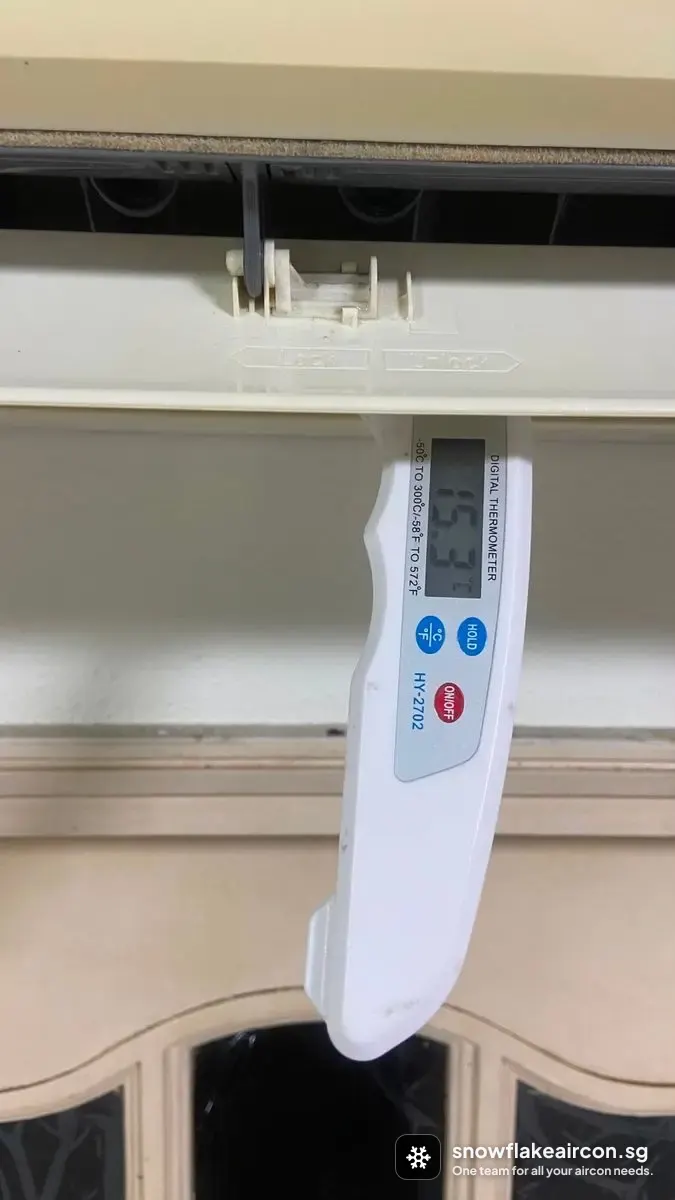
- Measuring live intake and supply vent air with a digital probe to log a 4°C temperature drop before inspecting the blower drum
- Actual finding
- Lint-packed blower barrel and matted upper coil forcing warm return air to bypass the fins while the Daikin R32 charge stays untouched
- Scope saved
- Servicing or adjustment with no parts replaced
What Else Produces This
Setting a lower remote temperature cannot overcome stalled indoor heat transfer. Measuring real air temperatures across the fan coil gives objective proof before climbing onto the HDB ledge.
Clipping a digital thermometer probe into the supply vane records 23°C discharge air against 27°C intake air, giving a weak 4°C split.
Feeling the suction copper pipe behind the indoor trunking confirms cold refrigerant return, ruling out an empty gas loop.
Removing the front Daikin cover exposes greasy dust bridging the upper evaporator rows and forcing intake air around the coil edges.
Shining an inspection lamp inside the discharge slot reveals thick grey fuzz lining every vane of the cylindrical blower wheel.
Why It Happens
Over several humid Punggol years, nightly bedroom cooling built sticky dust inside the blower drum and across the upper coil face. The loaded barrel could no longer pull full air volume evenly across the chilled fins. Warm room air bypassed the coldest coil rows, leaving outlet air stuck at 23°C.
What Resolution Involves
Leave the outdoor Daikin condenser valves sealed with zero refrigerant added. Fit a waterproof wash canvas beneath the indoor chassis, spray dedicated coil wash onto the fouled fins and barrel blades, and flush away dissolved grime with steam and clean water. Clear the rinsed residue straight through the drain pan and outlet hose.
How to Tell It Worked
Reassemble the Punggol master-bedroom unit and start cooling at 23°C on mid blower speed. Insert the digital probe back into the supply slot and log a steady 11°C temperature drop with crisp, far-reaching airflow. Confirm dry coil edges and quiet blower rotation before wrapping up.
Before You Approve a Quote
Measure supply-to-return air drop before suspecting low gas
- A 4°C temperature split at the Daikin outlet proves heat transfer has stalled, even when the compressor runs normally.
- Lint packed inside curved blower fins chokes air throw and lets uncooled bedroom air slip past the coil.
- A single-unit S$80 wash (or S$60 each across three or more fan coils) restores an 11°C split while keeping the gas circuit closed.