On this page
How This Presents
A living-room split in a Queenstown condo blows cool on cloudy mornings, yet shuts off cooling during hot afternoon sun. Out on the balcony ledge, the outdoor condenser hums softly while the main fan blade sits completely still before thermal protection trips.
- Setup
- LG Wall-mounted7-9 yearsCondoQueenstown
- Misread as
- Expecting a seized outdoor fan motor or major condenser replacement when afternoon living-room cooling cuts out after a soft humming sound.
- Check first
- Isolating power on the condo balcony ledge to discharge and bench-test the outdoor fan capacitor against its label rating before condemning the motor
- Actual finding
- Degraded outdoor fan run capacitor losing rated capacity under afternoon balcony heat, preventing fan startup and tripping condenser thermal protection
- Scope saved
- Targeted repair instead of full replacement
What Else Produces This
A silent outdoor blade paired with normal motor hum on a sunny balcony points straight to starting-circuit weakness. Testing the fan bearings and capacitor separately rules out motor seizure.
Switching off the balcony isolator and nudging the outdoor fan blade confirms smooth, quiet bearing rotation with zero stiffness.
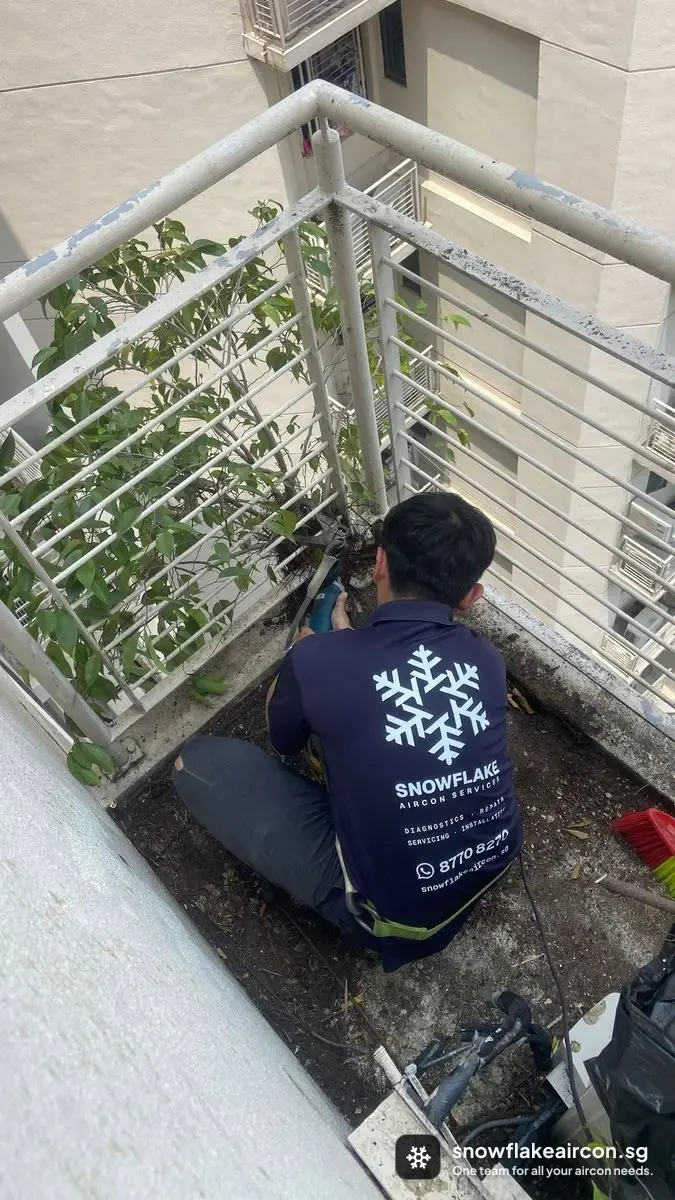
Opening the side cover on the Queenstown condo balcony exposes the round fan capacitor clipped beside the wire strip.
Safely discharging the terminals and bench-testing capacitance reads less than half of the factory rating stamped on the canister.
Checking the outdoor fan coils shows balanced motor resistance with zero short to earth.
Why It Happens
Seven to nine years of west-facing afternoon sun on a Queenstown condo ledge gradually dried out the internal electrolyte inside the run capacitor. Once stored charge dropped below startup threshold on warm days, the fan stalled and trapped condenser heat until thermal cutback tripped.
What Resolution Involves
Leave the healthy LG fan motor and compressor untouched. Match the exact voltage and capacity rating on the canister, crimp clean spade connectors onto sound wire ends, secure the new outdoor capacitor inside its bracket, and tidy the compartment wiring.
How to Tell It Worked
Refit the weather cover, restore mains supply, and test startup under warm afternoon conditions in Queenstown. The outdoor blade spins up crisply on the first call, condenser exhaust stays cool, and living-room cooling runs quietly without tripping.
Before You Approve a Quote
Check the outdoor fan capacitor before replacing a stalled motor
- A fan blade that spins smoothly by hand yet only hums under power needs a fresh capacitor, not a new motor.
- Afternoon sun baking a Singapore condo balcony ledge accelerates capacitor wear faster than shaded indoor components.
- Testing and swapping a weak capacitor takes one visit and restores quiet, steady cooling without replacing the fan motor or condenser.