On this page
How This Presents
Every afternoon during peak clinic hours in Novena, the ceiling unit above the waiting seats loses airflow and drips cold water onto the reception floor. Morning cooling starts brisk, then frost creeps onto the discharge grille by mid-afternoon. Daily icing makes a gas leak look certain.
- Setup
- York Cassette7-9 yearsClinicNovena
- Misread as
- Assuming recurring afternoon ice and ceiling drips above the Novena clinic waiting seats meant an urgent refrigerant leak and gas recharge.
- Check first
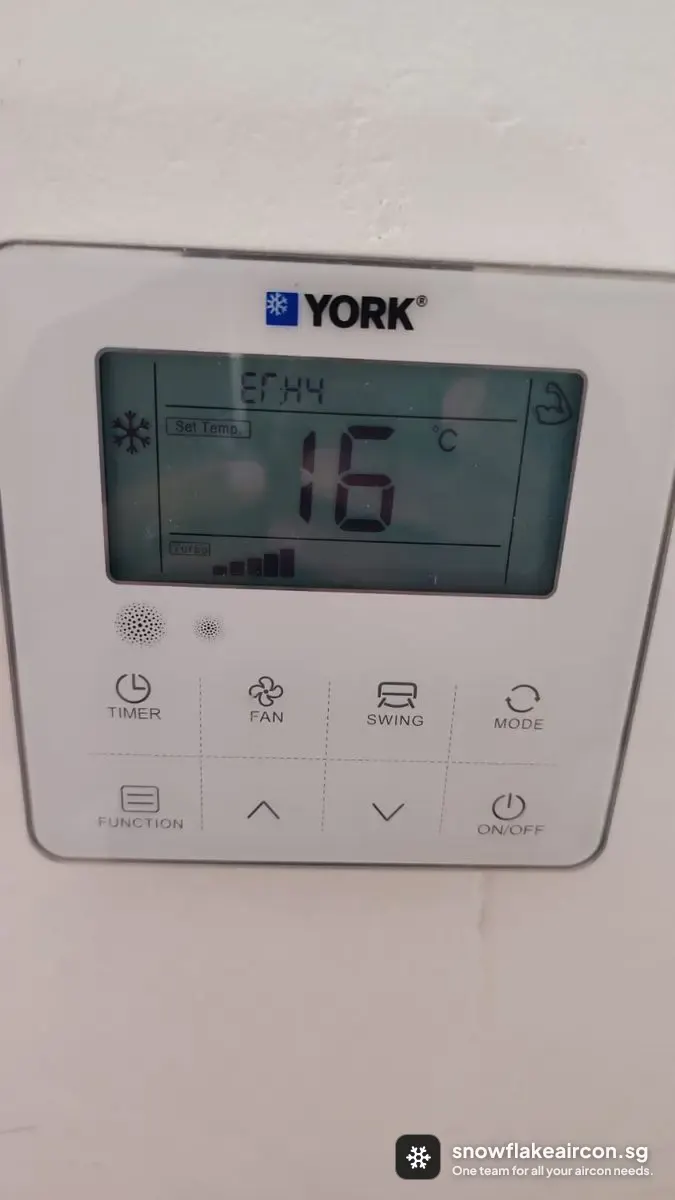
- Spotting the York wired wall controller locked at 16°C and verifying steady refrigerant pressure after thawing the dust-choked cassette coil
What Else Produces This
Predictable afternoon freeze-ups split cleanly between restricted airflow over the indoor coil and low refrigerant pressure. Inspecting the wall controller and ceiling grille first rules out operating and fouling triggers before touching gas lines.
Checking the wall-mounted York wired controller shows the set temperature pressed all the way down to 16°C alongside a low fan speed.
Dropping the return-air grille exposes a grey dust blanket sealing the cassette filter mesh and matting the evaporator fin rows behind it.
Thawing the ice sheet completely and connecting manifold gauges confirms steady operating pressures with zero refrigerant deficit.
Checking the internal drain pump and float switch confirms normal discharge once meltwater clears the pan.
Why It Happens
Repeated door openings in the busy Novena clinic let humid air stream into the waiting room. Staff nudged the York controller down to 16°C for faster relief while dust steadily choked the cassette fins. Starved of warm return airflow, the evaporator froze solid each afternoon and dripped onto the floor whenever the ice thawed.
What Resolution Involves
Skip gas top-up completely because refrigerant levels are intact. Perform thorough chemical servicing on the thawed York cassette coil, flush the drain pan and pump line, and wash the return grille. Reset the wired controller to 23°C to 24°C on medium fan speed and brief clinic staff on avoiding 16°C lockouts.
How to Tell It Worked
Run the cleaned Novena clinic cassette through a full afternoon consultation block at 24°C. Confirm strong four-way airflow, dry discharge vanes with zero frost trace, and steady room comfort without ceiling drips.
Before You Approve a Quote
Check wall setpoints and coil dust before charging a frosted cassette
- Dialing a wired controller down to 16°C does not chill a clinic waiting area faster; it forces nonstop compressor load.
- Low fan airflow across a dust-matted evaporator lets coil surface temperatures plunge below zero even when refrigerant charge is full.
- Chemical cassette cleaning paired with a practical 23°C to 24°C setpoint ends daily defrost drips without adding gas.