On this page
How This Presents
Intermittent scratching sounds rattle from the rear right corner of a high-floor Punggol HDB master-bedroom wall unit. Water starts pooling sluggishly inside the drain tray on humid evenings. Because the rustling rises when the unit switches on, the indoor fan motor looks suspect.
- Setup
- Daikin Wall-mounted4-6 yearsHDBPunggol
- Misread as
- Expecting an expensive indoor fan motor or bearing swap when dry scratching sounds and slow drainage started behind the master-bedroom Daikin.
- Check first
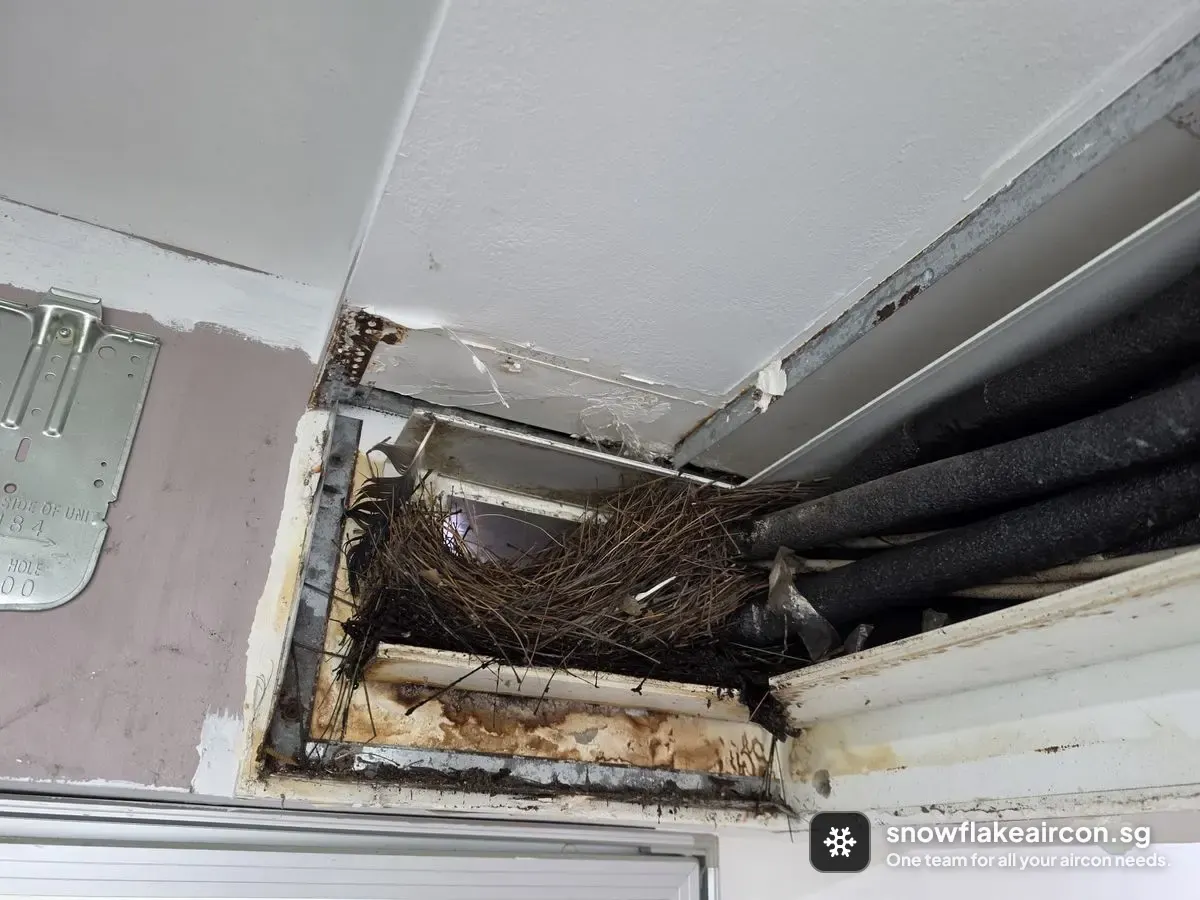
- Lifting the indoor wall casing and opening the side trunking cutout to uncover dried twigs stuffed directly around the insulated copper pipes
What Else Produces This
Dry scratching paired with sudden drainage trouble rarely fits a pure motor bearing failure. Checking behind the cover and trunking box separates mechanical fan wear from external debris intrusion.
Spinning the Daikin blower wheel by hand with power off feels smooth and silent, ruling out seized fan bearings.
Unclipping the front cover and opening the side trunking box reveals dried twigs and dark feathers packed around the black insulated refrigerant pipes.
Peering past the pipe bundle shows daylight streaming straight through an unsealed rectangular wall sleeve facing the exterior ledge.
Inspecting the rear drain pan lip uncovers fine bark dust and feather grit gathering near the drain outlet mouth.
Why It Happens
An unsealed masonry wall sleeve left open from an earlier pipe run gave high-floor Punggol birds an easy tunnel into the sheltered trunking pocket. Packed nesting twigs pressed against the soft drain hose and shed debris into the pan area, triggering scratching vibrations during fan airflow.
What Resolution Involves
Leave the healthy Daikin fan motor untouched. Wearing gloves, pull out every twig and feather from the trunking pocket, vacuum loose grit, and sanitise the drain pan and flush line thoroughly. Inspect the black copper pipe insulation for pecking marks, then pack and seal the exterior wall sleeve completely airtight.
How to Tell It Worked
Pour test water along the cleaned Punggol master-bedroom drain tray to confirm brisk flow to the floor trap. Run the Daikin on quiet, medium, and full fan while listening beside the right trunking box. Cooling runs quietly with zero scratching and no exterior daylight showing.
Before You Approve a Quote
Check open exterior wall sleeves behind noisy high-floor units
- Scratching or rustling behind an HDB wall unit often comes from nesting material inside an unsealed exterior pipe penetration.
- Twigs and feathers packed beside insulated pipes push on the flexible drain hose and drop grime straight into the pan outlet.
- Clearing the cavity, sanitising the drain tray, and sealing the exterior sleeve prevents repeat nesting without touching the fan motor.