On this page
How This Presents
Faint vertical damp tracks keep returning along the painted wall beneath a master-bedroom Starmex unit in an Ang Mo Kio HDB flat. Routine general servicing finished only weeks earlier, and cooling feels crisp. Droplets gather along the bottom-right casing seam on humid Singapore nights.
- Setup
- Mitsubishi Electric Wall-mounted4-6 yearsHDBAng Mo Kio
- Misread as
- Paying for an unnecessary chemical overhaul when sweat stains kept appearing down the master-bedroom wall right after routine servicing.
- Check first
- Lifting the bottom of the indoor wall casing and tracing fresh condensation beads straight to an open masonry hole behind the pipe sleeve
What Else Produces This
Recurring water marks right after a clean service split cleanly between a rear drain spill and external condensation. Checking the drainage path first rules out a blocked pan before inspecting behind the casing.
Pouring test water across the front drain tray flushes briskly to the floor trap with zero backup.
Evaporator fins and blower wheel vanes look clean, ruling out heavy slime or airflow ice.
Unclipping the lower indoor casing exposes a thumb-wide unsealed hole where the copper pipe bundle enters from the service corridor.
Warm humid draft pulls steadily through that wall gap, beading water onto the cold suction lagging seam and rear plastic housing.
Why It Happens
Old plaster putty around the trunking hole had shrunk and cracked over four to six years in a humid Ang Mo Kio flat. Whenever the bedroom door closed and the fan coil ran, slight negative room pressure pulled warm corridor air through the gap. That moist air hit the chilled pipe entry and sweated directly down the wall.
What Resolution Involves
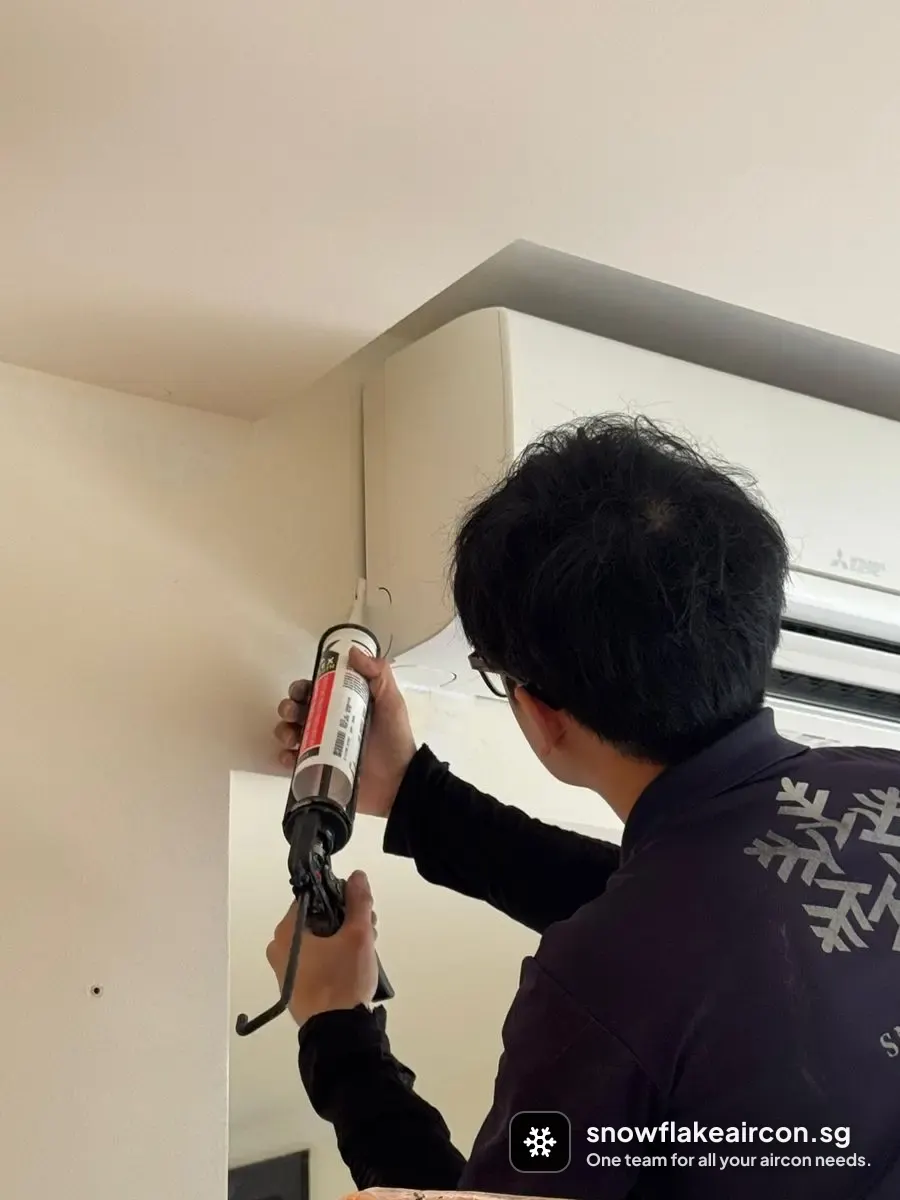
Skip an unnecessary chemical overhaul because the coil and drain line are clear. Wipe the damp rear casing dry, press the split pipe lagging tightly shut with insulation tape, and seal the masonry penetration cleanly around the trunking entry using a sealant gun. Reclip the casing flush against the wall plate.
How to Tell It Worked
Run the Ang Mo Kio master-bedroom unit on cool mode at low fan speed to build maximum pipe chill. Feel around the sealed trunking edge for warm air movement and check the lower casing rim after steady operation. The rear seam stays dry and wall staining stops.
Before You Approve a Quote
Inspect rear wall pipe gaps before ordering another wash
- Water trailing down painted HDB walls from a freshly cleaned unit often points to warm air infiltration behind the mounting plate.
- Unsealed trunking holes pull humid Singapore corridor air straight onto cold copper pipes and the back of the fan coil.
- Sealing the wall opening and tidying the insulation seam stops back-wall sweating permanently without dismantling the coil.