On this page
Quick summary
An Acson indoor blinking LED signals normal timer/standby state when cooling runs smoothly, or a stored protection code like E1, U0, U4, or A3 when the compressor shuts off. Switch the unit off at the remote cleanly rather than cycling wall isolators.
On-site fault check: $30 ($80 VRV), waived if you proceed with repair · See diagnosis & repair
Separating Normal Acson LED Lights from an Active Fault
Indoor indicator layouts differ across Singapore Acson series, so LED colour alone (blue, green, orange, or red timer lamps) does not pinpoint a fault by itself. A steady or gently flashing timer lamp while cold airflow stays strong typically reflects active Sleep/Timer scheduling or standby readiness rather than hardware failure.
An active fault is present whenever an indicator lamp blinks continuously while indoor cooling stops, the louvre closes unexpectedly, or a multi-split condenser on the outdoor ledge falls silent. Because Acson manuals list no customer power-reset procedure for protection faults, keep wall isolators untouched once cooling fails.
Acson Fault Codes Behind Blinking Indicator Lights
Acson G18/GS02 Inverter Y and APJ2 diagnostic service manuals pair blinking fault alerts with exact two-character controller codes retrieved during inspection. Identifying whether the fault belongs to drainage, sensors, wiring, refrigerant, or outdoor boards avoids blind chemical washes.
| Acson code | Official service guide meaning | Typical Singapore field check |
|---|---|---|
| U0 | Insufficient refrigerant | Test static/running pressures and nitrogen-check flares or indoor coils |
| U4 | Communication error | Check outdoor power supply, fuses, and indoor-outdoor interconnect wiring |
| A3 | Water-pump error | Inspect high water level, float switch, blocked drain line, or condensate pump |
| A6 | Indoor fan-motor abnormality | Check blower spin drag, wet PCB connector pins, and fan motor windings |
| C4 | Indoor heat-exchanger thermistor fault | Measure coil thermistor kOhm resistance against pipe temperature |
| E1 | Outdoor-unit PCB error | Check surge or moisture damage on condenser board; resolved by full board swap |
| E5 | Compressor motor lock | Inspect compressor winding balance, start current, and outdoor inverter drive |
| E7 | Outdoor DC fan-motor lock | Check condenser blade obstruction, fan motor windings, and drive board |
| F3 | Discharge-pipe overheat | Measure refrigerant charge, clogged outdoor coil fins, and discharge probe |
What Singapore Homeowners Can Check Safely First
Recording the right clues before calling avoids multiple diagnostic trips, especially across multi-split HDB ledges where three bedrooms share one condenser.
- Switch the faulty Acson unit off cleanly using the handheld remote control and leave circuit breakers alone if one tripped.
- Note which specific LED lamp flashes (Operation, Timer, Power) and record whether cooling stopped in one bedroom or every room at once.
- Inspect visually from indoors only that curtains or laundry racks are not trapping hot exhaust around the outdoor ledge condenser.
- Save a quick photo of the indoor unit model label (bottom casing edge) and a 5-second video clip showing the blinking lamp rhythm.
How to Decide Between Servicing, Repair Diagnosis, or Unit Replacement
Matching repair action to whether airflow, drainage, or electronics halted cooling keeps costs predictable under our transparent S$30 on-site check (waived whenever you proceed with quoted repair).
- Book routine servicing or drainage work only if water leaks clearly from a choked drain pan without an electrical lockout code.
- Book a fault diagnosis visit whenever blinking LEDs accompany warm air, U0/U4/E1 faults, or an unmoving outdoor compressor fan.
- Weigh system age cleanly if diagnosis confirms an outdoor E5 compressor lock on a unit past eight years of humid Singapore running.
- Message your blinking LED video and model sticker on WhatsApp so Snowflake technicians confirm scope before arriving.
Diagnostic Cases for This Fault
Singapore jobs showing what we checked on-site before quoting parts or gas.
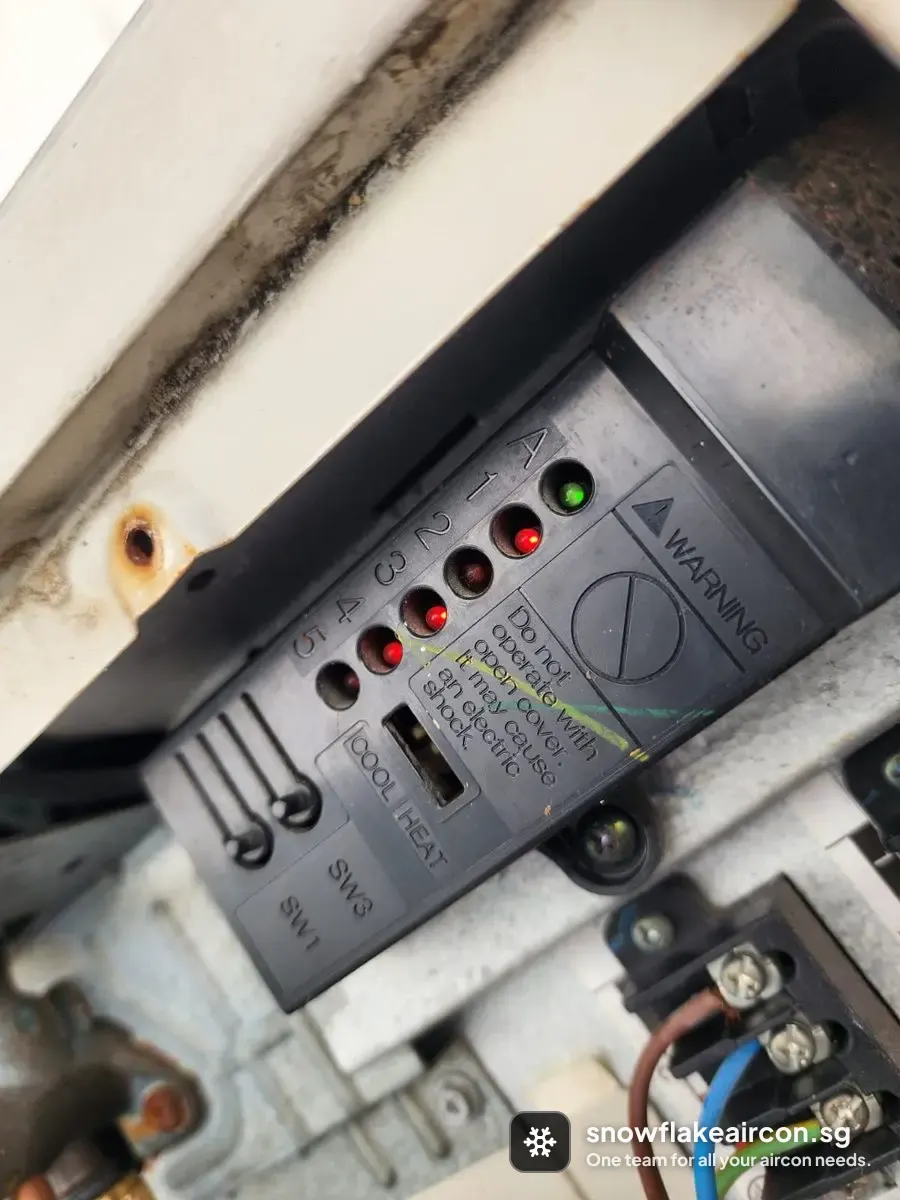
Daikin · Wall-mounted
Daikin J6 outdoor red LED: bad thermistor, not condenser
Open-circuit Daikin outdoor heat-exchanger thermistor halting multi-split cooling via outdoor safety protection while the inverter compressor stays healthy
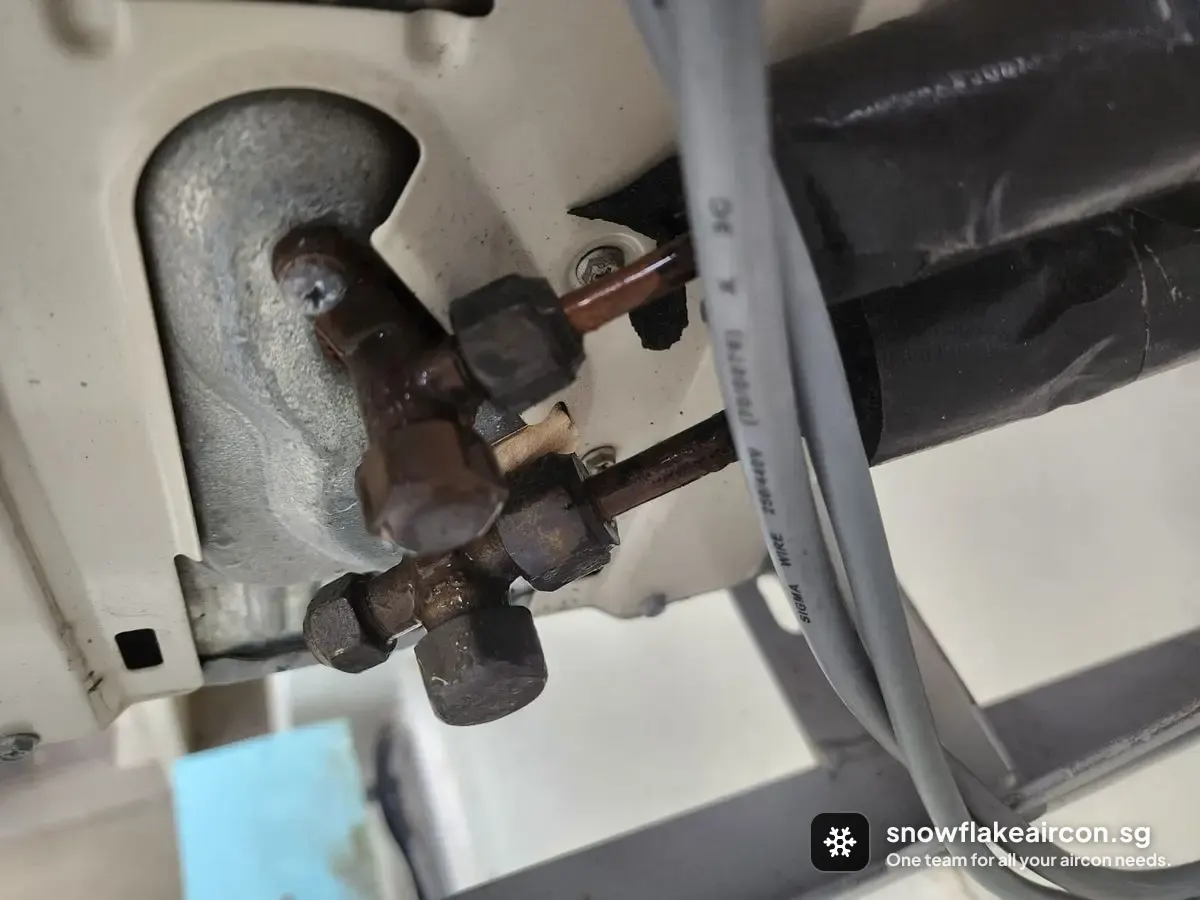
Samsung · Wall-mounted
Coastal unit losing gas again: salt ate the pipe fitting
A corroded outdoor fitting thinned past the point where it can seal
Common Questions
Why does my Acson aircon blink orange or red after turning off?
Can turning off the wall switch reset a blinking Acson error light?
What triggers A3 or U4 fault codes on Singapore Acson splits?
How much does an on-site Acson fault check cost with Snowflake?
Sources
Sources checked 29 Nov 2026