On this page
Quick summary
A split aircon that cools well at midnight yet turns lukewarm at 2 pm usually suffers condenser heat soak, dirty outdoor fins, a drifting sensor, or a weak capacitor. West-facing HDB glass and small BTU sizing worsen afternoon warmth once ledge heat tops 40 degrees.
Why Sunlit Singapore Ledges Cause Afternoon Cooling Drops
Aircons move room heat into outdoor air, so cooling output relies on the temperature gap across the outdoor condenser coil. At midnight, ambient Singapore air sits near 27 degrees, letting even dusty coils reject heat smoothly.
By 2 pm on west-facing HDB and condo ledges, direct sunlight and enclosed concrete walls push intake air past 40 degrees. High head pressure forces modern inverter boards to throttle compressor speed down to prevent overheating, leaving vents blowing tepid air.
Heat soak inside outdoor electrical boxes also exposes ageing run capacitors and drifting sensors that still work normally at night. Strong sun through unshaded west glass compounds that drop inside living halls and bedrooms.
Separate Heat-Soak Faults from Undersized Room Capacity
Checking midday room warmth against simple indoor tests separates dirty coils and failing parts from undersized BTU sizing:
Scroll to see more columns
| Afternoon symptom pattern | Most likely culprit | Safe indoor home check | Recommended next step |
|---|---|---|---|
| Cools fast after 9 pm, tepid at 2 pm | Dirty outdoor fins or hot ledge air loop | Check indoor mesh cleanliness and air throw | Book outdoor condenser jet wash |
| Outdoor compressor cuts out in midday sun | Weak capacitor under heat soak or high pressure | Listen indoors for short click-off cycles | Book S$30 on-site electrical test |
| Compressor stays quiet despite warm room | Drifting room thermistor or coil sensor | Test lower setpoint by 3 degrees briefly | Confirm thermistor resistance on site |
| Air feels cold at grille yet room stays 28 degrees | West-sun glass load or undersized 9,000 BTU | Shut blackout curtains and corridor doors | Add solar film or plan BTU upsizing |
| Warm air persists at both 2 pm and midnight | Borderline gas leak or restricted capillary line | Check for poor 5-minute intake-outlet split | Pressure-test pipes before topping up |
Use Safe Indoor Checks and Reduce West-Facing Heat Load
Draw blackout curtains before noon on west-facing glass. BCA passive design advice notes that shading direct sun cuts afternoon cooling load fast.
Run a ceiling or standing fan on medium-high alongside the aircon so cold air mixes across sunny walls. Rinse indoor plastic mesh filters every two weeks and keep shelves clear of the top intake grille.
Stay firmly indoors when comparing night and 2 pm vent coolness with a probe thermometer. Keep feet inside the flat and leave exterior HDB ledges and live panels to trained staff.
Compare S$30 Fault Checks and Cleaning Rates
Confirming whether heat soak stems from dirty fins, a weak capacitor, or low pressure keeps repair spending focused on the proven root cause:
- Reserve a S$30 troubleshooting visit when clean indoor meshes still leave afternoon supply air tepid. That fee drops completely off any approved repair bill.
- Condenser jetting on sunlit boxes runs S$100 each with plain water. Chemical jet cleaning costs S$120 to strip baked grime.
- Routine wall-split work runs S$50 solo, S$30 each for two heads, or S$25 each from three up (14-day warranty). Chemical washes cost S$80 on one head, S$70 each on pairs, or S$60 each for three-plus (60-day cover).
- Deeply fouled evaporator blades choking heat transfer need teardown chemical overhauls. Rates run S$115 per fan coil on three or more, S$125 per coil on two, and S$150 on a lone unit with 90-day cover.
Diagnostic Cases for This Fault
Singapore jobs showing what we checked on-site before quoting parts or gas.
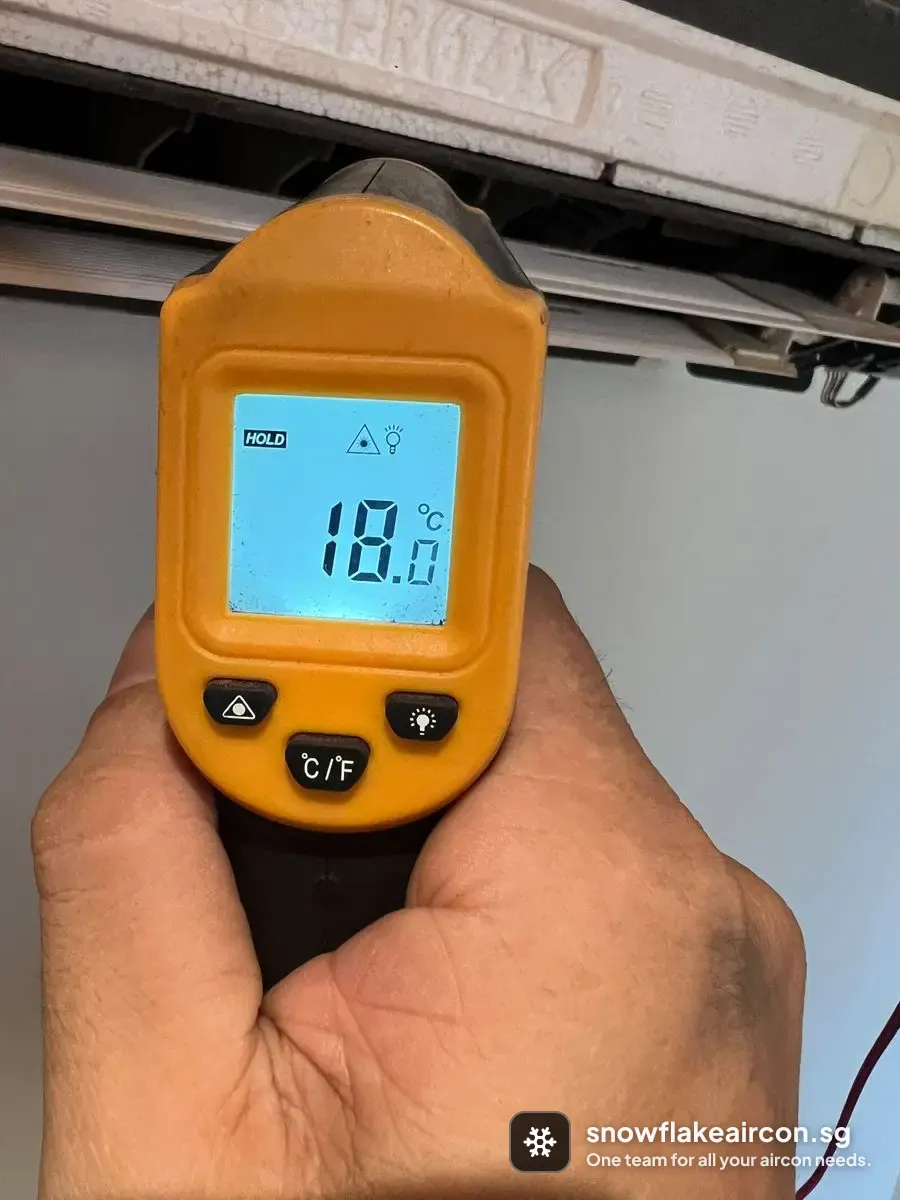
River Valley Condo · Daikin
River Valley Daikin Warm at 18 Degrees: Drifted Sensor
Out-of-tolerance indoor room air thermistor reporting a falsely chilled bedroom temperature to the Daikin board, stepping down outdoor compressor speed far too early
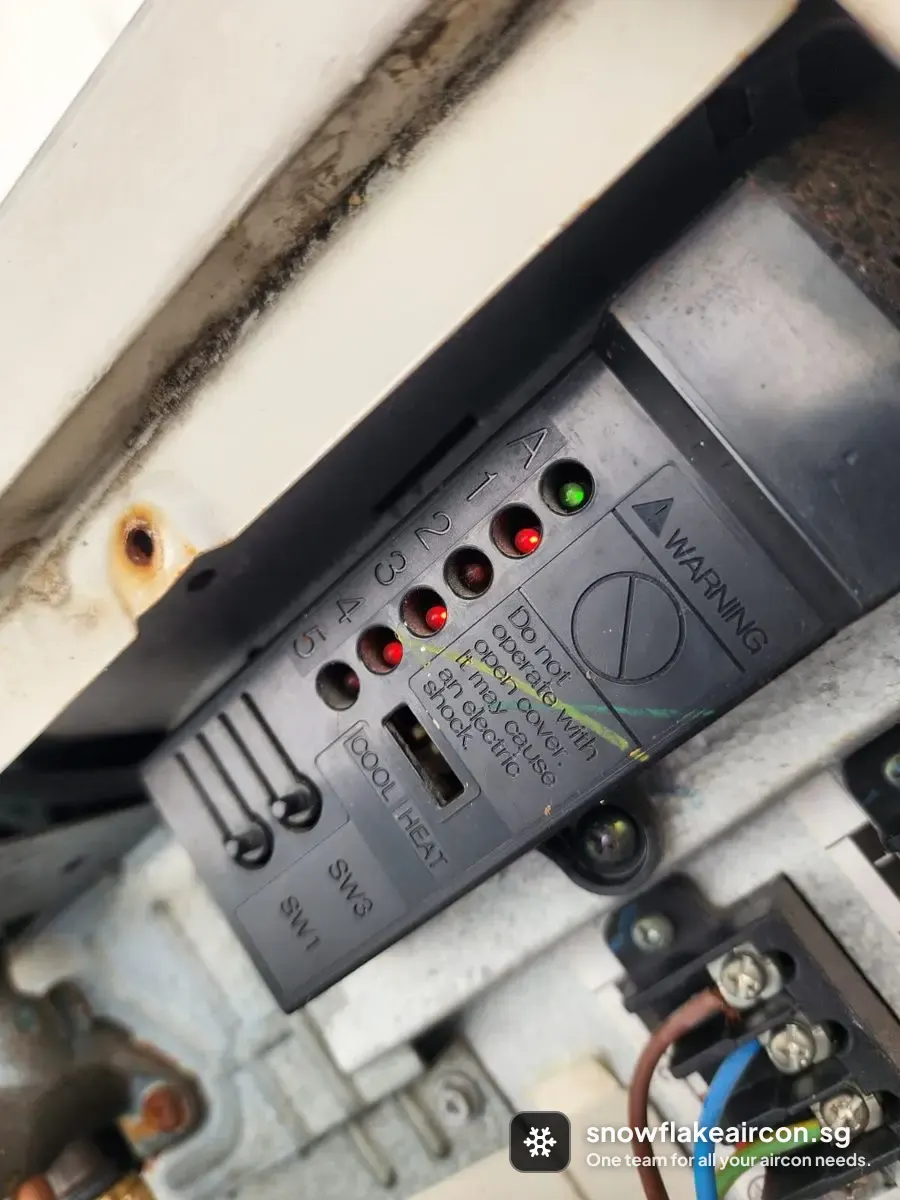
Bishan Condo · Daikin
Daikin Outdoor Red LED Bank: Thermistor, Not Condenser
Open-circuit Daikin outdoor heat-exchanger thermistor halting multi-split cooling via outdoor safety protection while the inverter compressor stays healthy
Check Your Diagnostic or Servicing Price
Tap your job, unit count, and home type for our published Singapore rate — then send the pre-filled message on WhatsApp.
Published Singapore estimate
$30 / visit on-site diagnostic check
Technician tests cooling output, sensors, PCB, fan motor and pressure — fee is waived if you proceed with the quoted repair.
30-day workmanship warranty on confirmed repairs. VRV commercial checks are $80 / visit.