On this page
Quick summary
Residential inverter aircons in Singapore draw roughly 2W to 5W on standby, costing about S$0.30 to S$0.75 monthly across 16 idle hours daily under the 31.16 cents per kWh SP Group rate. Leaving the 20A isolator on reduces switch wear and keeps outdoor compressor oil mildly warmed.
Wall-mounted general servicing $25–$50/unit · chemical wash $60–$80/unit · View servicing rates
Real SP Group Cost of 2-Watt to 5-Watt Aircon Standby
Modern R32 inverter boards draw only 2W to 5W combined while idle. Over 16 daytime standby hours, total usage reaches 0.96 to 2.40 kWh monthly. Running a single bedroom inverter overnight consumes over twenty times more electricity than daytime standby power.
Singapore's late-2026 electricity tariff stands at 31.16 cents for each kWh including GST. Daily standby therefore adds roughly S$0.30 to S$0.75 each month.
Compare Standby kWh and Bill Totals Across Idle Schedules
Even spare bedrooms left idle all month keep standby expenses below S$1.15. Standby meters confirm outdoor condensers pull tiny control wattage while compressors rest. Review exact monthly figures below to compare four common apartment idle schedules side by side.
Scroll to see more columns
| Idle standby profile | Daily idle hours | Monthly energy draw | Monthly SP Group cost |
|---|---|---|---|
| 2W single-split board | 16 hours (8h sleep run) | 0.96 kWh | ~S$0.30 / month |
| 5W multi-split boards | 16 hours (8h sleep run) | 2.40 kWh | ~S$0.75 / month |
| 2W spare room idle | 24 hours (unused unit) | 1.44 kWh | ~S$0.45 / month |
| 5W spare room idle | 24 hours (unused unit) | 3.60 kWh | ~S$1.12 / month |
Why Keeping Isolators Powered Protects Compressor Oil and Switches
Steady standby voltage lets outdoor boards keep compressor crankcase oil lightly warmed. Warm oil resists damp refrigerant dilution during humid Singapore monsoon nights. Tight terminal contacts keep outdoor inverter boards supplied with clean 230V power.
Twice-daily switching wears heavy 20A rocker contacts early and loosens terminal screws. EMA regulations require licensed electrical workers whenever faulty wall switches need replacement.
Decide When Flipping the 20-Amp Isolator Switch Makes Sense
Setting thermostats at 25 degrees overnight saves far more than flipping switches. Reserve wall isolators for trips or safety events while cutting bills with clean coils:
- Cut the 20A isolator before trips over seven days, electrical storms, or water leaks. Always turn it off before servicing begins.
- Clean blower wheels trim active cooling amps. One unit bills S$50, two bill S$30/unit, and multi-room homes pay S$25/unit (14-day warranty).
- Chemical cleaning clears sticky dust drag. Solo rooms pay S$80, two-room bookings pay S$70/unit, and bigger flats run S$60/unit (60-day warranty).
- Deep teardowns run S$150 (1 unit), S$125/unit (2 units), or S$115/unit (3+ units) with 90-day warranty. Crackle checks cost S$30 (waived on repair).
Diagnostic Cases for This Fault
Singapore jobs showing what we checked on-site before quoting parts or gas.
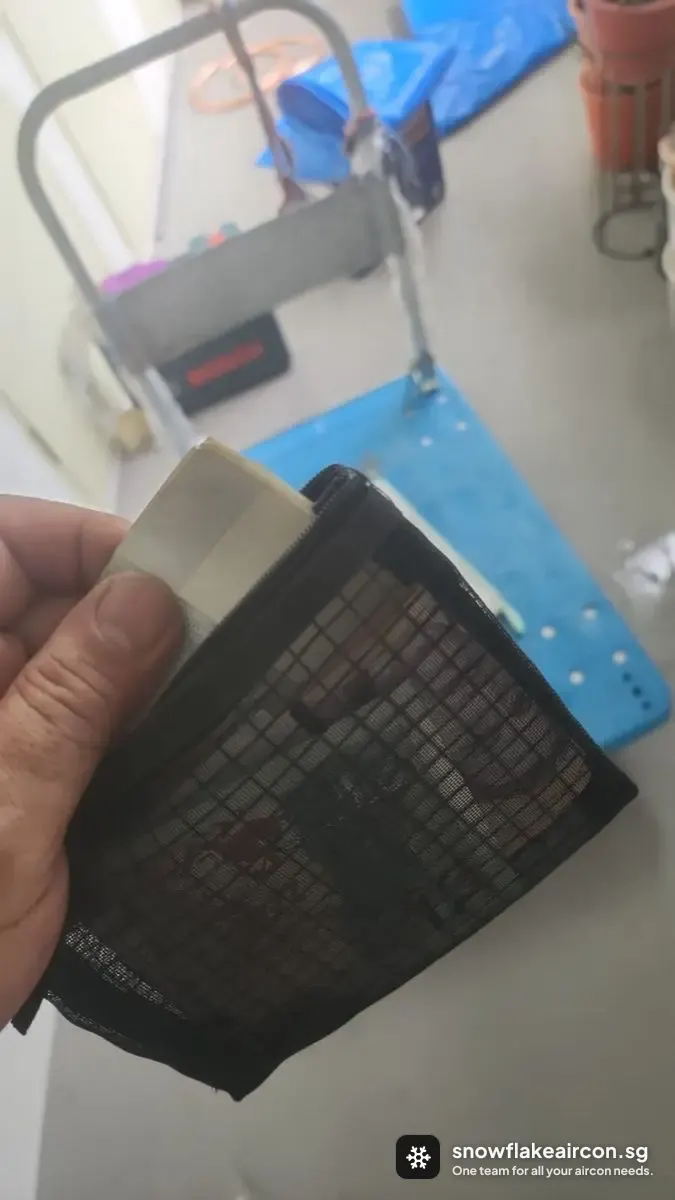
LG · Wall-mounted
Told a near-new unit needed a chemical wash: routine clean enough
Ordinary dust on the filters and a light haze on the fin face, both clearing with a routine service
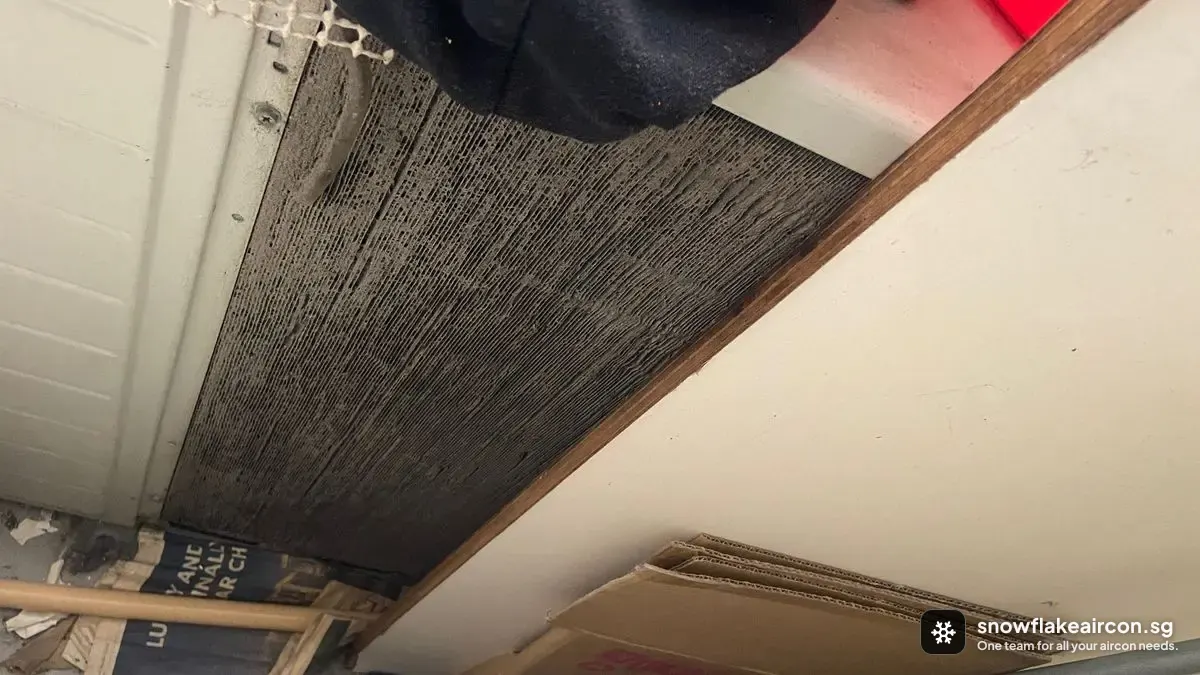
Midea · Cassette
Weak airflow over a kitchen line: grease-bound coil needs overhaul
Hardened cooking grease bound through the full fin depth and packed across the blower
Common Questions
How much does aircon standby power actually cost monthly on Singapore SP Group bills?
Why do installers advise leaving the 20A aircon isolator turned on between daily sleeps?
When should Singapore homeowners actually switch off the 20A aircon isolator?
Does frequent 20A wall switch toggling cause blinking error lights or PCB failures?
Sources
Sources checked 27 Nov 2026