On this page
Quick summary
Magnesium carbonate chalk inside Singapore bouldering gyms mixes with tropical humidity to bake into a cement-like crust on evaporator fins, blower blades, and drain pans. Monthly coil inspection, high-capture pre-filters, and scheduled chemical flushing keep commercial cooling reliable without mid-session compressor lockouts.
Wall-mounted general servicing $25–$50/unit · chemical wash $60–$80/unit · View servicing rates
How Magnesium Chalk Turns into Wet Coil Cement
Dry bouldering chalk stays light enough to bypass coarse return grilles during busy evening sessions. Fine magnesium carbonate hits wet cooling fins inside indoor units. Once damp, that powder dries into hard scale across aluminium plates.
Coated blower wheels lose blade pitch and vibrate louder every week. Static pressure climbs steadily inside ceiling ducts. Thick chalk paste also settles into drain pans, forming concrete-like plugs that flood crash mats during humid weekends.
Compare Chalk Buildup Zones and Gym Maintenance Triggers
Track these four high-risk aircon components before sticky chalk crusts force costly after-hours teardowns:
Scroll to see more columns
| Aircon zone | Chalk failure sign | Singapore gym risk | Service response |
|---|---|---|---|
| Return pre-filters | White cake on intake mesh | Static pressure spikes fast | Weekly wash or filter swap |
| Ducted or split coil | Calcified grey fin crust | Warm air and frozen suction lines | Deep chemical coil flush |
| Squirrel-cage blower | Thick blade buildup and rattle | Motor bearings overheat early | Full strip-down wheel scrub |
| Drain pan and pipe | Chalk putty blocking trap | Water drips onto crash mats | Pressurised drain line purge |
Protect Climbing Gym Blowers Between Chemical Washes
Gym staff should vacuum washable return grilles weekly and inspect pleated pre-filters before chalk coats intake louvers. Never scrub wet aluminium coils with dry wire brushes. Keep water sprays away from ceiling electrical boxes per EMA safety rules.
Gyms upgrading aged commercial splits above basic efficiency marks can also check GoBusiness Energy Efficiency Grant terms. Qualifying local enterprises receive support when adopting higher-efficiency replacements.
Align deep coil washes with quarterly route-reset mornings while mats sit clear of wall zones. Catching chalk paste early avoids noisy bearing wear and sudden floor-trap floods on peak weekends. Keep ceiling return grilles unobstructed above bouldering pads.
Schedule Commercial Chalk Inspections and Deep Washes Cleanly
Book morning maintenance windows before sessions start so mats stay dry while technicians inspect every plenum:
- Standard split fault diagnostics begin at S$30, whereas commercial VRV checks bill S$80. Approved repair or cleaning work waives the inspection fee under 30-day warranty.
- Reception and studio wall splits follow clear unit tiers for light cleaning. One wall blower costs S$50, twin wall blowers bill S$30 per head, and larger batches drop to S$25 per wall blower (14-day guarantee).
- Chalk-caked split coils benefit from chemical washes priced at S$80 for one studio unit. Washing two studio units costs S$70 each, falling to S$60 apiece across bulk split counts (60-day guarantee).
- Hardened crust on wall-mounted blowers demands dismantled overhauls at S$150 for a lone unit, S$125 per unit across twin units, and S$115 per unit on three upward with 90-day protection.
Diagnostic Cases for This Fault
Singapore jobs showing what we checked on-site before quoting parts or gas.
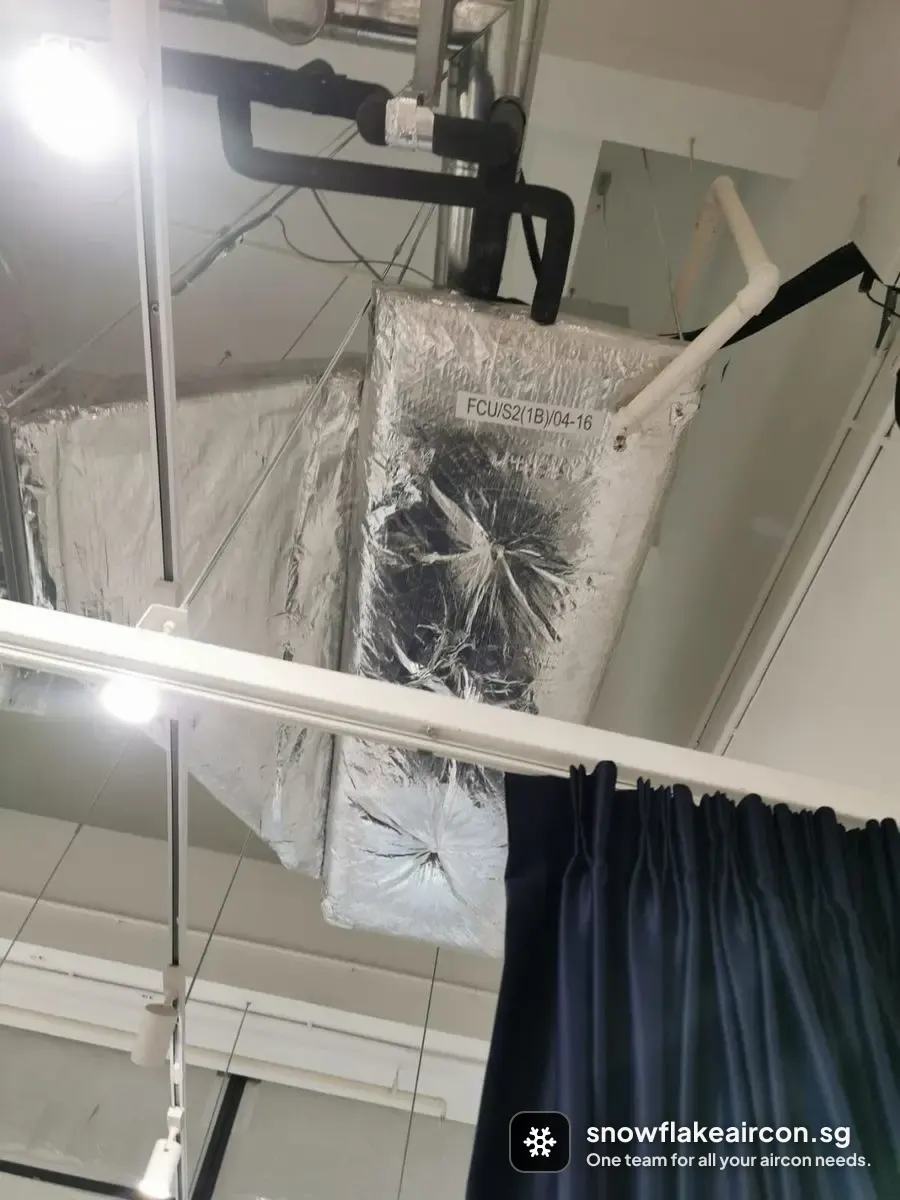
Carrier · Ducted
Shop ducted FCU losing airflow: lint-choked coil
Apparel textile lint compacted across the concealed ducted FCU coil face and blower blades
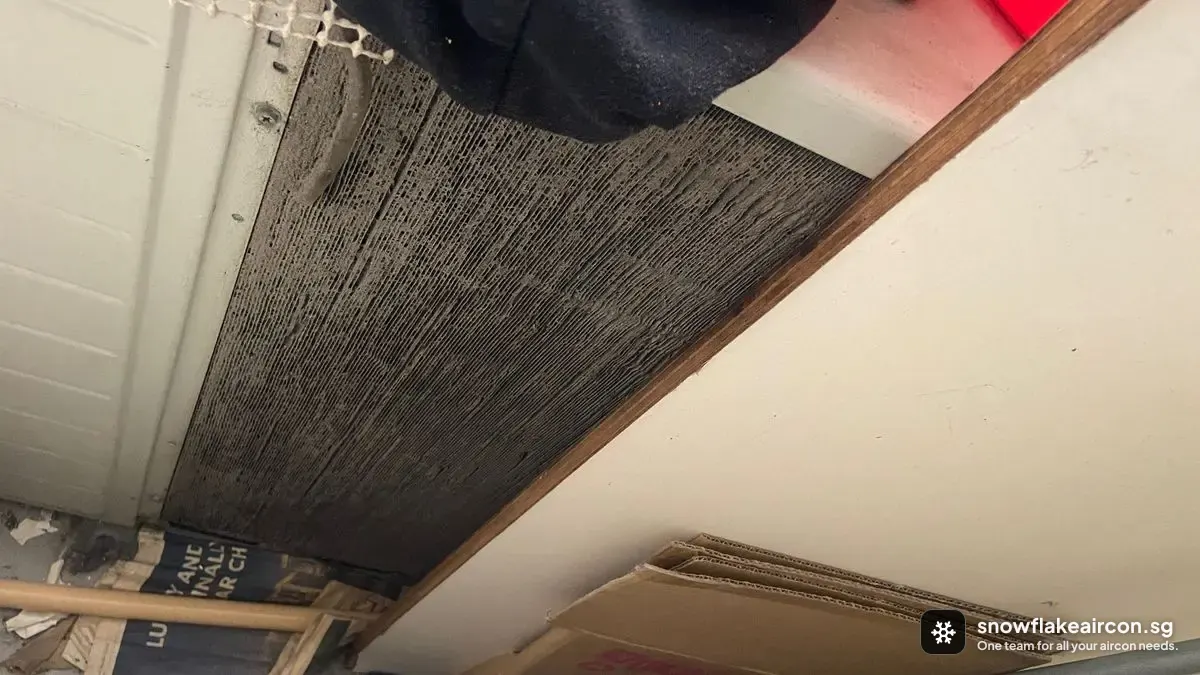
Midea · Cassette
Weak airflow over a kitchen line: grease-bound coil needs overhaul
Hardened cooking grease bound through the full fin depth and packed across the blower
Common Questions
Why does bouldering chalk damage aircon coils faster than normal gym dust?
How often should Singapore climbing gyms clean aircon filters and coils?
Can gym staff scrape hardened chalk off indoor blower wheels themselves?
Do older climbing gyms qualify for grants when upgrading chalk-damaged splits?
Sources
Sources checked 27 Nov 2026