On this page
Quick summary
Lint matting 30 percent of indoor evaporator fins starves heat transfer and keeps inverter compressors driving harder for longer hours. Running two bedrooms nightly with choked fins adds roughly 48 kWh monthly, costing about S$15 extra under current 31.16 cents/kWh residential tariffs.
Wall-mounted general servicing $25–$50/unit · chemical wash $60–$80/unit · View servicing rates
Why 30 Percent Choked Fin Airflow Hikes Compressor Work
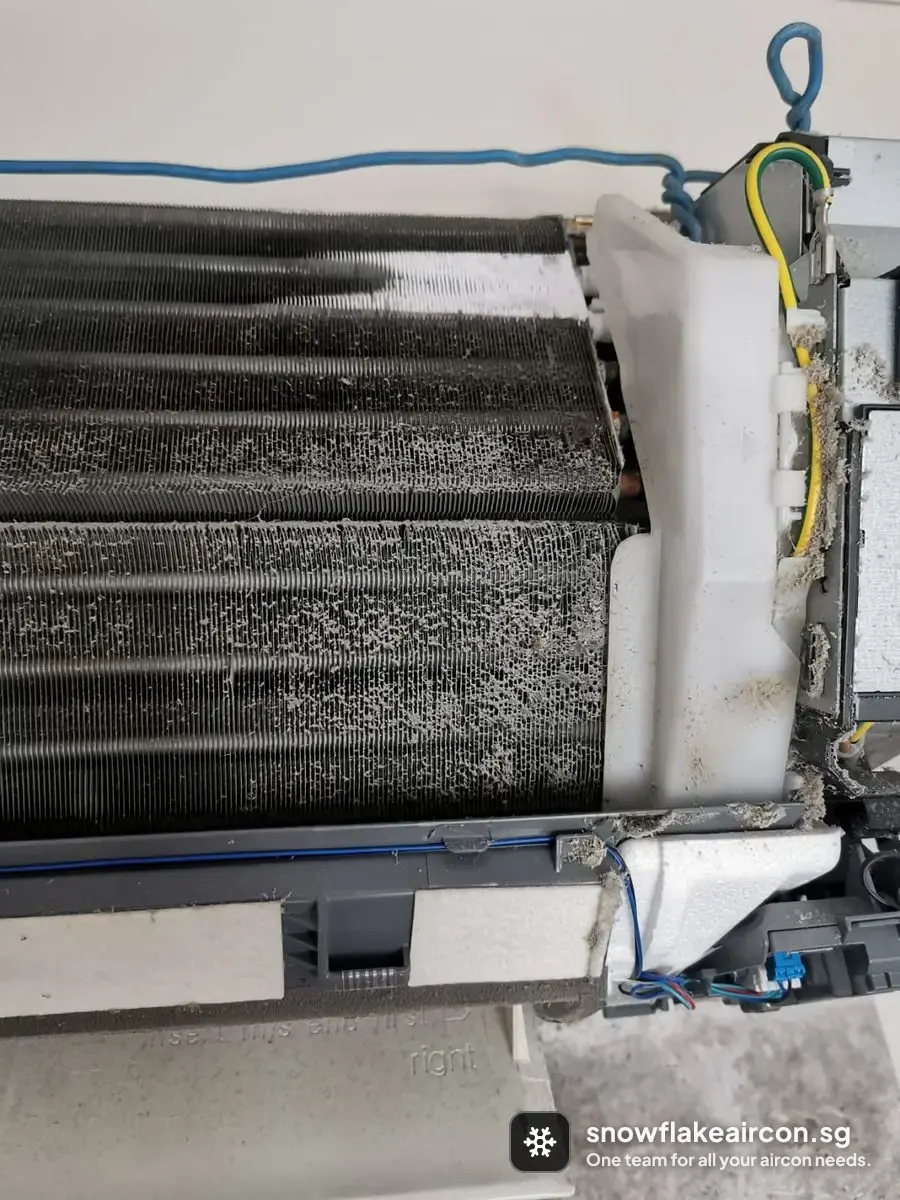
Humid room air must sweep cleanly across cold aluminium fins to boil liquid refrigerant efficiently. When dust mats 30 percent of fin openings, indoor cooling slows down. The inverter therefore keeps ramping hard well past midnight instead of cruising lightly.
Matters worsen whenever exterior condenser fins accumulate street grime or lint. Blocked outdoor heat rejection spikes compressor discharge head pressure sharply. Amperage draw rises immediately across every running hour.
Compare Clean Versus Choked Coil kWh Draw at Current Tariffs
Running two HDB or condo bedrooms for eight hours nightly shows monthly waste assuming Singapore's late-2026 regulated tariff of 31.16 cents/kWh (GST included):
Scroll to see more columns
| Tested coil condition | Per-room nightly draw | Monthly two-room usage | Estimated SP Group charge |
|---|---|---|---|
| Clean evaporator and wheel | 3.0 kWh per night | 180 kWh monthly | S$56 base tariff bill |
| Light dust (10% flow loss) | 3.3 kWh per night | 198 kWh monthly | S$62 (+S$6 monthly penalty) |
| Choked fins (30% flow loss) | 3.8 kWh per night | 228 kWh monthly | S$71 (+S$15 monthly penalty) |
| Heavy grime plus choked outdoor | 4.3 kWh per night | 258 kWh monthly | S$80 (+S$24 monthly penalty) |
Test Coil Cleanliness Using Safe Floor-Level Checks First
Homeowners can check airflow health safely from indoor floor tiles. Pull out washable mesh filters monthly and rinse off dust. Then shine a torch gently beneath the swing flap to inspect whether lint fuzz coats the barrel fan wheel.
Leave clamp-meter amperage measurements and outdoor coil jetting strictly to trained workers. EMA electrical guidance and MOM/BCA rules prohibit residents from opening live isolator covers or climbing onto external condenser ledges.
Schedule Coil Servicing Before Wasted kWh Exceeds Wash Fees
Stacking monthly kWh penalties side by side with published wash rates highlights the lowest-cost plan:
- Recoup cleaning fees inside months. Trimming S$15 to S$24 monthly off electric bills pays back a multi-room coil flush rapidly while easing compressor wear.
- Keep clean coils efficient quarterly via general servicing. One unit costs S$50, two units bill S$30 each, and three-plus units drop to S$25 per unit (14-day warranty).
- Dissolve sticky dust embedded inside choked evaporator rows through chemical servicing. Single-unit visits run S$80, pairs bill S$70 per unit, and three or more cost S$60 per unit (60-day cover).
- Remove stubborn biofilm mats via full dismantled overhauls (S$150 lone unit, S$125 each for two, S$115 apiece for three or more under 90-day coverage), plus optional S$30 checks (waived on work; S$80 VRV).
Diagnostic Cases for This Fault
Singapore jobs showing what we checked on-site before quoting parts or gas.
Toshiba · Multi-split
Multi-split, one bedroom warm: seized expansion valve
The affected room's own metering valve stuck part-closed, starving its coil
Mitsubishi Heavy Industries · Wall-mounted
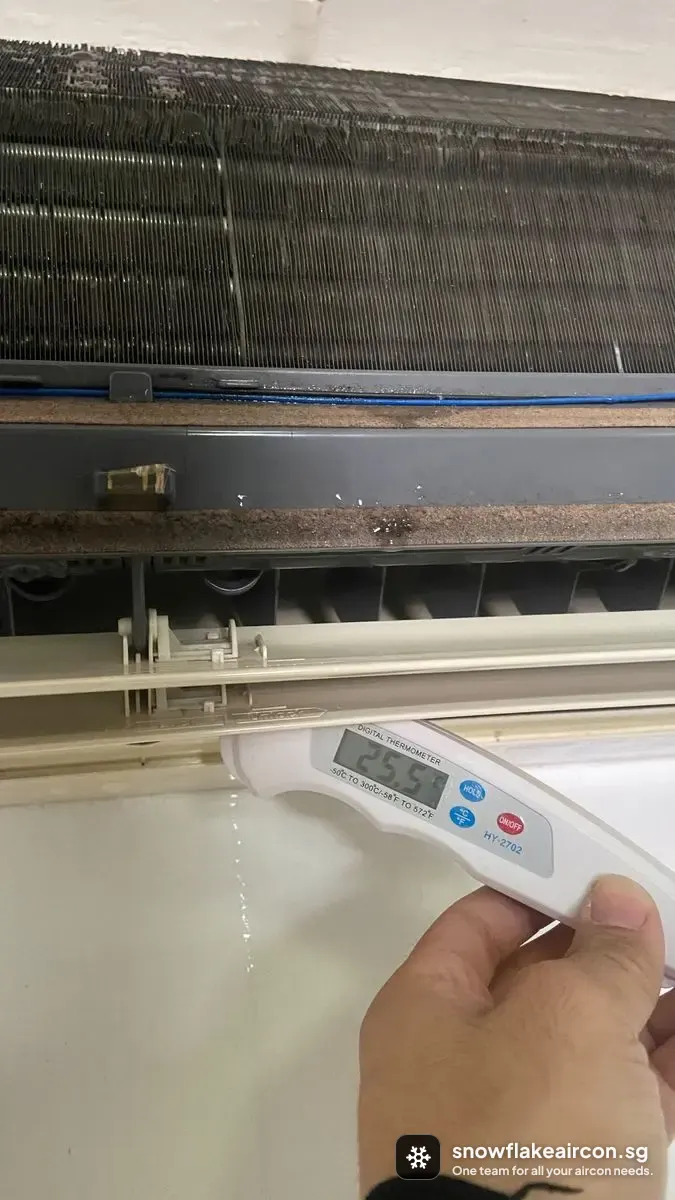
One room warm on a multi-split: coil buildup, not low gas
Coil and airflow restriction confined to the single affected indoor unit
Common Questions
Does cleaning a dirty aircon coil actually cut monthly SP Group electricity bills?
How can Singapore residents spot a choked evaporator coil without dismantling covers?
Why does an unwashed outdoor condenser raise electricity draw faster than indoor dust?
Which servicing interval keeps electricity kWh creep low in humid Singapore bedrooms?
Sources
Sources checked 27 Nov 2026