On this page
Quick summary
White frost forming across indoor copper fins behind spotless mesh filters signals low refrigerant pressure or a stalled blower fan. Follow EMA, HDB, and MOM floor stop-lines without opening 230V panels or ledges, check the pass/fail table, and book a S$30 check.
On-site fault check: $30 ($80 VRV), waived if you proceed with repair · See diagnosis & repair
Follow EMA, HDB, and MOM Stop-Line Rules Before Inspecting
Turn off your indoor 20A circuit switch first whenever wind stalls or icy droplets spray from vents. Stand strictly on flat bedroom flooring or a low sturdy step stool while lifting only the front plastic fascia.
Respect EMA, HDB, and MOM safe stop-lines on every visual check. Never prise open 230V side covers, scrape ice off thin aluminium fins with knives, or climb onto outdoor aircon ledges.
Check Indoor Filter and Coil Signs Using Pass or Fail Rules
Lift the clean plastic mesh gently from floor level and compare visible coil fins against this pass/fail self-check table:
Scroll to see more columns
| Inspection zone | Pass condition | Fail warning sign | Safe next step |
|---|---|---|---|
| Upper evaporator fins | Even cool moisture, zero snow | White frost strip across tubes | Keep off; arrange S$30 check |
| Outlet vane wind speed | Steady room air spread | Dead breeze while outdoor unit hums | Stop cooling; test fan motor |
| Washable mesh screen | Clean light-passing plastic grid | Clean mesh yet solid ice cakes fins | Rule out dust; check gas charge |
| Lower tray after thaw | Calm runoff to bathroom trap | Melting slush spills over wall | Leave isolator off; book check |
Why Spotless Filters Still Freeze Indoor Copper Coils
Spotless filter grids rule out dust blockage and point straight toward two cooling faults. Starved R32 or R410A pressure from a slow pinhole leak cools entry tubes below freezing, icing humid bedroom air onto upper fins.
Alternatively, a stalled cylindrical blower wheel, worn motor bearing, or failed fan capacitor stops air movement across wet copper. Without warm room air flowing through, condensation freezes solid in minutes.
Prevent Wall Leaks and Book Diagnostic Testing After Icing
Thaw frozen coils gently and schedule exact testing before restarting cooling:
- Run fan-only airflow for 30 minutes with towels below, or leave the switch off so frost melts safely into the tray.
- Book Snowflake's S$30 diagnostic visit, billed at S$80 on VRV suites, to check fan speed, capacitor health, and nitrogen leak tightness. Repair jobs waive that visit fee with 30-day warranty.
- Lint-packed drums behind thawed ice need chemical servicing. Rates stand at S$80 single, S$140 across two units, or S$180 across three blowers under 60-day terms. Heavy slime needs strip-down overhauls at S$150 one head, S$250 for two, or S$345 across three coils (90-day cover).
- Keep thawed blowers spinning smoothly afterward with scheduled upkeep. General cleaning runs S$50 solo, S$60 across two rooms, or S$75 across three rooms (14-day cover).
Diagnostic Cases for This Fault
Singapore jobs showing what we checked on-site before quoting parts or gas.
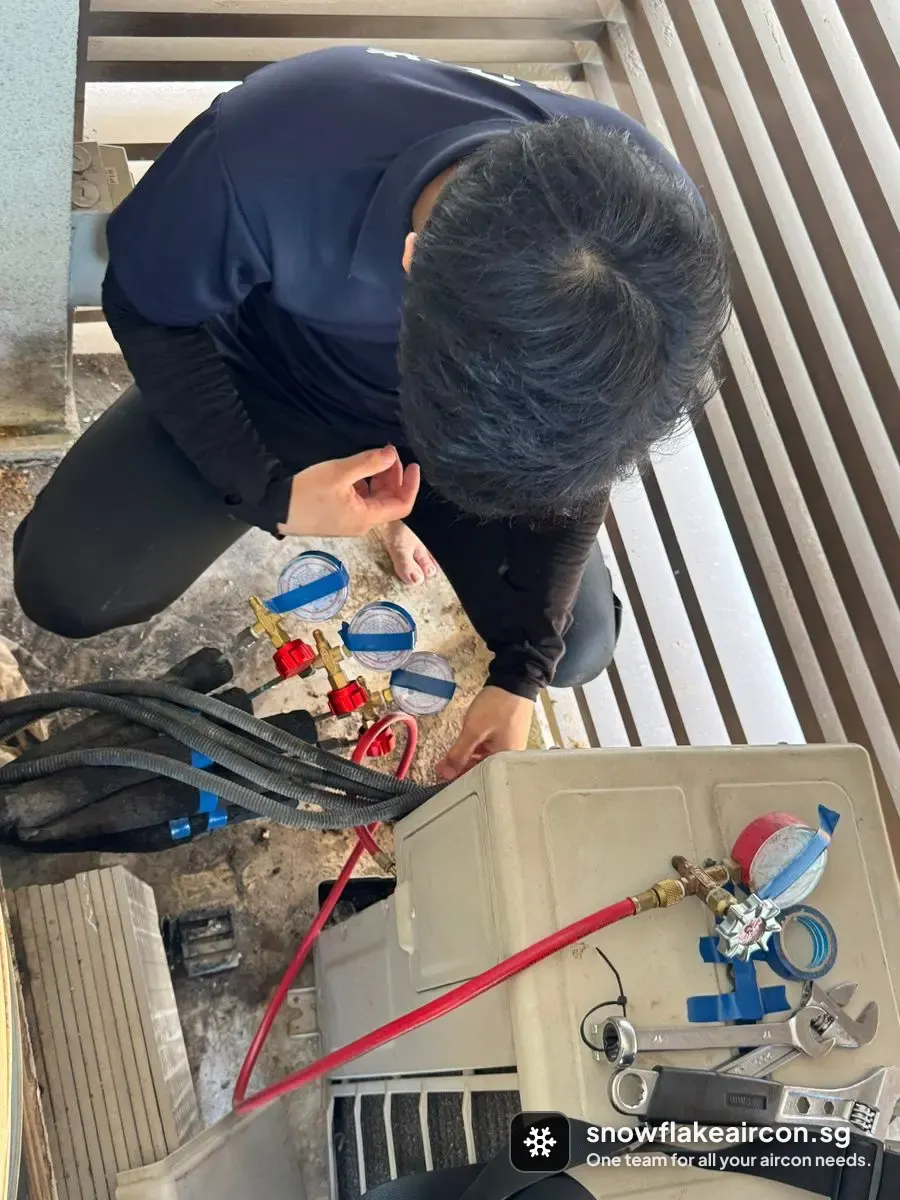
Mitsubishi Electric · Wall-mounted
Warm air with normal gas pressure: fouled coil, not low gas
Grease-choked indoor evaporator coil and dust-packed blower wheel causing poor temperature drop while refrigerant pressure stayed full
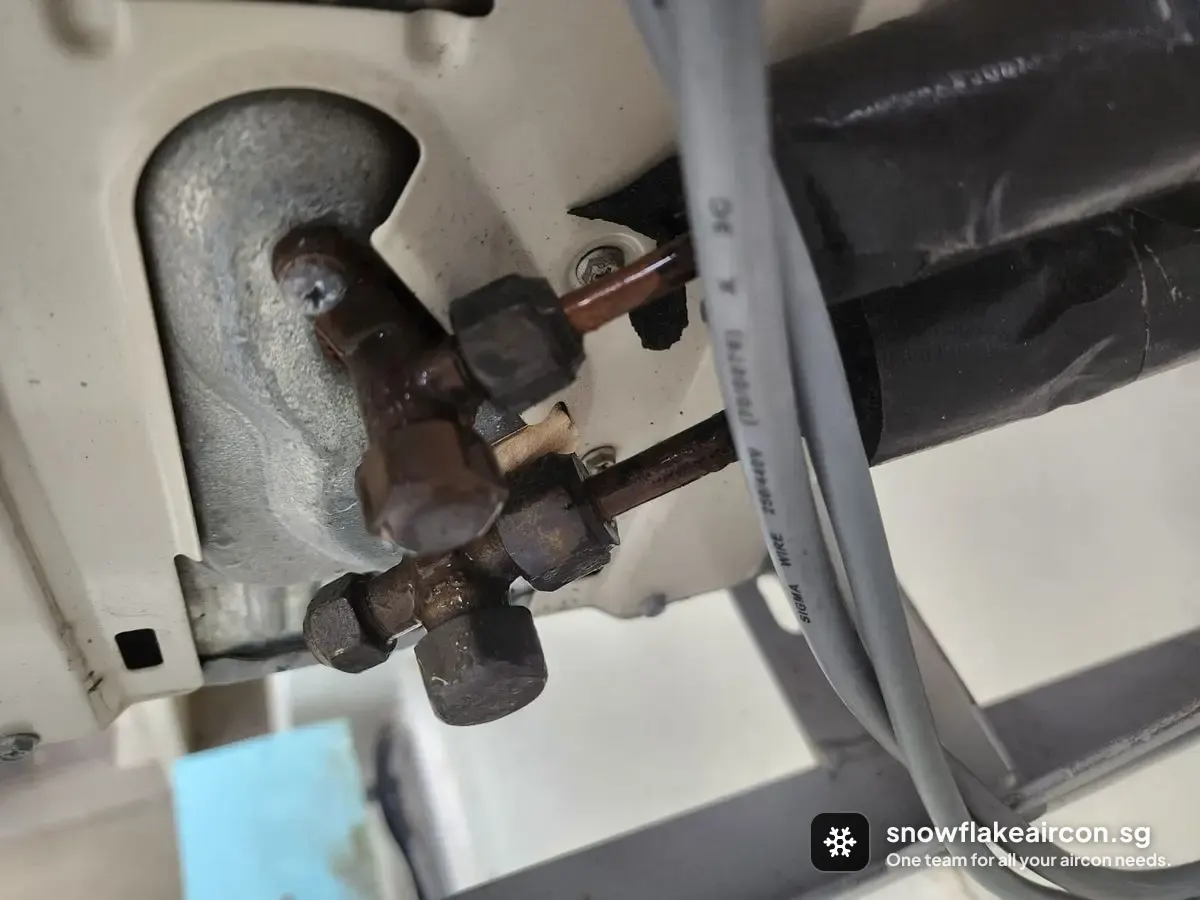
Samsung · Wall-mounted
Coastal unit losing gas again: salt ate the pipe fitting
A corroded outdoor fitting thinned past the point where it can seal
Common Questions
Why does white ice grow behind spotless indoor aircon filters?
Is running fan-only mode safe to defrost an iced indoor aircon coil?
Should residents scrape coil ice off with metal tools behind the filter grid?
How do technicians separate low gas icing from a seized blower motor?
Sources
Sources checked 27 Nov 2026