On this page
Quick summary
Slow Singapore refrigerant leaks frequently trace back to cracked brass flare unions or weeping service valve cores rather than corroded indoor coils. Isolating each line with dry nitrogen pressure testing prevents needless coil condemnation and premature system swaps.
System 2 installed from $2,600 (22 SWG copper) · $30 site survey waived on install · View packages
Separate Brass Flare Leaks from True Coil Pinholes
When an inverter loses cooling every few months, contractors sometimes condemn indoor coils too quickly. Nightly heat swings and compressor vibration commonly crack outdoor brass flare nuts first.
Schrader valve cores inside service ports also seep gas slowly after gauges detach. Swapping a worn valve core, fitting a sealed brass cap, or re-flaring copper saves healthy indoor coils.
True coil pinholes appear as oily dark corrosion spots along wet copper hairpin bends inside the tray. Isolating circuits separately proves where gas actually escapes before quoting replacements. Spending modestly on joint checks avoids scrapping functional inverter hardware, and tidy five-year sets often cool cleanly once flare nuts seal.
Compare Leak Points, Nitrogen Checks, and Repair Odds
Insist on isolated dry nitrogen testing across pipe runs and indoor headers before condemning any unit. Clear gauge drops separate small external fittings from buried coil tubing:
Scroll to see more columns
| Suspected leak zone | Inspection evidence | Nitrogen isolation check | Repair or upgrade call |
|---|---|---|---|
| Brass flare nut or union | Oily residue behind flare collar | Bubbles appear at nut under pressure | Re-flare copper and swap brass nut |
| Schrader service valve core | Oil wet inside outdoor port cap | Soap test bubbles at brass stem | Replace valve core and brass cap |
| Outdoor valve body or stub | Stained shutoff gland or brazed tee | Isolated outdoor loop drops gauge | Repair valve seal or braze cleanly |
| Evaporator hairpin U-bend | Dark oxidation and oil inside tray | Capped indoor coil loses pressure | Replace coil or upgrade old system |
Follow Safe Testing Limits on Pressurized R32 Lines
Homeowners must stay indoors on floor level and never climb onto HDB ledges under MOM and BCA rules. Repeated blind gas top-ups waste money and overheat compressor motors.
Qualified technicians isolate sections safely, apply regulated dry nitrogen, bubble-check brass joints, and weigh R32 refrigerant after vacuum drying. Never permit compressed air inside sealed inverter pipes.
Always verify gauge pressure holds steady across sufficient minutes before recharging gas. Rushed five-minute checks often miss hairline flares that seep out again within weeks.
Decide Between Targeted Leak Repairs and Coil Replacement
Weigh system age, nitrogen pressure hold tests, and eligible HDB vouchers before ordering major swaps. Ask technicians to show gauge readings and bubble proof before approving swaps:
- Dry nitrogen testing begins with a S$30 site diagnosis (waived when repair or replacement proceeds), backed by a 30-day repair guarantee.
- Stripping a suspect indoor coil for full leak visual checks costs S$150 (single), S$250 (pair), or S$115 per head across triple+ suites (90-day guarantee).
- Minor brass union re-flares or valve core swaps protect tidy sets under six years old once nitrogen holds overnight.
- Systems aged seven years plus with confirmed U-bend pinholes justify upgrading to 5-tick R32 models using S$400 HDB Climate Vouchers until late 2027.
Diagnostic Cases for This Fault
Singapore jobs showing what we checked on-site before quoting parts or gas.
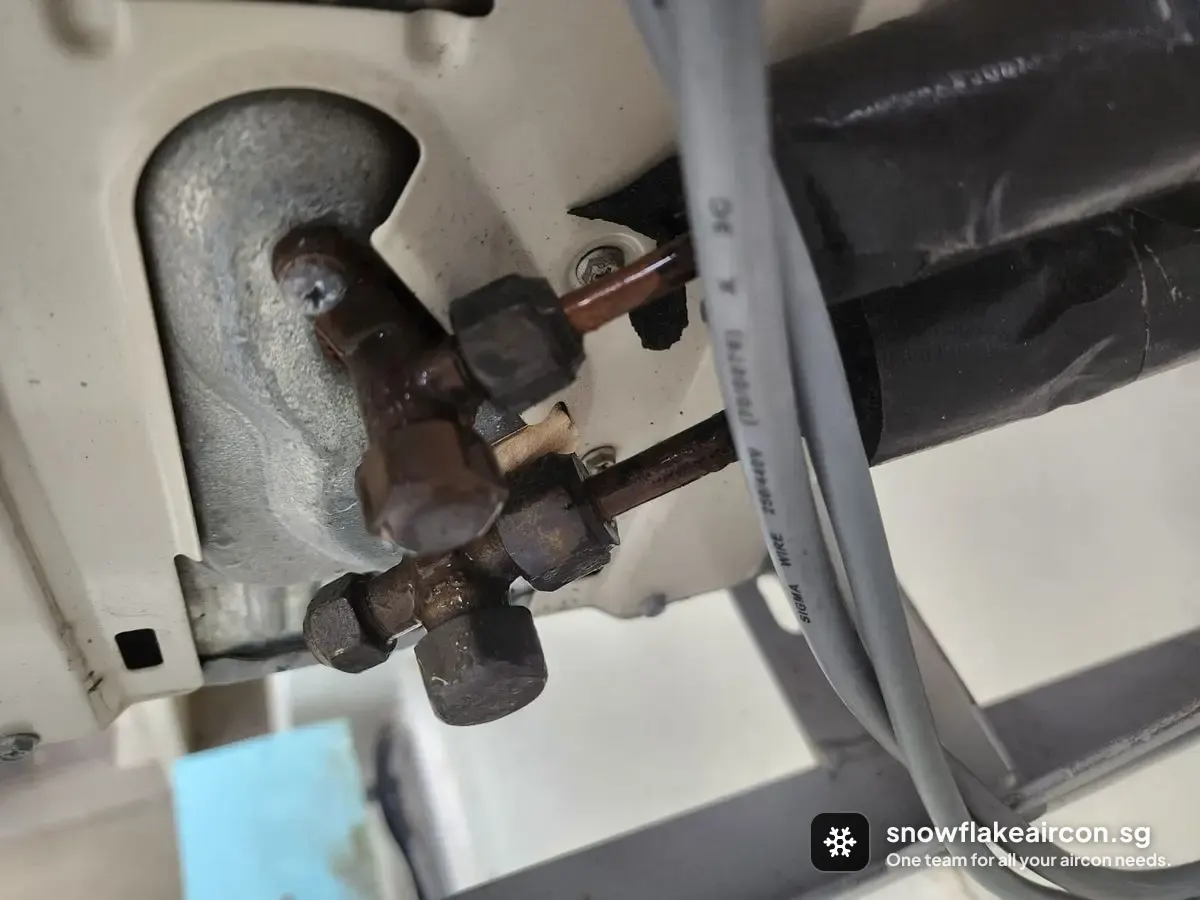
Samsung · Wall-mounted
Coastal unit losing gas again: salt ate the pipe fitting
A corroded outdoor fitting thinned past the point where it can seal
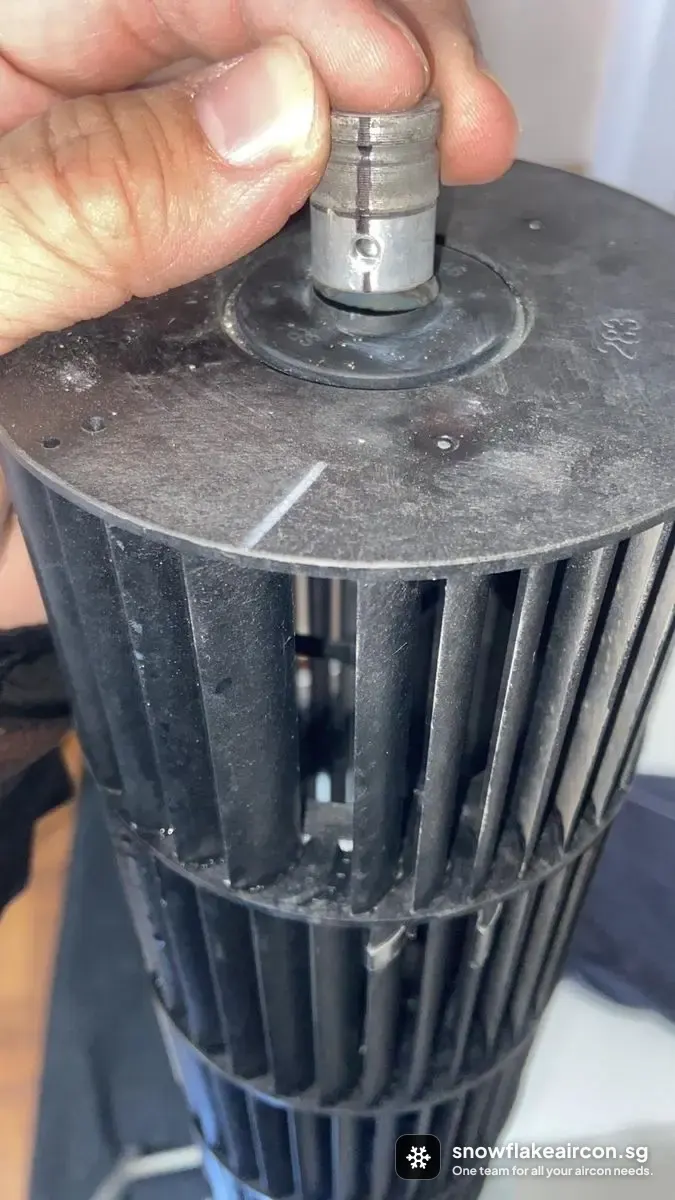
Midea · Wall-mounted
Rattling on startup: blower wheel loose on the shaft
A blower barrel drifted along its shaft after the setscrew backed off