On this page
Quick summary
Modern R32 aircons run roughly 60 percent higher working pressure than legacy R22 systems and use incompatible synthetic compressor oil. Reusing thin SWG 23 or 24 R22 copper risks split flare collars, concealed wall sweating, and mineral oil sludge choking new valves.
System 2 installed from $2,600 (22 SWG copper) · $30 site survey waived on install · View packages
Compare R32 Working Pressures Against Old R22 Pipe Walls
Legacy R22 setups across older HDB blocks ran near 65 PSI suction and 220 to 260 PSI discharge. Modern R32 single-stage and inverter condensers operate roughly 60 percent higher. Discharge pressures often reach 450 to 550 PSI on hot Singapore afternoons.
Thin SWG 23 or SWG 24 tubing installed decades ago lacks safe margin around brazed bends and brass flares. Work-hardened old copper cracks easily when flared onto new R32 service valves.
Prevent Mineral Oil Contamination and Insulation Rot
Old R22 systems circulate mineral oil, whereas R32 hardware requires synthetic POE or PVE lubricants. Trace mineral oil trapped inside unreplaced tubing mixes poorly with synthetic oil. Waxy sludge then plugs expansion valves and overheats compressor windings.
Brittle open-cell sponge insulation inside aged trunking also collapses and sweats behind plaster walls. Fresh R32 installs pair SWG 22 copper with half-inch closed-cell Armaflex sleeves to stay dry.
Compare Legacy R22 Copper Against Modern R32 Install Specs
Inspect why legacy R22 pipework fails modern R32 specifications across wall gauge, operating pressure, oil chemistry, and insulation:
Scroll to see more columns
| Piping specification | Legacy R22 installation | Modern R32 requirement | Failure risk on reuse |
|---|---|---|---|
| Copper wall gauge | Thin SWG 23 or 24 (0.56-0.61 mm) | Minimum SWG 22 (0.71 mm) | Split flares and pinhole leaks |
| Peak discharge pressure | 220 to 260 PSI typical peak | 450 to 550 PSI tropical peak | Fatigue splits along tight bends |
| Lubricant residue | Mineral oil coating inner bore | Synthetic POE or PVE oil | Acid sludge choking expansion valves |
| Thermal lagging sleeve | Compressed aged foam tube | 0.5-inch closed-cell insulation | Wall sweating and ceiling mould |
Verify Concealed Lines and Plan a Full R32 Pipe Swap
Confirm your pipe route and warranty eligibility before signing any replacement order:
- Order a S$30 piping check if old R22 copper hides behind false ceilings. Moving ahead with installation cancels that survey fee.
- Skip solvent flushing on thin R22 lines. Gas flushing cannot thicken SWG 24 tube walls or replace perished insulation sleeves.
- Qualifying HDB households claim S$400 Climate Vouchers before Dec 2027 on 5-tick R32 installs. Modern inverter compressors also lower household power bills under Singapore's 31.16 cents/kWh tariff (GST incl.).
- Keep new R32 evaporators clear with S$50 single cleans, S$30/head for pairs, or S$25/head across three-plus rooms (14-day cover). Chemical cleans bill S$80, S$70/head, or S$60/head (60-day cover); dismantled teardowns charge S$150, S$125/head, or S$115/head (90-day cover).
Diagnostic Cases for This Fault
Singapore jobs showing what we checked on-site before quoting parts or gas.
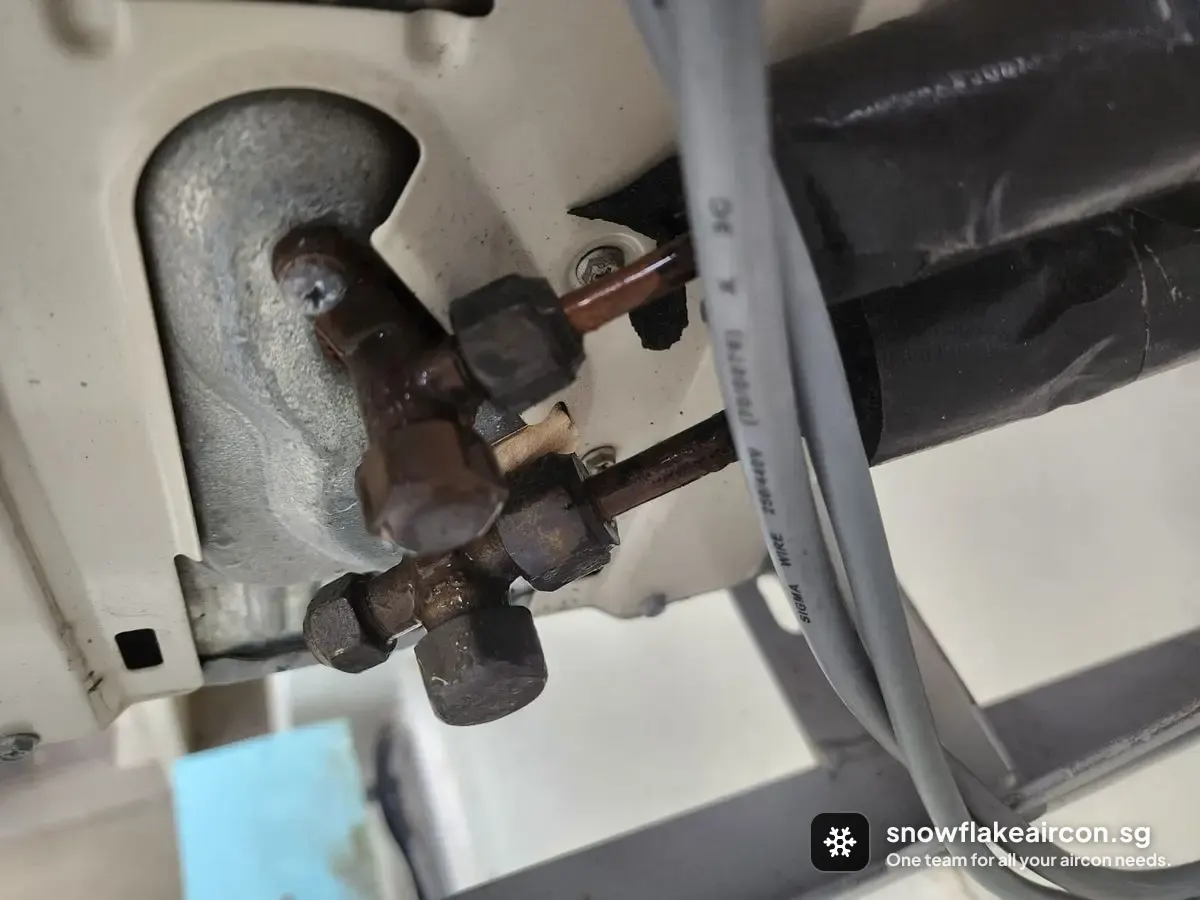
Samsung · Wall-mounted
Coastal unit losing gas again: salt ate the pipe fitting
A corroded outdoor fitting thinned past the point where it can seal
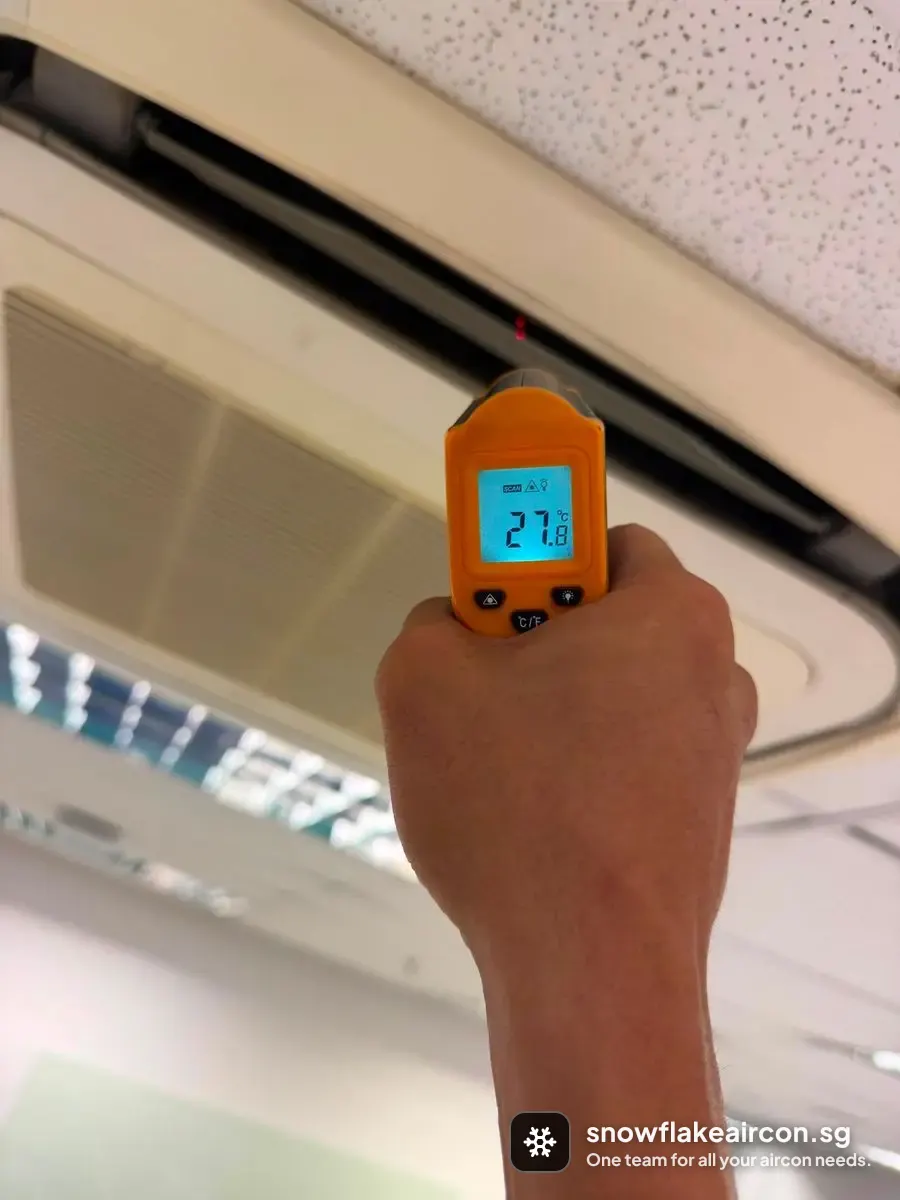
Daikin · Cassette
Cassette not cooling: stuck gas-flow valve, not compressor
A flow-control valve stuck part-closed, restricting refrigerant to the indoor coil