On this page
Quick summary
Gree E3 signals low-pressure protection (a Refrigerant / Pressure Fault) on wall-mounted split units when suction pressure or switch continuity drops abnormally. Rinse indoor filters from floor level once, stop resetting the breaker, and book pressure testing before any gas top-up.
On-site fault check: $30 ($80 VRV), waived if you proceed with repair · See diagnosis & repair
What Gree E3 Low-Pressure Protection Means on Split Units
Gree E3 signals low-pressure protection on wall-mounted split units, grouped under Refrigerant / Pressure Faults. The controller shuts cooling down once suction pressure drops below safe operating thresholds.
An open low-pressure switch circuit or severely starved evaporator can trigger the same protection code. Always confirm the exact model label before ordering parts or refrigerant.
Resetting the wall isolator repeatedly bypasses this vital compressor safeguard. Running low on gas starves compressor oil circulation and risks expensive motor seizure.
Early diagnosis protects both indoor flare joints and outdoor compressor windings. Confirming exact pressure levels prevents blind gas top-ups that mask slow leaks.
Compare Gree E3 Fault Triggers and Pressure-Side Checks
Match your indoor and outdoor stickers first, then compare the four field causes behind E3 trips:
Scroll to see more columns
| Suspected E3 cause | How it trips low-pressure protection | Safe resident step | Technician diagnostic check |
|---|---|---|---|
| Flare or coil gas leak | Refrigerant loss drops suction pressure | Switch isolator off; stop resets | Dry nitrogen pressure test and joint inspection |
| Low-pressure switch or wire | Open sensor circuit mimics low gas | Leave 230V covers untouched | Measure switch continuity and harness voltage |
| Restricted EEV or strainer | Blocked liquid flow starves evaporator | Clean washable indoor filters only | Check superheat, coil ohm, and pipe frosting |
| Matted indoor coil or filter | Severe airflow drop pulls suction low | Rinse mesh screens at floor level | Inspect evaporator cleanliness and fan speed |
Check Indoor Mesh Filters Safely and Respect Electrical Limits
Turn the main wall isolator off before touching any grille. Stand steadily on floor level to lift the front panel and rinse matted mesh filters.
Dry the screens completely and try one short test run. Shut the system down immediately if Gree E3 reappears on the display.
Stay off exterior HDB aircon ledges and keep live 230V electrical panels closed. MOM, BCA, and EMA rules assign condenser valve and sensor checks strictly to trained technicians.
Book a Gree E3 Diagnosis and Check Repair Costs
Pressure gauge readings and wiring checks isolate leaks from switch defects before you pay for gas refills:
- Book a S$30 diagnostic visit to measure static pressures, switch continuity, and expansion valve flow. Repair approvals credit that fee back with 30-day warranty cover.
- Approve dry nitrogen leak tracing and weighed refrigerant charging only after technicians locate the exact breach.
- Strip thick coil slime with chemical washes at S$80 for one unit or S$70 each for two. Larger three-unit setups cost S$60 per coil (60-day cover).
- Keep indoor suction steady year-round with routine cleans at S$50 solo or S$30 each for pairs. Three-plus setups cost S$25 per room, while single teardowns cost S$150.
Diagnostic Cases for This Fault
Singapore jobs showing what we checked on-site before quoting parts or gas.
Daikin · Wall-mounted
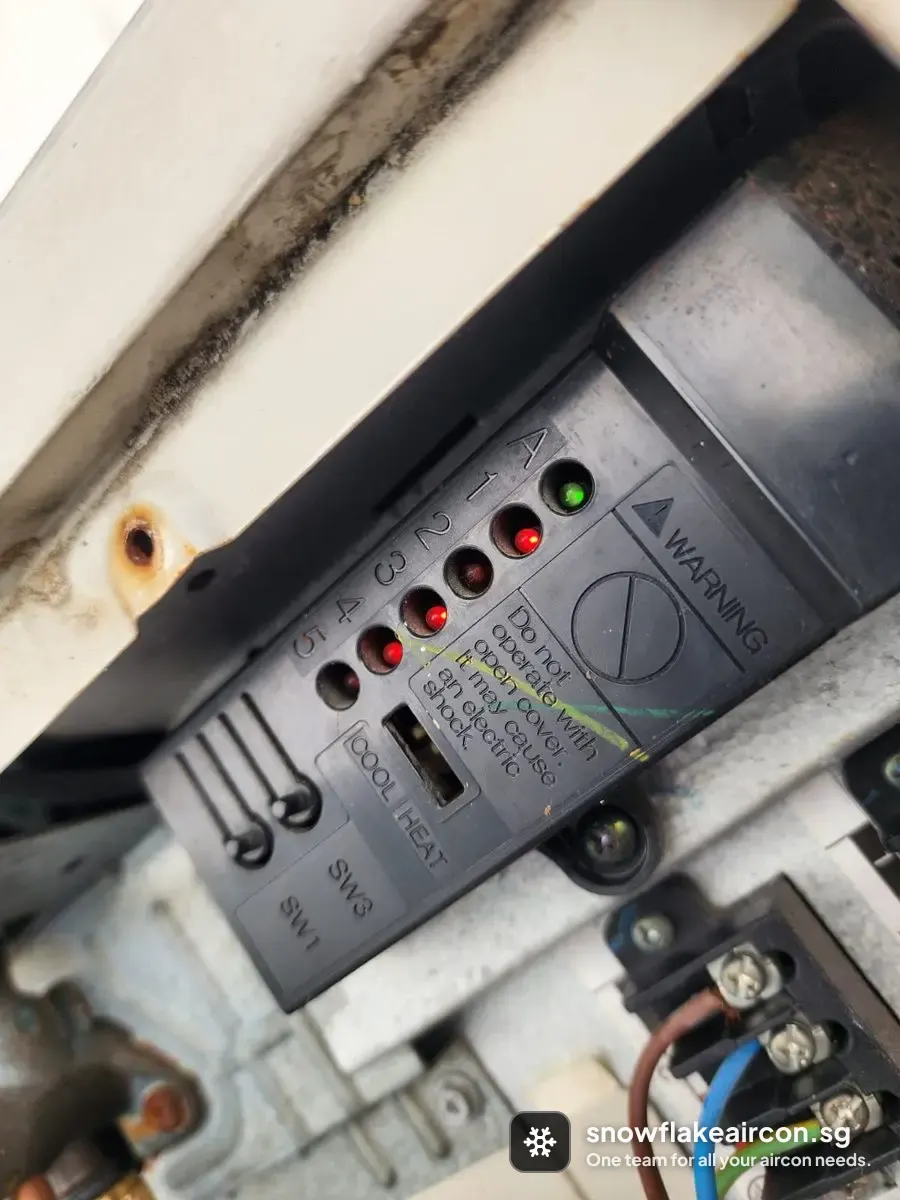
Daikin J6 outdoor red LED: bad thermistor, not condenser
Open-circuit Daikin outdoor heat-exchanger thermistor halting multi-split cooling via outdoor safety protection while the inverter compressor stays healthy
Gree · Wall-mounted
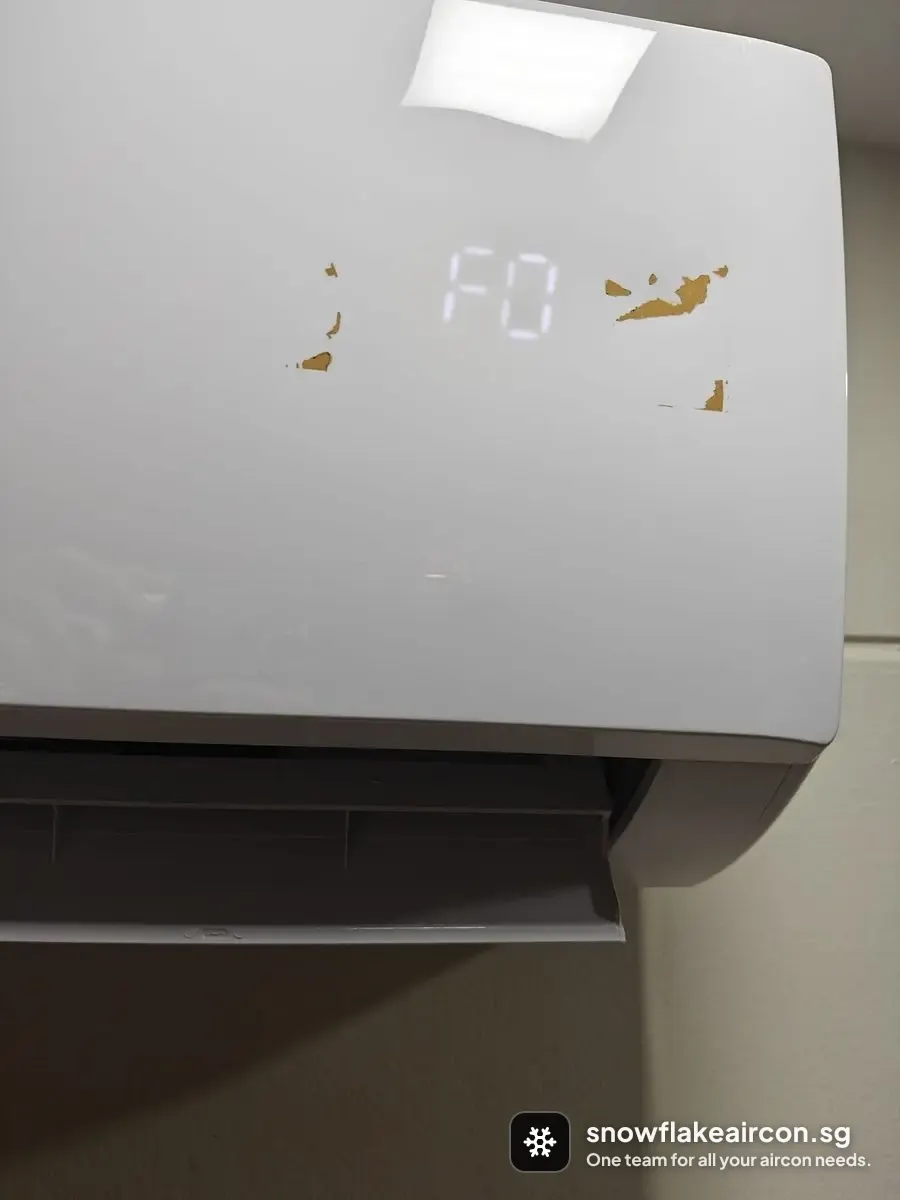
Gree F0 on a rusted condenser: refrigerant shortage
R32 refrigerant shortage triggering Gree F0 protection from corroded evaporator return bends
Common Questions
Can homeowners reset a Gree aircon showing error code E3?
Does Gree E3 always mean the aircon needs a refrigerant gas top-up?
Why do HDB residents never inspect Gree outdoor valves for E3 themselves?
How do technicians confirm an E3 leak versus a sensor fault?
Sources
Sources checked 27 Nov 2026