On this page
Quick summary
Corner terrace houses in Singapore absorb intense afternoon solar heat through an exposed exterior gable wall that shaded mid-terrace homes lack. Adding a 20 percent BTU cooling margin on sunlit bedrooms and attics stops inverters from running flat-out at lower efficiency during 33-degree afternoons.
System 2 installed from $2,600 (22 SWG copper) · $30 site survey waived on install · View packages
Why Exposed Corner Gable Walls Defeat Shaded Room Rules
Intermediate terraces share sheltered brick walls with neighbours on both flanks. Corner terraces expose an entire west gable wall plus unshaded roof eaves directly to afternoon Singapore sun.
Masonry walls radiate stored warmth well past sunset. Undersized 9,000 BTU bedrooms lock compressors at 100 percent speed, cutting COP under SP Group's regulated late-2026 charge of 31.16 cents/kWh.
Compare Shaded Terrace Sizing Against a 20 Percent Sun-Wall Buffer
Step up sunlit gable rooms systematically before choosing indoor fan-coil models:
Scroll to see more columns
| Corner terrace room | Shaded mid-terrace baseline | West-wall +20% target | Condenser and shading note |
|---|---|---|---|
| Corner bedroom (11-13 sq m) | 9,000 BTU wall split | 12,000 BTU (~3.5 kW) | Verify diversity stays under 120% |
| Master suite with gable glass | 12,000 BTU wall split | 18,000 BTU (~5.2 kW) | Add solar window film and blackout blinds |
| Top-floor attic study | 12,000 BTU ceiling unit | 18,000 BTU or dual heads | Insulate roof soffit against radiant heat |
| Open ground living-dining | 18,000-24,000 BTU single | 24,000-28,000 BTU twin | Protect outdoor condenser per BCA rules |
Pair BTU Buffers with Solar Shading and Condenser Headroom
Upsizing indoor blowers achieves little if the outdoor condenser lacks total kW output at midday. Confirm NEA-registered 5-tick cooling kW and part-load COP figures before signing installation schedules.
Combine extra BTU headroom with UV glazing film and ventilated condenser shade screens. Observe BCA structural mounting rules so landed outdoor frames stay corrosion-free and accessible.
Compare Multi-Split Sizing and Book a Site Survey
Verify landed load calculations and long-term upkeep pricing across multi-zone homes:
- Schedule Snowflake's S$30 layout check (S$80 on multi-storey VRV/VRF estates) before coring gable walls. Proceeded installations or repairs waive that charge (30-day warranty).
- Three-plus landed fan coils maintain steady output via general servicing at S$25 per zone. Two zones cost S$30 each, and one zone costs S$50 (14-day cover).
- West-side rooms facing street dust need chemical flushing: S$60 per zone (3+ zones), S$70 per zone (2 zones), or S$80 (1 zone) under 60-day warranty.
- Blocked attic drains or aged retrofits clear with chemical overhauls. Pricing stands at S$115/unit (3+ units), S$125/unit (2 units), or S$150 (1 unit) with 90-day protection.
Diagnostic Cases for This Fault
Singapore jobs showing what we checked on-site before quoting parts or gas.
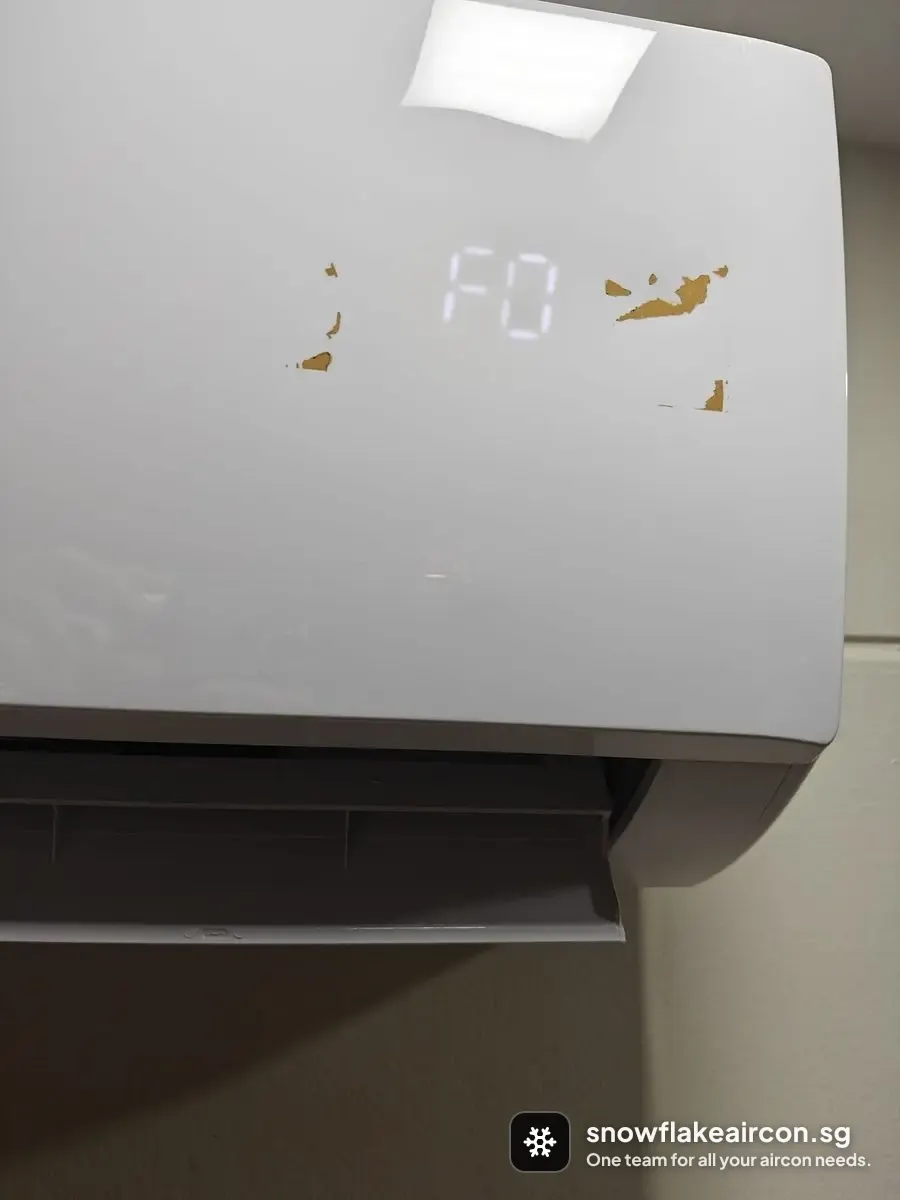
Gree · Wall-mounted
Gree F0 on a rusted condenser: refrigerant shortage
R32 refrigerant shortage triggering Gree F0 protection from corroded evaporator return bends
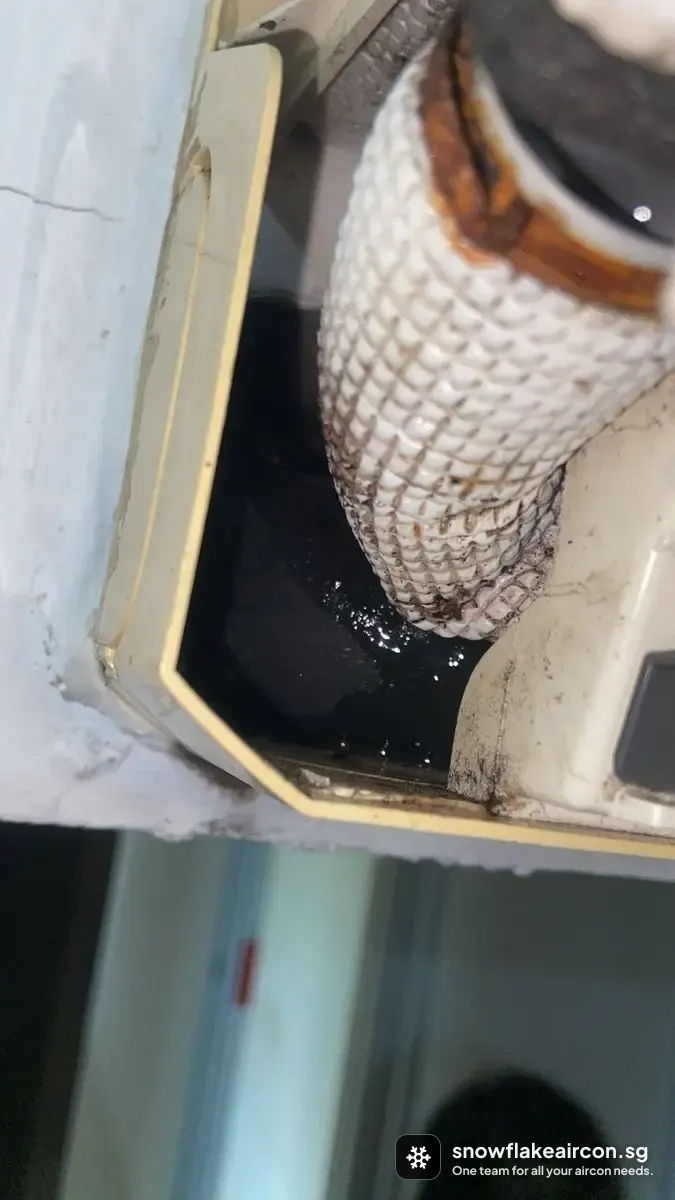
Panasonic · Wall-mounted
Dripping after renovation: fine plaster dust choked the drain
Fine renovation dust bound with moisture into a choke in the drain path
Common Questions
Why does a Singapore corner terrace need more BTU than an intermediate terrace?
Does oversizing a sunlit bedroom unit by 20 percent waste electricity in Singapore?
What happens if indoor BTU buffers exceed outdoor condenser capacity?
Should landed homeowners place outdoor condensers directly on west sun walls?
Sources
Sources checked 27 Nov 2026