On this page
Quick summary
Singapore lease minor-repair clauses cap tenant fixes at S$150 per item for small upkeep, not fixed parts wear. When outdoor run capacitors or inverter PCBs fail from age and heat after regular washes, landlords pay for the swap.
Wall-mounted general servicing $25–$50/unit · chemical wash $60–$80/unit · View servicing rates
How the S$150 Minor-Repair Clause Separates Upkeep from Wear
Most Singapore private and HDB leases cap tenant minor repairs at S$150 per item. Tenants pair that clause with mandatory three-monthly general servicing throughout their stay.
Minor-repair caps pay for small items like remote cells, filter clips, or light drain clears. They do not shift core fan or high-voltage part swaps onto tenants.
Outdoor units face years of tropical sun, rain, and high start loads. When capacitors weaken or inverter PCBs fail past four or five years, the landlord pays.
Splitting repair bills fairly starts by checking age wear against routine care. Paid service slips clear up most lease rows before deposit handover.
Compare Tenant Servicing Duties Against Landlord Electrical Repairs
Inspect how typical Singapore leases divide everyday resident care from aged outdoor electrical breakdowns:
Scroll to see more columns
| Component or fault | Primary cause in SG flats | Usual lease allocation | Verification evidence |
|---|---|---|---|
| Compressor or fan capacitor | Heat ageing past year 4 to 7 | Landlord wear and tear | Capacitance drop vs nameplate rating |
| Outdoor inverter PCB | Ageing relays, humidity, or surge | Landlord capital repair | Board visual check and fault printout |
| Blocked indoor drain tray | Missed quarterly coil washes | Tenant if servicing lapsed | Dated three-monthly service invoices |
| Remote or intake filter clip | Daily resident handling | Tenant under S$150 cap | Move-in inventory condition record |
Check Quarterly Receipts and Respect Electrical Safety Boundaries
Landlords reviewing a repair claim should check dated quarterly servicing invoices first. Clean maintenance logs confirm normal electrical fatigue rather than neglected dust buildup.
Clear proof of missed upkeep can still shift part of a bill. Skipping washes for over a year lets matted coils overheat the outdoor unit.
Residents must never open outdoor condenser covers or touch 230V terminal blocks. EMA electrical safety rules reserve live capacitance and board testing solely for trained technicians.
Book a S$30 Diagnostic Check to Decide Repair Liability and Costs
Written technician notes recording unit age, fault readings, and coil hygiene settle mid-lease and deposit disputes calmly:
- Arrange an independent S$30 diagnostic assessment before ordering spare parts. That check fee drops off whenever repair work proceeds (30-day warranty).
- Compare measured capacitance or PCB error codes directly against the tenancy agreement's S$150 minor-repair clause.
- Keep lease records compliant through three-monthly general maintenance. Single blowers run S$50, twin-split flats cost S$30 per head, and multi-split homes of three or more pay S$25 per indoor unit (14-day warranty).
- Book deep chemical washes (S$80 single, S$70 twin, S$60 triple) or S$150 single teardowns strictly for dirty turnover coils. Aged capacitors stay outside those fees.
Diagnostic Cases for This Fault
Singapore jobs showing what we checked on-site before quoting parts or gas.
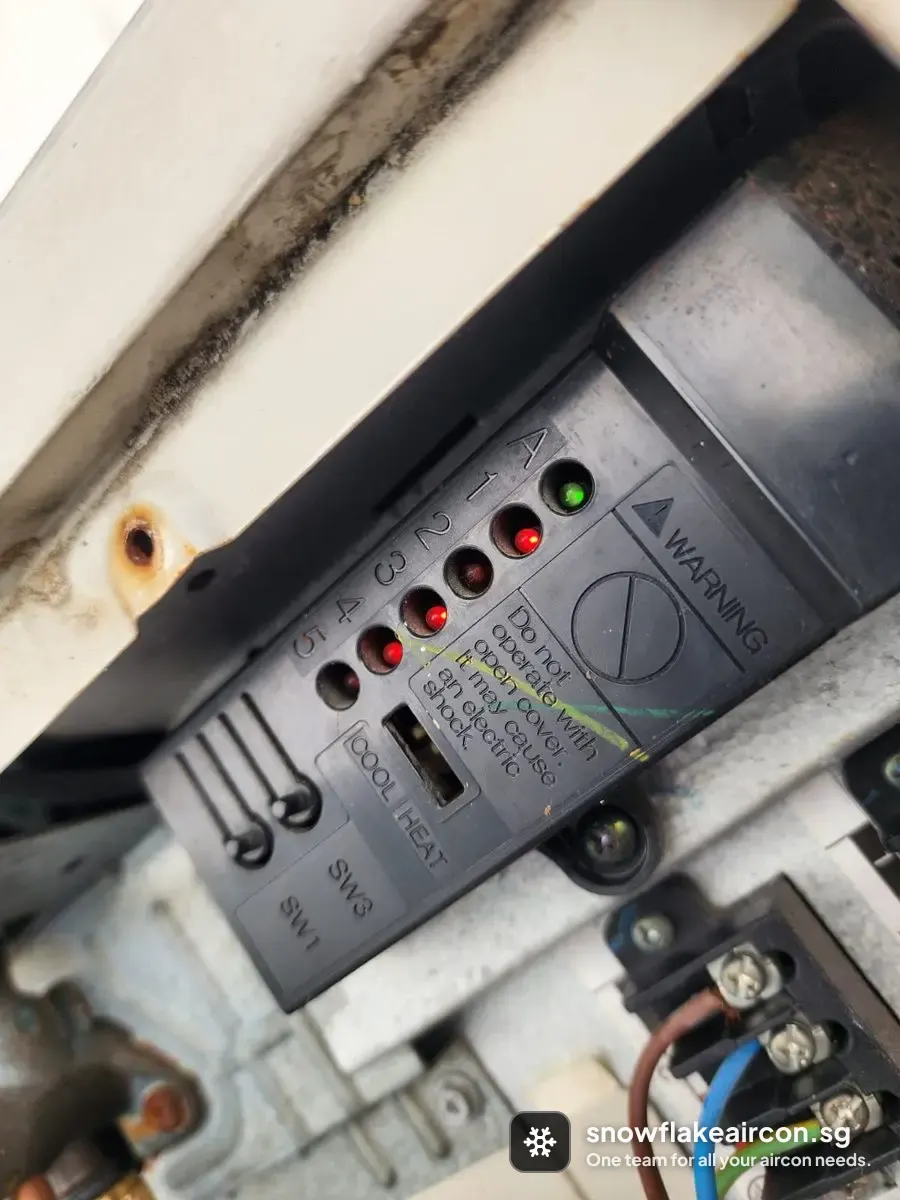
Daikin · Wall-mounted
Daikin J6 outdoor red LED: bad thermistor, not condenser
Open-circuit Daikin outdoor heat-exchanger thermistor halting multi-split cooling via outdoor safety protection while the inverter compressor stays healthy
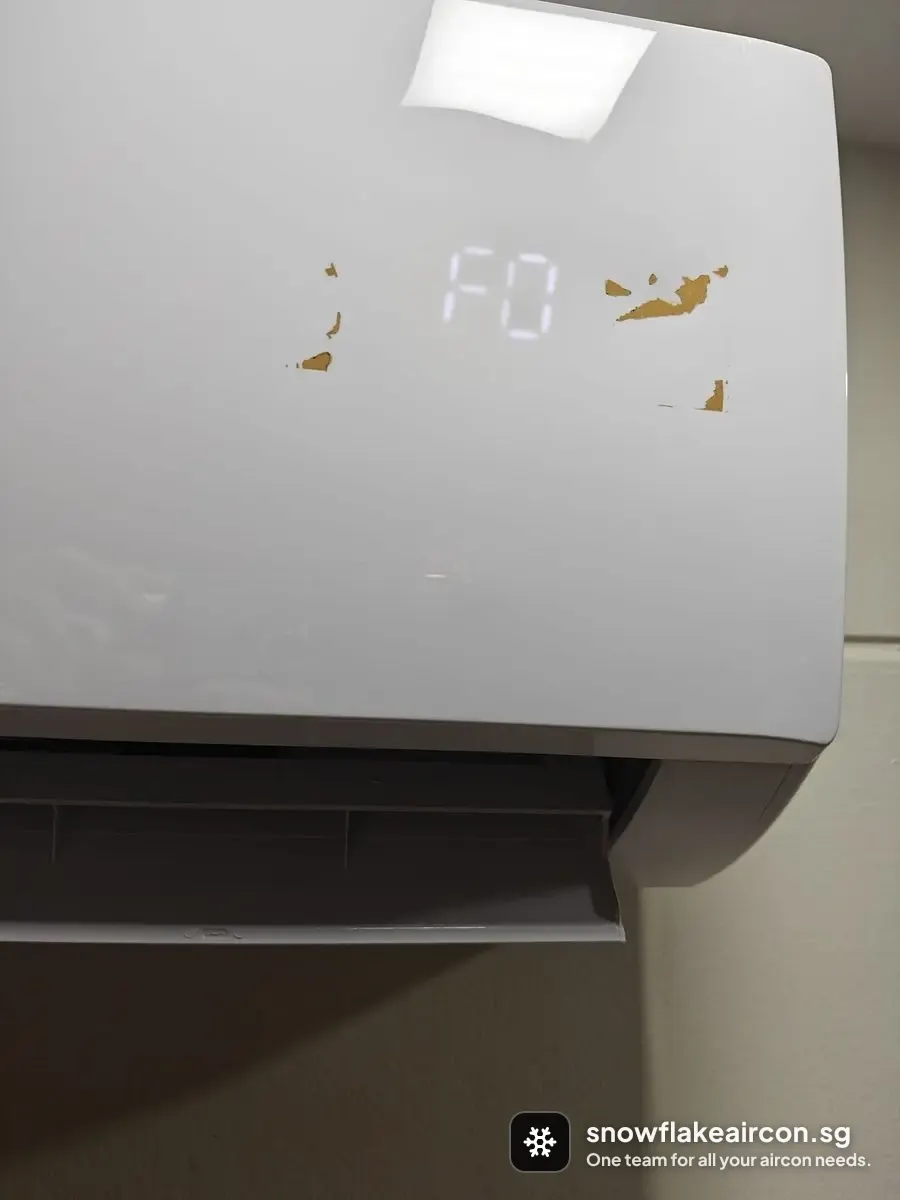
Gree · Wall-mounted
Gree F0 on a rusted condenser: refrigerant shortage
R32 refrigerant shortage triggering Gree F0 protection from corroded evaporator return bends
Common Questions
Why does a S$150 minor-repair clause not force tenants to pay for PCB failure?
Can a landlord deduct a failed aircon capacitor from a tenant's deposit?
When can electrical aircon damage become a tenant's responsibility?
What proof should landlords and tenants ask a technician to record?
Sources
Sources checked 27 Nov 2026