On this page
Quick summary
Cool rainy mornings from November through January drive indoor humidity up while chilling walls near dew point, breeding musty condo wardrobe mould. Raising cool setpoints to 25 degrees, using timed dry cycles, and flushing blower biofilm keep closets dry.
Wall-mounted general servicing $25–$50/unit · chemical wash $60–$80/unit · View servicing rates
Understand Why Chilly Rain Breeds Dampness Inside Condo Closets
Between November and January, monsoon showers chill outdoor air toward 24 degrees while outdoor humidity stays saturated. Setting bedroom aircons to 20 degrees chills timber wardrobes and exterior concrete walls below indoor dew point.
When humid corridor or balcony air enters beneath bedroom doors, invisible moisture condenses along cool cupboard panels. Within days, stagnant dark corners start growing pale fungal spots on jackets, bags, and leather shoes.
Keeping indoor temperatures steady near 25 degrees prevents cold wall sweating while pulling excess dampness into the drain tray.
Match Monsoon Dampness Symptoms to Aircon Settings and Care
Pair smarter mode timing with targeted maintenance across rainy months. Small adjustments keep timber cabinetry dry and odour-free:
Scroll to see more columns
| Rainy-season symptom | Underlying moisture trigger | Immediate setting change | Preventive servicing step |
|---|---|---|---|
| Clammy bedsheets at 24 degrees | High humidity without enough cooling run | Use dry mode for 45 minutes | Rinse front dust mesh fortnightly |
| Sweating wardrobe back panels | Over-cooling walls past room dew point | Lift cool setpoint to 25 degrees | Inspect pipe lagging for gaps |
| Sour blast when fan spins up | Damp blower wheel growing mould | Avoid fan-only after cool shutoff | Book chemical wash or overhaul |
| Drips along bedroom window pipe | Saturated Armaflex meeting wet breeze | Seal window gap during AC runs | Run S$30 lagging check promptly |
Avoid Fan Habits That Blow Coil Moisture onto Clothes
Leaving continuous fan-only mode running right after cooling stops blows trapped fin water back into the room. That damp mist settles rapidly inside closed wardrobes.
Run short 45-minute dry mode cycles on clammy mornings instead of freezing bedrooms. Raising cool setpoints from 20 to 25 degrees also cuts electricity waste against Singapore's 31.16-cent regulated kWh rate.
Open louvred closet doors briefly during dry midday breaks and run bathroom exhaust fans after hot showers. Good cross-ventilation stops stagnant pockets behind timber shelving. Wipe damp window glass seals dry each morning before sunlight hits.
Prepare Condo Aircons and Wardrobes Before Heavy Monsoon Weeks
Clear existing fungal buildup early so rainy mornings circulate clean, dry indoor air. Choose the right service tier below:
- Schedule monsoon dust washes under transparent rates. S$50 covers one blower, S$60 covers two blowers together, and three-plus bookings drop to S$25 per blower (14-day cover).
- Flush active barrel mould via chemical cleans. Single blowers run S$80, dual blowers run S$70 apiece, and three-plus units cost S$60 each (60-day cover).
- Clear heavy rear-pan fungus using dismantled chemical overhauls. Standalone coils run S$150, pairs cost S$125 per coil, and three-plus rooms pay S$115 per indoor unit (90-day cover).
- Request a S$30 diagnostic survey (waived on repair) whenever cold sweating beads appear along ceiling bulkheads or concealed pipe runs. Catching wet lagging early prevents ceiling paint peeling.
Diagnostic Cases for This Fault
Singapore jobs showing what we checked on-site before quoting parts or gas.
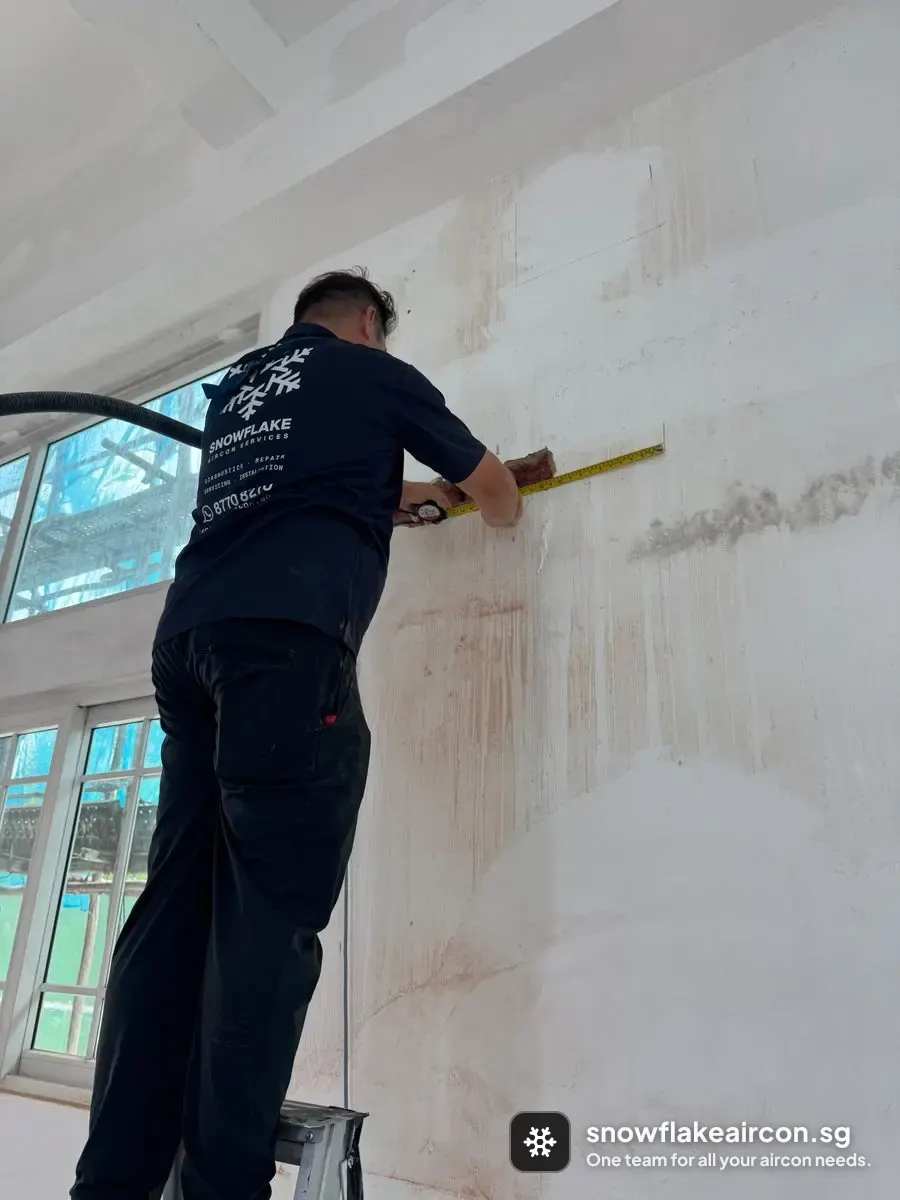
Daikin · Wall-mounted
Water stain down the wall: blocked rear drain trough
Biofilm jelly choking the hidden rear auxiliary drain trough behind the evaporator coil, spilling condensate down the plastered wall while the main trunking pipe stayed intact
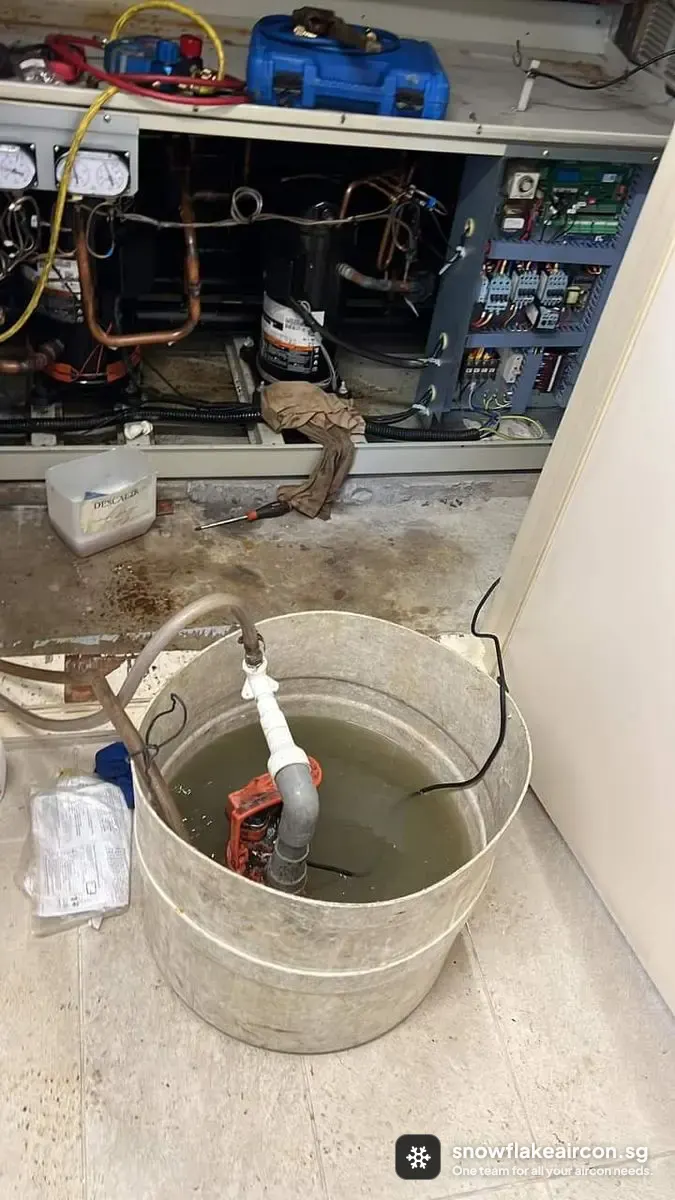
Mitsubishi Electric · Multi-split
Outdoor ledge dripping downstairs: split drain pipe stub
Split outdoor PVC condensate drain stub spilling backed-up water across the ledge
Common Questions
Should condo owners use dry mode or cool mode during Singapore northeast monsoon mornings?
Why does wardrobe mould worsen when bedroom aircons run very cold at 20 degrees?
Can running fan-only mode dry out an indoor aircon without spreading room dampness?
How often should Singapore condo units receive chemical servicing before rainy seasons?
Sources
Sources checked 27 Nov 2026