On this page
Quick summary
Condo built-in wardrobes often hide copper aircon pipes behind permanent carpentry panels. Running a standing 400 psi dry-nitrogen holding test and an oil-clearing flush verifies line integrity before locking a new R32 condenser onto old concealed runs.
System 2 installed from $2,600 (22 SWG copper) · $30 site survey waived on install · View packages
Why Pipes Behind Built-In Wardrobes Carry Hidden Risks
Developer-fitted condo wardrobes often trap refrigerant copper, foam lagging, and PVC drain pipes inside narrow rear cavities. Removing full-height timber joinery adds steep carpentry bills, making pipe reuse appealing during replacement.
Skipping formal line tests hides corrosion pinholes, acidic oil sludge, or squashed insulation behind laminated boards. Slow moisture leaks rot wardrobe timber long before wall dampness appears.
Testing every concealed run upfront protects your new compressor warranty. Fresh inverter systems fail quickly when connected onto contaminated or leaking hidden loops.
Documenting line integrity before dismantling existing units avoids sudden mid-install delays and unplanned hacking bills.
Compare Nitrogen Holding Test and Flush Pass Criteria
Run these four verification checks on every concealed branch before ordering new multi-split hardware:
Scroll to see more columns
| Pre-reuse verification step | Target field check | Safe reuse pass mark | When hacking is unavoidable |
|---|---|---|---|
| Standing pressure check | Charge isolated copper to 400 psi dry nitrogen | Steady gauge holding across 24 hours | Pressure bleeds inside concealed cavity |
| Solvent oil purge | Flush with RX11 flushing solvent and nitrogen | Clear clean discharge free of dark residue | Black sludge or burnt acid smell remains |
| Wall thickness match | Inspect exposed stubs at unit and ledge | 22 SWG copper matching new specs | Thin kinked tubing or wrong liquid size |
| Concealed drain flow | Pour steady test water at indoor spout | Rapid clear flow with dry wardrobe timber | Backed-up water or wet carpentry stains |
Verify Refrigerant Changeovers and Exposed Pipe Insulation
Switching an older R410A multi-split to a 5-tick R32 system demands clean pipe walls. Stale compressor oil left behind clogs narrow electronic expansion valves within months.
Check visible flare stubs above wardrobes and out at the condenser ledge for flattened insulation. Crushed lagging sweats moisture behind wood panels once humid Singapore air reaches bare copper. Adding sealed access panels keeps future valves reachable without pulling down carpentry.
File MCST renovation notices early if access hatches or cornice trunking become necessary. Keep wall isolators off and leave external ledge gauge tests to trained staff under EMA, MOM, and BCA rules.
Plan a Site Survey Before Ordering New Equipment
Follow a clean inspection sequence so replacement budgets stay accurate without surprise carpentry tearing:
- Schedule a S$30 pre-replacement inspection first, waived completely whenever installation or repair work goes forward under 30-day workmanship terms.
- Request separate 24-hour standing nitrogen holding logs for every bedroom branch rather than trusting one quick manifold glance.
- Confirm smooth flow through hidden PVC drain risers so backflow never warps laminated timber shelving.
- Compare surface-trunked copper rerouting along ceiling cornices whenever boxed lines drop pressure or discharge burnt sludge.
Diagnostic Cases for This Fault
Singapore jobs showing what we checked on-site before quoting parts or gas.
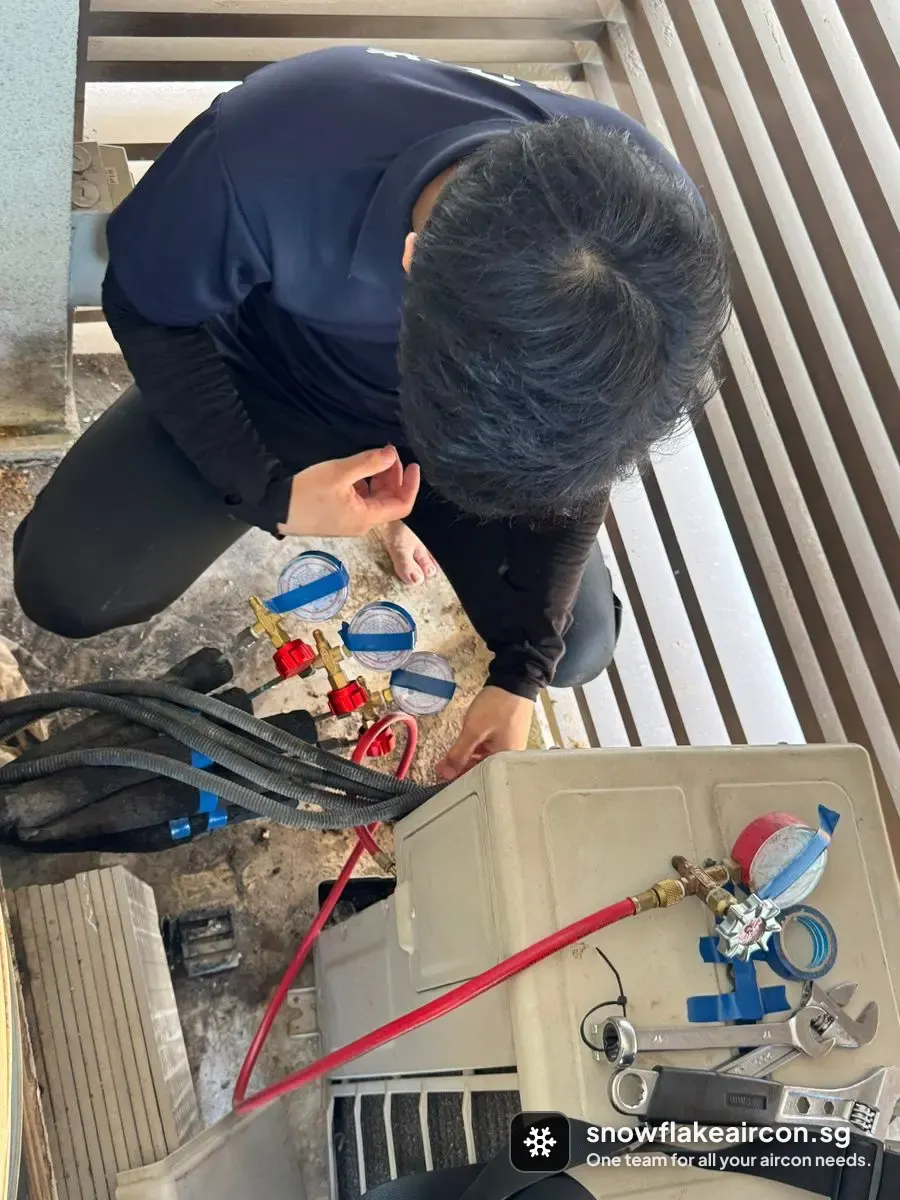
Mitsubishi Electric · Wall-mounted
Warm air with normal gas pressure: fouled coil, not low gas
Grease-choked indoor evaporator coil and dust-packed blower wheel causing poor temperature drop while refrigerant pressure stayed full
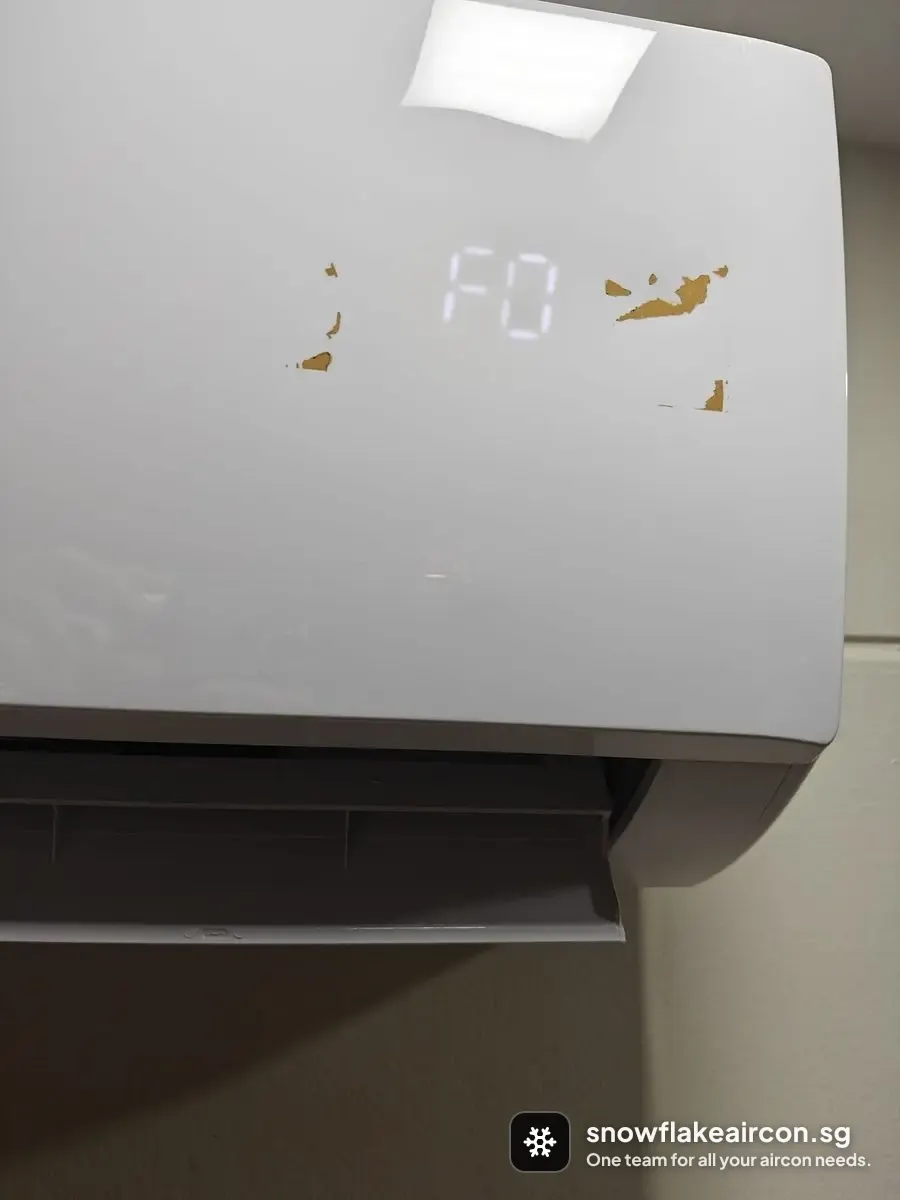
Gree · Wall-mounted
Gree F0 on a rusted condenser: refrigerant shortage
R32 refrigerant shortage triggering Gree F0 protection from corroded evaporator return bends
Common Questions
Can condo owners reuse old R410A pipes behind wardrobes for a new R32 aircon?
How long should a nitrogen holding test stay pressurized on concealed condo piping?
What happens if an RX11 flush is skipped before installing a new condenser?
When does tearing open a built-in wardrobe beat reusing boxed aircon piping?
Sources
Sources checked 27 Nov 2026