On this page
Quick summary
Afternoon squalls during Singapore's southwest monsoon drive sideways rain into aged isolator gaskets and balcony drain traps. Visually inspect switch covers and accessible indoor drains from dry floors, leaving wet ledge or breaker repairs to licensed specialists.
Wall-mounted general servicing $25–$50/unit · chemical wash $60–$80/unit · View servicing rates
Spot Storm-Driven Isolator and Drain Risks After Afternoon Squalls
Sudden Sumatra squalls drive horizontal rain upward behind condenser louvres and exterior switches across Singapore estates. Years of strong sun dry out rubber isolator gaskets and crack brittle PVC glands.
Storm runoff also carries leaves and dust straight into balcony floor traps shared by condensate lines. Backed-up drains choke air relief inside PVC stubs, forcing gurgling or indoor wall leaks.
Check Isolator Seals, Balcony Traps, and Trip Symptoms Safely
Observe these four post-storm checkpoints from dry indoor floors or sheltered balconies once thunder stops:
Scroll to see more columns
| Storm checkpoint | Visible storm clue | Safe floor-level step | Qualified repair scope |
|---|---|---|---|
| Outdoor isolator box | Water droplets or cracked latch | Flip indoor aircon MCB off | LEW swaps weatherproof enclosure |
| Household DB panel | RCBO snaps off during squall | Leave breaker off after one trip | Run S$30 moisture and load test |
| Balcony floor trap | Standing puddles or leaf silt | Sweep debris off top grating | Flush shared drain stub thoroughly |
| Indoor condensate pipe | Gurgling sound or damp trunking | Switch cooling off; wipe tray dry | Clear trap algae and restore slope |
Clear Accessible Indoor Traps Without Stepping onto Wet Ledges
Pour clean warm water down accessible service-yard floor traps monthly so U-bends stay clear and odour-sealed. Keep both feet safely indoors behind grilles when brushing reachable balcony grates.
MOM, BCA, and EMA rules prohibit residents from stepping onto slick aircon ledges or opening outdoor 230V covers. Wet concrete and damp terminal arcs make unassisted outdoor work hazardous.
Decide When to Keep Breakers off and Book a Storm Inspection
Avoid electrical shorts and damp wall damage during monsoon months by acting quickly on clear warning cues:
- Leave the aircon MCB down when rain trips power, then arrange Snowflake's S$30 inspection (deducted upon repair under 30-day cover).
- Remove damp indoor coil dust before mould spreads with general servicing: S$50 solo, S$30 per pair head, or S$25 per head across three-plus units.
- Sanitize storm-backed condensate channels via chemical washes at S$80 solo, S$70 per paired head, or S$60 per three-plus unit (60-day warranty).
- Clear deep slime inside hidden pipes through dismantled overhauls costing S$150 (one FCU), S$125 each (two FCUs), or S$115 apiece (three-plus FCUs, 90-day warranty).
Diagnostic Cases for This Fault
Singapore jobs showing what we checked on-site before quoting parts or gas.
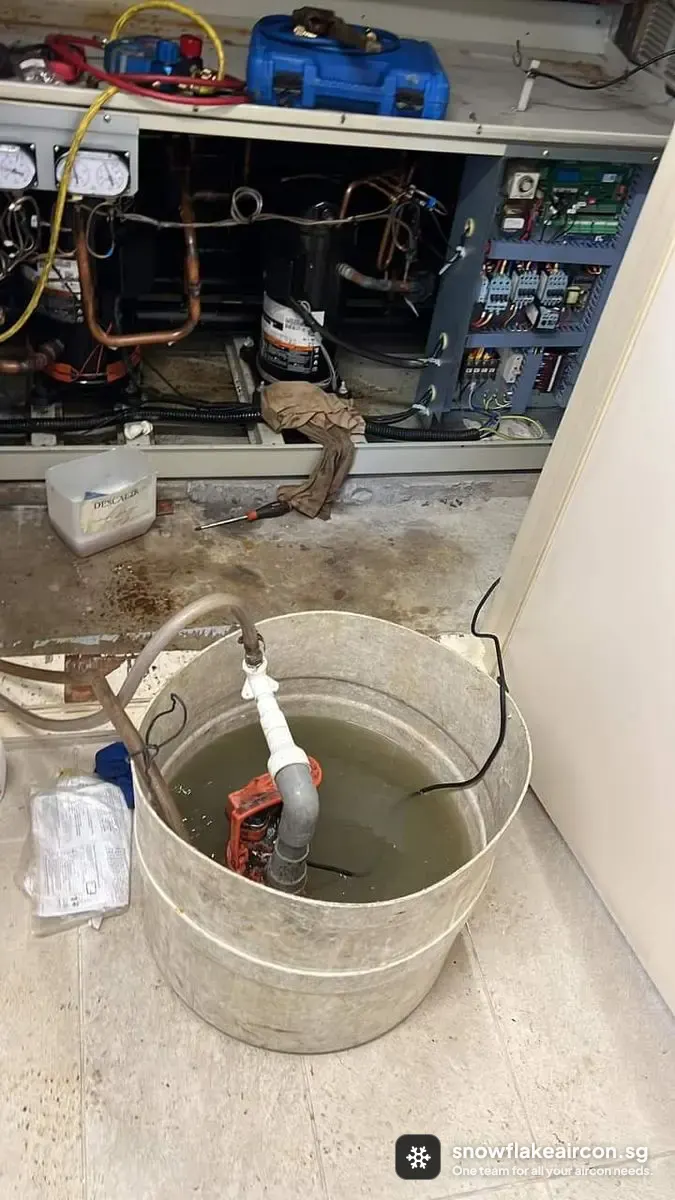
Mitsubishi Electric · Multi-split
Outdoor ledge dripping downstairs: split drain pipe stub
Split outdoor PVC condensate drain stub spilling backed-up water across the ledge
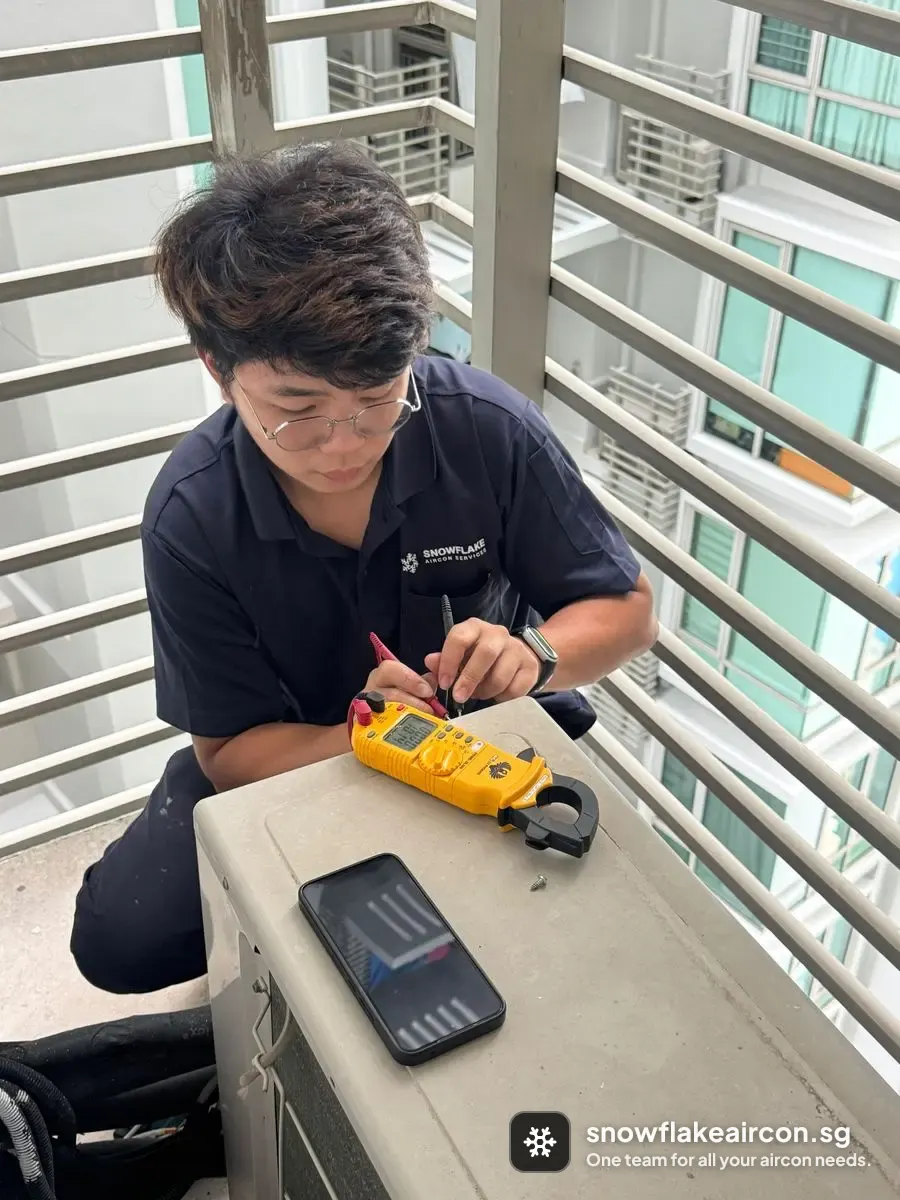
Daikin · Wall-mounted
Tripping a 20A breaker: weak capacitor, not compressor
Degraded outdoor run capacitor combined with a dust-choked condenser coil climbing amp draw past the 20A breaker limit after 15 minutes while the compressor remains sound
Common Questions
Why does my aircon breaker trip only during afternoon Sumatra squalls?
Can rainwater in a balcony floor trap make my indoor aircon drip?
Can HDB residents wipe or tape a loose outdoor isolator switch after rain?
How often should accessible indoor floor traps be flushed during monsoon season?
Sources
Sources checked 27 Nov 2026