On this page
Quick summary
Dark-timber walk-in wardrobes in Singapore condos grow mould when icy supply air chills enclosed laminate panels below ambient dew point while en-suite steam creeps underneath doors. Correct blower throw clearances, bottom bathroom door seals, and steady 25 degree dry operation eliminate hidden surface condensation.
System 2 installed from $2,600 (22 SWG copper) · $30 site survey waived on install · View packages
Understand Cold-Spot Condensation Inside Enclosed Closets
Outdoor humidity in Singapore routinely exceeds 80 percent, putting indoor dew point near 24 to 25 degrees. Aiming a blower directly at dark veneer cabinets chills wood surfaces below that moisture threshold. Short rapid blasts create icy hidden edges behind mirrors and hanging rails.
Warm bathroom steam then meets chilled laminate backing panels once cooling pauses. Trapped dampness inside dark closed carcasses feeds fuzzy white and black mould within weeks. Leather shoes, handbags, and wool jackets absorb moisture fast inside unventilated corners.
Check Placement Clearances and Airflow Rules for Closets
Adjust fan-coil positioning, door thresholds, and temperature staging to keep enclosed timber dry without over-chilling surfaces:
Scroll to see more columns
| Wardrobe variable | Typical mould trigger | Safer Singapore placement rule | Owner verification check |
|---|---|---|---|
| Blower discharge angle | Jet hits cabinet back or glass | Keep 1.2 m open aisle throw | Feel wood; avoid cold damp spots |
| En-suite bathroom gap | Hot steam creeps under door | Fit drop-down threshold seal | Run exhaust 20 mins post-shower |
| Evening temperature mode | Short 18 degree chill bursts | Steady 25 to 26 degree dry mode | Avoid abrupt cold-soak swings |
| Cabinet door venting | Zero airflow behind closed doors | Leave louvered vents or ajar gap | Pair standalone dehumidifier if shut |
Seal Bathroom Steam and Tune Steady Dehumidifying Airflow
Mount master-suite blowers over open walkway aisles rather than inside tight wardrobe alcoves. Running steady 25 to 26 degree dry cycles removes ambient vapour without overcooling dark timber. Avoid sudden 18 degree bursts before stepping out for work. Space hanging garments slightly apart so gentle dry air circulates cleanly between coats and cabinet walls.
Keep ceiling exhaust fans active for twenty minutes after showers and fit rubber drop-down door seals. Leave louvered closet doors slightly open whenever rooms sit empty. Inspect concealed shelf corners monthly with a bright torch. Wipe accessible grilles only from floor level, and hire EMA-licensed workers for any thermostat or wiring work. Keep moisture absorbers inside closed shoe cabinets.
Choose Anti-Mould Servicing Before Spores Spread to Clothes
Dirty evaporator fins and slimy drain pans launch trapped mould spores straight across hanging garments whenever blowers start up:
- Musty smells inside dressing areas warrant a S$30 fault inspection. Snowflake waives that fee on repair or servicing, backed by a 30-day repair guarantee.
- Batching three or more home fan coils unlocks multi-unit discounts. General maintenance runs S$25, chemical washing S$60, and full teardown overhauls S$115 per unit.
- Two-unit master bedroom and wardrobe sessions carry mid-tier fees. General cleans run S$30 per blower, chemical cleans S$70, and overhauls S$125.
- Cleaning one standalone dressing blower bills S$50 general (14-day cover), S$80 chemical (60-day cover), or S$150 dismantled overhaul (90-day cover) to clear tray slime.
Diagnostic Cases for This Fault
Singapore jobs showing what we checked on-site before quoting parts or gas.
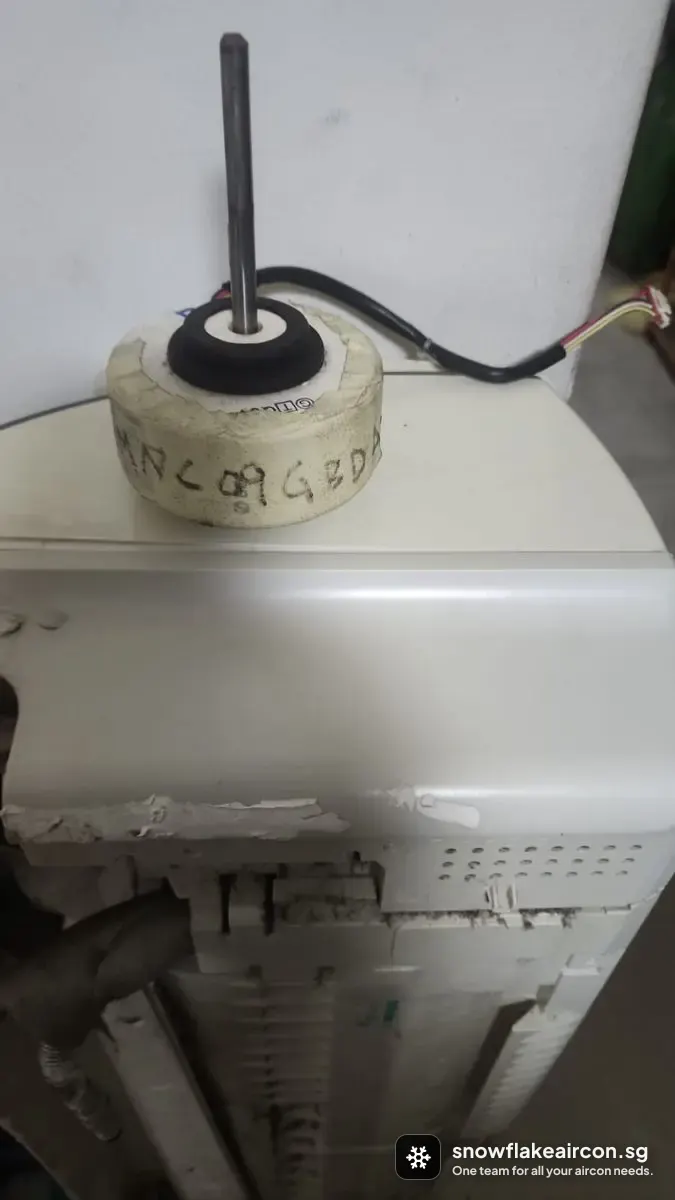
Sharp · Wall-mounted
Sharp 6-0 grinding then shutdown: worn fan motor bearings
Worn indoor fan motor bearings on a unit past its usual service life
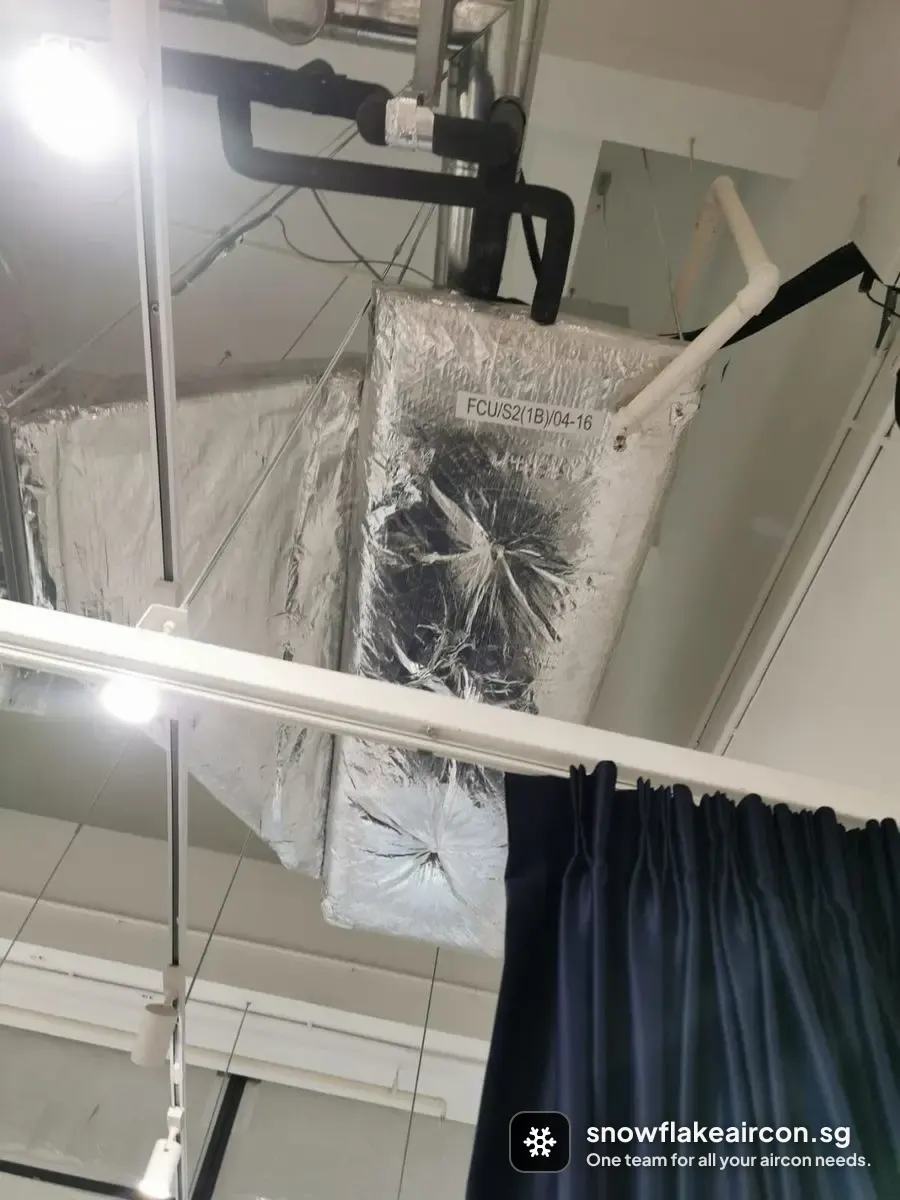
Carrier · Ducted
Shop ducted FCU losing airflow: lint-choked coil
Apparel textile lint compacted across the concealed ducted FCU coil face and blower blades
Common Questions
Why does mould still grow inside an air-conditioned walk-in wardrobe in Singapore?
Where should a bedroom or dressing-room fan coil sit relative to dark timber?
What temperature and mode prevent wardrobe cold spots without clammy air?
When does a musty walk-in wardrobe aircon need a chemical overhaul instead of general cleaning?
Sources
Sources checked 27 Nov 2026