On this page
How This Presents
A dual-head office setup in Tuas loses sharp afternoon chill across both rooms just months after quick refrigerant top-ups. Both indoor blowers stay clean and brisk while supply vents push mild room air across busy workstations. Facility teams dread shutting down active production wings for full outdoor unit replacement and new piping.
- Setup
- Daikin Multi-split4-6 yearsOfficeTuas
- Misread as
- Shutting down active Tuas office wings for costly multi-split compressor swaps or recurring gas top-up bills.
- Check first
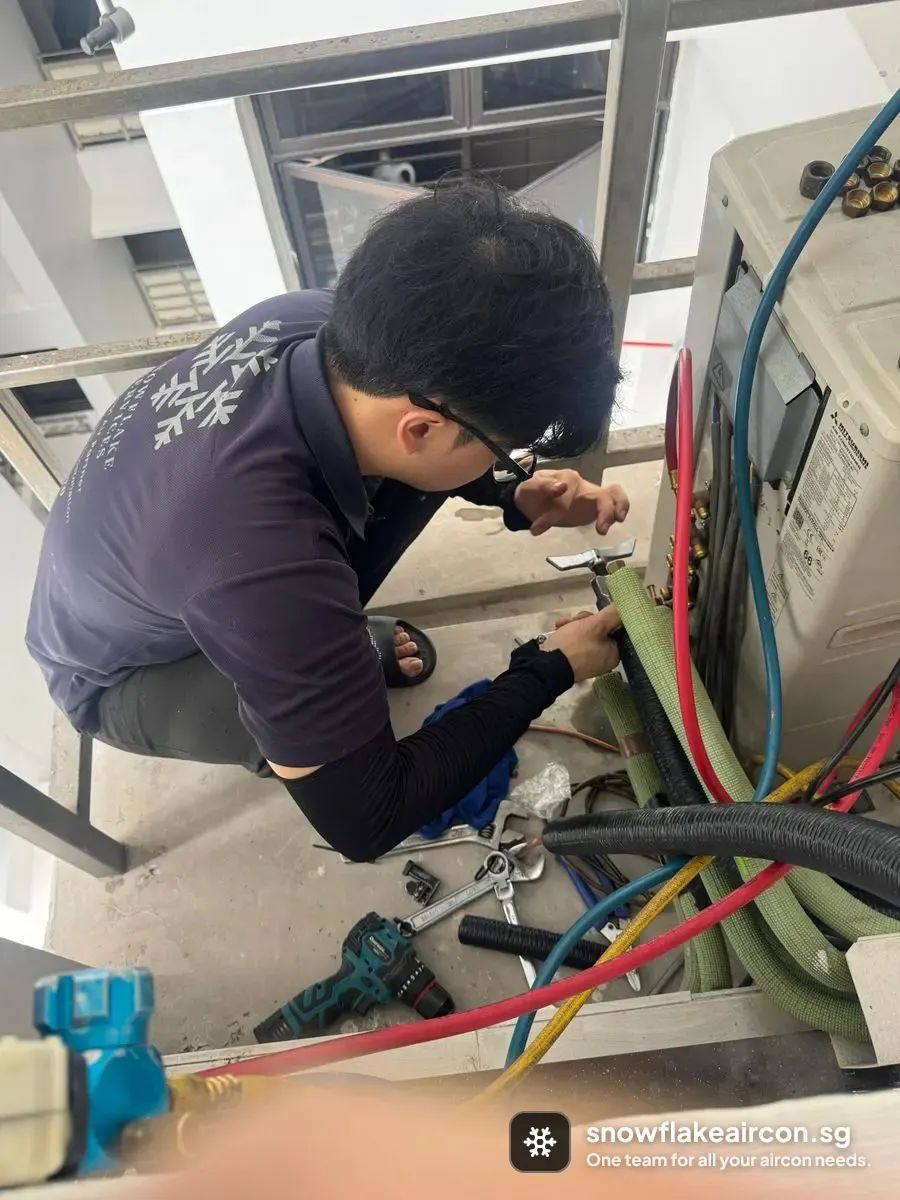
- Coupling gauge hoses across the dual-head outdoor valve ports to check standing pressure before soap-testing the oily brass union under nitrogen
- Actual finding
- Cracked and oil-stained brass flare union on port A of a dual-head outdoor valve block slowly bleeding R32 across a Tuas office system
- Scope saved
- Root cause fixed once instead of repeat call-outs
What Else Produces This
Paired zone cooling fade after short-lived top-ups points to shared circuit loss outside rather than twin indoor faults. Coupling gauge hoses to the valve block isolates leaky flares cleanly before stripping office ceilings or walls.
Connecting manifold hoses at the Tuas outdoor ledge measures low resting pressure across both linked branch lines.
Peeling foam tape back reveals dark oily grime clinging to one brass flare nut on outdoor valve pair A.
Pressurising isolated lines with dry nitrogen produces growing soap bubbles directly around the scarred union neck.
Soap checks across valve pair B, indoor unions, and Schrader stems hold tight with zero secondary bubbles.
Opening the oily nut exposes a work-hardened, split copper flare rim from earlier heavy spanner force.
Why It Happens
Heavy spanner force at first fit-out work-hardened the thin copper flare lip on port A. Daily machine shake along the Tuas outdoor ledge opened a tiny crack across that brittle brass-seated rim. R32 gas leaked out slowly until both office rooms lost crisp afternoon chill and dry air.
What Resolution Involves
Halt blind refills and avoid condenser swaps entirely. Recover remaining R32 cleanly, trim back fatigued copper, and press a smooth new cone. Torque the flare union evenly, verify dry nitrogen holding pressure, pull trapped damp air out deeply, and recharge by exact factory scale weight for both office zones.
How to Tell It Worked
Apply soapy test fluid across both Tuas valve pairs and confirm zero fine bubbles while running both office rooms together. Manifold gauges hold steady factory R32 readings across thirty minutes. Cool copper lines sweat evenly outside and both staff rooms stay crisp, cool, and dry across busy shifts.
Before You Approve a Quote
Seal leaking outdoor flare joints before buying another office gas refill
- Oily grime around an exposed brass pipe connection reveals exactly where cooling gas escapes from dual-head outdoor valve blocks.
- Topping up extra gas without remaking the worn copper cone lets expensive refrigerant bleed back out within a few months.
- Pulling trapped wet air out completely and weighing fresh charge by factory scale restores steady Singapore office cooling cleanly.