On this page
How This Presents
Evening chill inside a Bedok HDB master bedroom turns lukewarm roughly every six months. Each earlier refrigerant top-up brings crisp cold air back for a few warm months before outlet air softens again. Thin frost rims the indoor copper pipe while the indoor blower still hums smoothly at full room speed every night.
- Setup
- Mitsubishi Electric Wall-mounted7-9 yearsHDBBedok
- Misread as
- Paying S$90 to S$150 twice a year for endless gas top-ups or facing a full indoor coil swap quote.
- Check first
- Running a manifold pressure test and bubble-checking the bare service valve mouth after unhooking the charging hose
- Actual finding
- Hardened rubber seal on the outdoor Schrader valve core slowly bleeding refrigerant through the charging port while indoor coils and flare pipes held tight
- Scope saved
- Root cause fixed once instead of repeat call-outs
What Else Produces This
Recurring semi-annual cooling fade often gets blamed on a pinhole inside an ageing evaporator coil. Inspecting the outdoor service fitting directly checks the cheapest leak path before assuming copper decay.
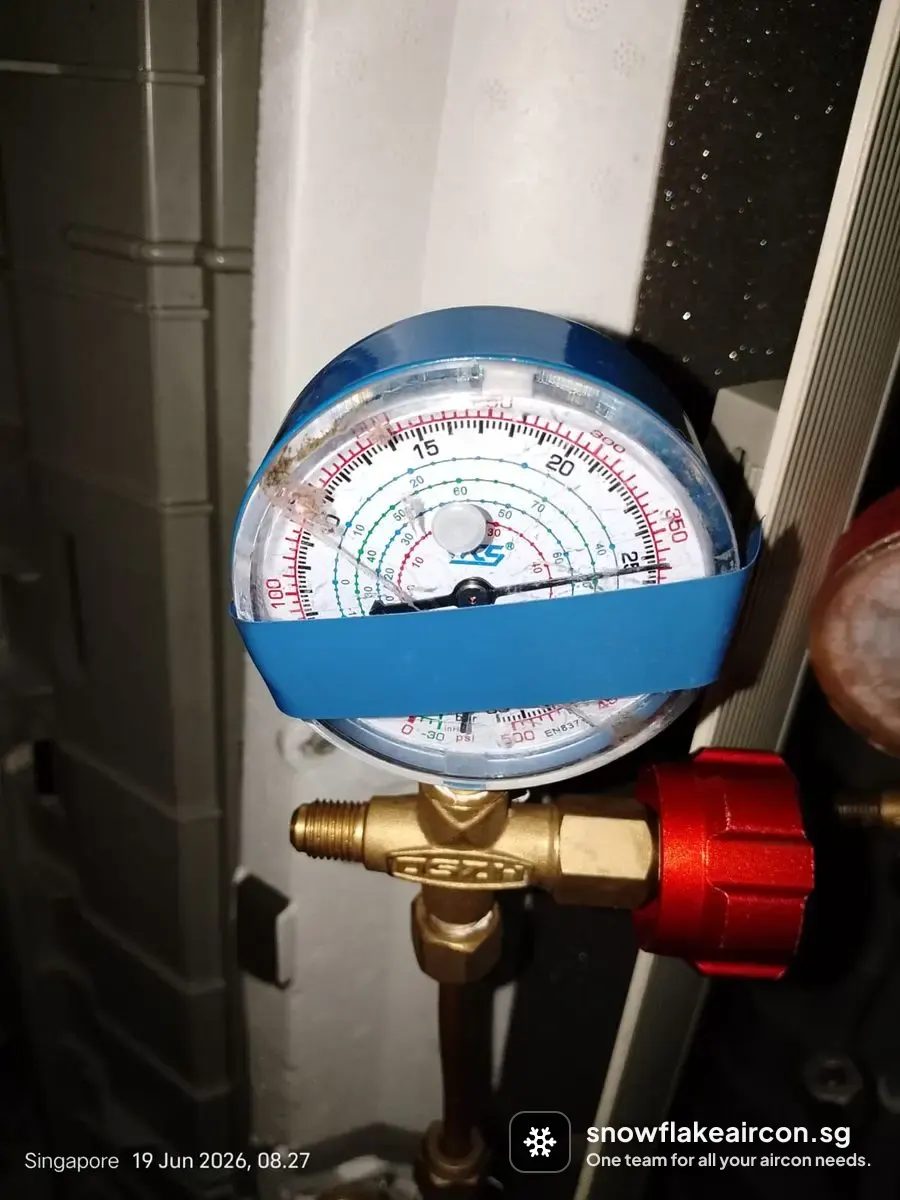
Attaching a manifold gauge set on the Bedok ledge reads low suction pressure consistent with gradual refrigerant depletion.
Unscrewing the brass port cap exposes dark oil film pooled inside the cap threads and around the service stem.
Once the charging hose comes off, soap solution forms slow, steady micro-bubbles right from the centre Schrader pin.
Every copper flare nut and indoor Starmex coil bend stays completely bubble-free under dry nitrogen pressure testing across the circuit.
Why It Happens
Repeated service hose hookups across seven to nine years nicked and flattened the tiny rubber O-ring seating the outdoor brass valve pin. Without a tight flare cap backing up that perished seal, hot Bedok ledge temperatures expanded the metal fitting daily. Small puffs of refrigerant escaped steadily until the Starmex loop lost cooling every six months.
What Resolution Involves
Skip another blind gas top-up or expensive coil replacement quote. Recover remaining refrigerant safely and unscrew the worn Schrader pin. Fit a fresh refrigerant-grade valve core and hold dry nitrogen pressure to confirm tightness. Evacuate the line cleanly, weigh in fresh refrigerant to nameplate spec, and tighten a proper sealing brass cap.
How to Tell It Worked
Brush soap solution across the bare service port mouth and flare nuts after unhooking the hoses to confirm zero micro-bubbles. Run the Bedok master bedroom Starmex at 24 degrees for twenty full minutes. Outlet chill sharpens steadily, copper pipe frost disappears completely, and running pressures settle squarely on factory specification.
Before You Approve a Quote
Check the brass valve pin before booking another refrigerant refill
- Aircon refrigerant works inside a sealed loop, so cooling that fades every half-year always means an active leak.
- Repeated hose hookups flatten the tiny rubber pin seal inside the outdoor brass valve mouth until gas seeps away.
- Swapping the tiny pin core and tightening a fresh brass cap fixes the slow loss permanently for far less money.