On this page
How This Presents
Master-bedroom air turns lukewarm across a Yishun HDB System 3 whenever humid evenings arrive, even though all three fan coils blow briskly. Gas refills restore crisp chill briefly before the smaller suction line turns frosty again. Outdoor pipe sleeves outside the service yard look split and chalky.
- Setup
- Mitsubishi Electric Multi-split7-9 yearsHDBYishun
- Misread as
- Paying repeatedly for refrigerant refills or facing a full condo-grade condenser swap when bedroom cooling keeps weakening.
- Check first
- Stripping weathered ledge lagging back to expose oil-wet brass flare seats and verifying bubbles under soap test
What Else Produces This
Recurring gas drop with normal indoor airflow points toward a slow mechanical escape outside rather than a failing indoor evaporator. Opening the ledge pipe bundle separates weathered flare seepage from internal coil failure.
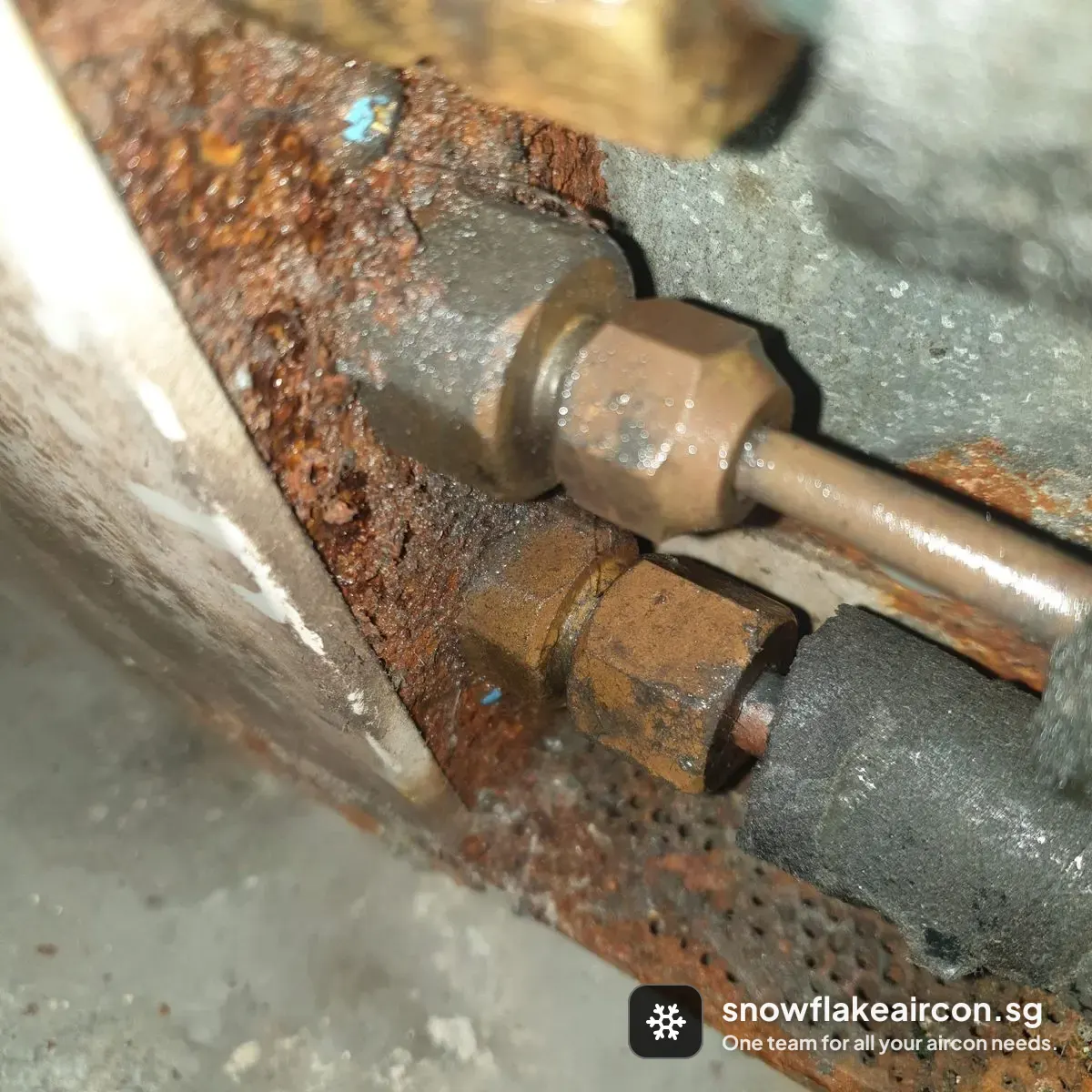
Peeling away sun-baked tape exposes sodden foam lagging holding trapped rain against all six outdoor brass collars.
Dark sticky oil film coats two liquid-line flare nuts, confirming compressor lubricant weeping out under pressure.
Manifold gauges show low standing pressure across the shared loop while compressor amp draw remains healthy.
Brushing soap foam onto the green-crusted flare threads raises steady micro-bubbles along the seated joint.
Why It Happens
Sun and monsoon rain along an open Yishun HDB ledge break down outer pipe tape within seven to nine years. Water wicks inside split foam and sits against dissimilar copper and brass fittings, driving galvanic pitting around the flared lip. Thermal expansion during daily cycles opens hairline micro-gaps that bleed gas slowly.
What Resolution Involves
Skip blind gas top-ups and recover the remaining charge cleanly before cutting behind the pitted copper stubs. Form fresh smooth flares, torque new brass nuts onto clean valve faces, and pressure-test with dry nitrogen. Pull a deep vacuum, recharge by scale weight, and seal new closed-cell lagging tightly.
How to Tell It Worked
Standing nitrogen holds steady with zero drop before charging, and fresh soap foam stays completely flat across every Yishun ledge joint. All three rooms drop to brisk supply air within twenty minutes of restart while suction lines sweat evenly without frost. Fresh outer tape sheds rain cleanly.
Before You Approve a Quote
Deteriorated outdoor lagging hides wet flare leaks
- Cracked foam sleeves across a rain-hit Singapore HDB ledge trap moisture straight against brass pipe joints.
- An oily dark crust around a flare nut signals escaping gas long before the compressor takes harm.
- Cutting fresh flares, fitting new brass nuts, and sealing new insulation stops repeat top-ups without replacing the outdoor unit.