On this page
How This Presents
Bedroom cooling in a Sembawang HDB flat weakens steadily over several warm weeks until night air feels barely cool despite healthy indoor fan speed. Looking onto the exterior ledge shows thick orange rust flaking right around the side pipe cutout. No indoor error lights blink.
- Setup
- Daikin Multi-split7-9 yearsHDBSembawang
- Misread as
- Assuming heavy surface rust on the outdoor box means the entire HDB aircon system must be scrapped immediately.
- Check first
- Brushing loose rust scales off the side pipe bulkhead and leak-testing the corroded coupling under pressure before quoting condenser replacement
What Else Produces This
Gradual cooling decline paired with localized exterior rust points toward slow refrigerant loss at the side valve bulkhead rather than sudden compressor failure. Inspecting beneath the flaked metal cutout confirms whether the unit remains repairable.
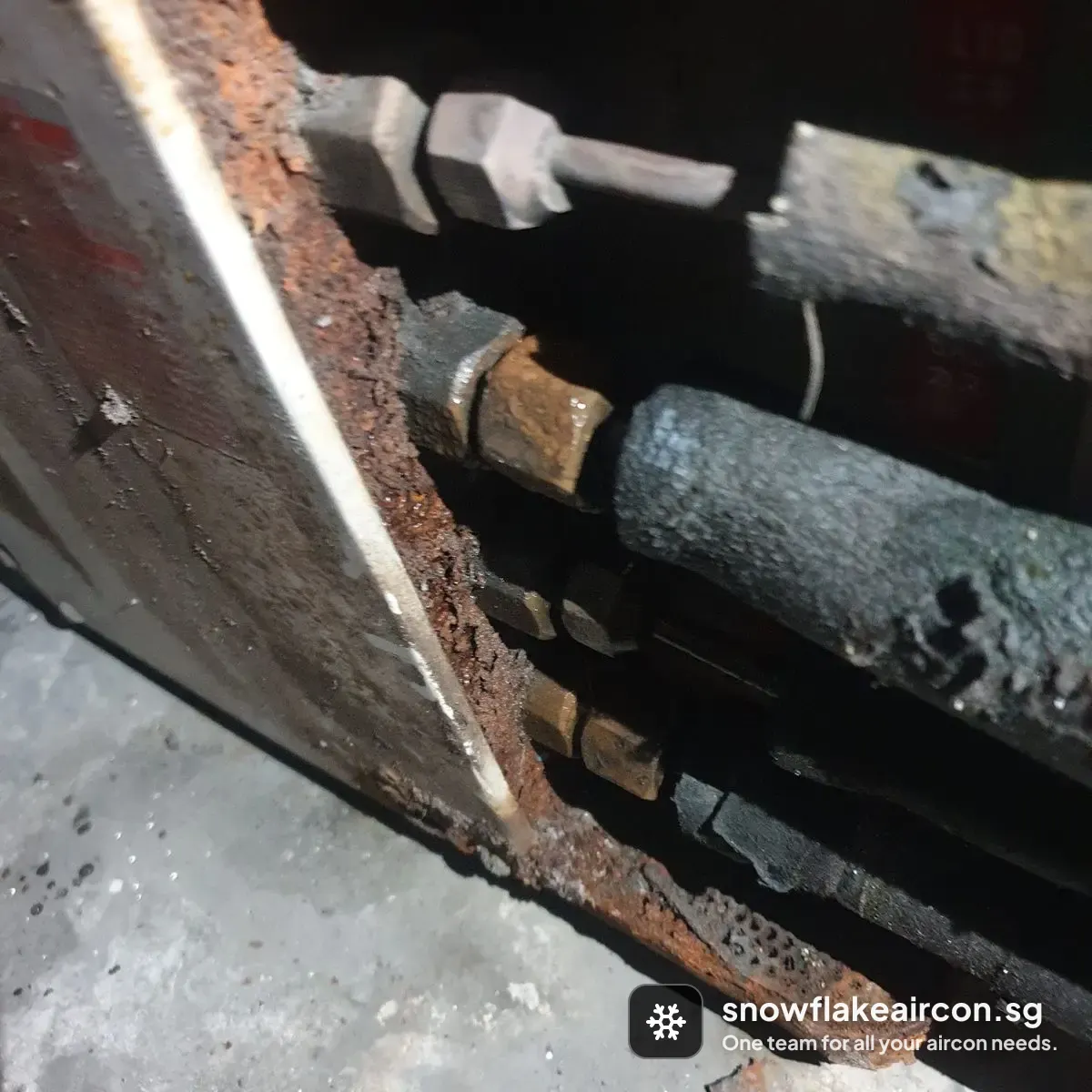
Removing the side service cover exposes crumbled paint and damp rust scales packed tightly around the brass pipe bulkhead.
Oil-stained grime coats the lower suction coupling where shrunk foam lagging left bare cold copper sweating nonstop.
Gauge checks confirm low system charge while the compressor starts quietly and pulls normal balanced amperage.
Applying soap leak solution across the corroded brass port produces steady pinpoint bubbles along the weathered seal.
Why It Happens
Humid coastal winds sweeping across northern Sembawang bathe shaded HDB ledges in salty moisture year round. Once thin pipe lagging shrinks back from the side casing cutout, chilled sweating pipes feed nonstop rust across the sheet-metal collar and pit the brass connection until refrigerant seeps away.
What Resolution Involves
Avoid scrapping a healthy compressor solely over cosmetic casing rust. Recover remaining refrigerant safely, scrape flaking oxide away from the valve plate, and renew the pitted flare joint with fresh brass fittings and pressure-tested nitrogen holds. Pull a clean vacuum, weigh in factory charge, and insulate tightly.
How to Tell It Worked
Nitrogen test pressure holds dead steady before recharging, and fresh soap bubbles stay completely quiet across the renewed Sembawang side coupling. Both bedroom fan coils deliver crisp dry air within twenty minutes while newly sealed lagging stops water pooling against the metal panel.
Before You Approve a Quote
Surface casing rust does not always condemn the compressor
- Northern Singapore coastal air eats exposed painted metal panels around outdoor pipe ports far faster than it wears out internal mechanical parts.
- Wet rust flakes packed around the side valve plate trap moisture straight against brass fittings and start gradual refrigerant seepage.
- Fixing the leaking pipe joint and sealing open copper keeps a sound outdoor unit cooling well for years.