On this page
How This Presents
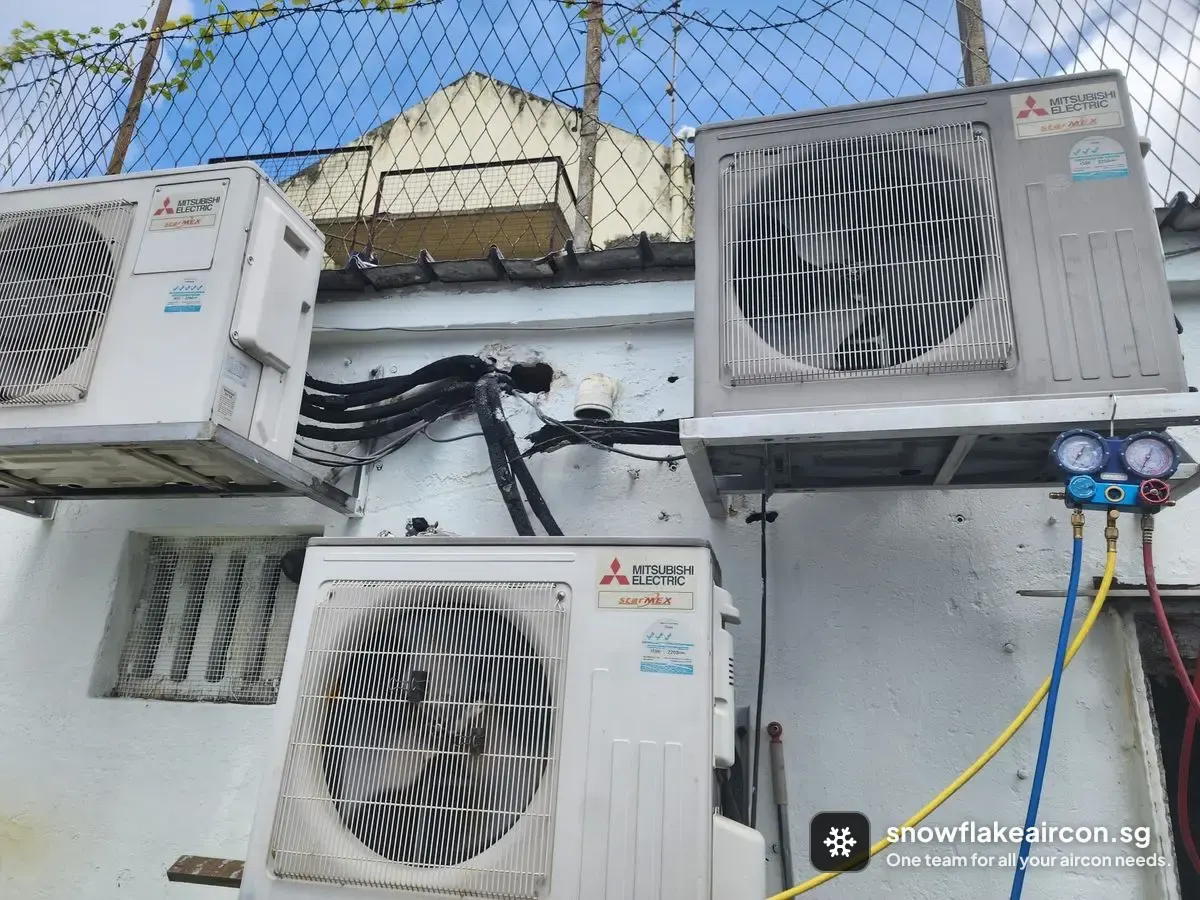
Inside a Punggol HDB master bedroom, vent airflow barely cools past mild breeze even at 18 degrees while common bedrooms stay icy. Out on the ledge, both stacked condensers hum along quietly without fault lamps. Recent indoor servicing cleaned every filter and coil yet brought zero cooling gain.
- Setup
- Mitsubishi Electric Multi-split4-6 yearsHDBPunggol
- Misread as
- Wasting money on repeat gas refills across stacked Punggol condensers without stopping the slow master-bedroom cooling loss.
- Check first
- Connecting manifold hoses to each stacked outdoor condenser separately to isolate depressed pressure and oily brass residue on the lower unit
- Actual finding
- Slow refrigerant seepage past a fatigued brass flare nut on the lower stacked Starmex condenser, starving the master bedroom while the upper condenser circuit stays healthy
- Scope saved
- Root cause fixed once instead of repeat call-outs
What Else Produces This
Dual stacked condensers run two completely separate refrigerant circuits. Checking operating pressure on both Starmex machines outdoors isolates which loop lost charge before touching any flare fittings.
Attaching manifold hoses to the upper Punggol condenser confirms steady standing and running pressure serving the cold common rooms.
Moving manifold hoses down to the lower stacked Starmex condenser reveals sharply depressed suction pressure under master-bedroom load.
Unbolting the lower side valve cover uncovers dark, tacky oil residue coating the smaller liquid-line brass flare nut.
Brushing leak-detection soap around the brass collar raises persistent micro-bubbles, proving an active outdoor weep.
Checking indoor flare joints behind the master-bedroom wall plate shows dry copper with zero oil film.
Why It Happens
Daily compressor vibration and hot-cold expansion on the lower stacked Punggol condenser gradually relaxed the copper sealing face inside the liquid-line brass nut. Refrigerant bled out steadily with traces of compressor oil, starving the master bedroom while the upper Starmex circuit stayed sealed. Without repairing that brass seat, every top-up would fade again.
What Resolution Involves
Reject quick top-ups that escape again within months. Recover the remaining lower-circuit charge, trim away the fatigued copper lip, and form a smooth new flare cone. Torque the brass union cleanly, hold dry nitrogen to verify zero drop, evacuate moisture deeply, and charge exact factory refrigerant weight.
How to Tell It Worked
Confirm rock-steady nitrogen holding pressure before charging, then soap-test the fresh brass union under full running load. Inside the Punggol master bedroom, vent temperature drops rapidly and sticky room humidity clears fast. Outdoors, insulated suction tubing feels evenly cold all the way back to the lower condenser with stable operating pressure and zero oil seepage.
Before You Approve a Quote
Repair the weeping outdoor brass nut before recharging aircon gas
- Stacked outdoor condensers in Singapore HDB flats run separate circuits, so one weak room points directly to its paired machine.
- Oily grime around a brass pipe nut marks a slow gas leak that quick top-ups will never seal.
- Re-making the worn copper flare and charging fresh gas properly ends repeat warm nights and saves wasted refill fees.