On this page
How This Presents
A newly moved-in resale flat in Choa Chu Kang cools fine across the living room while one bedroom wall unit fades to room air within months. Frost briefly coats the thin copper stub outside before vanishing. Routine filter washes make zero difference to the warm bedroom airflow.
- Setup
- Daikin Wall-mounted4-6 yearsHDBChoa Chu Kang
- Misread as
- Facing hidden wall-trunking pipe leaks or full system replacement right after renovating and moving into a resale HDB flat.
- Check first
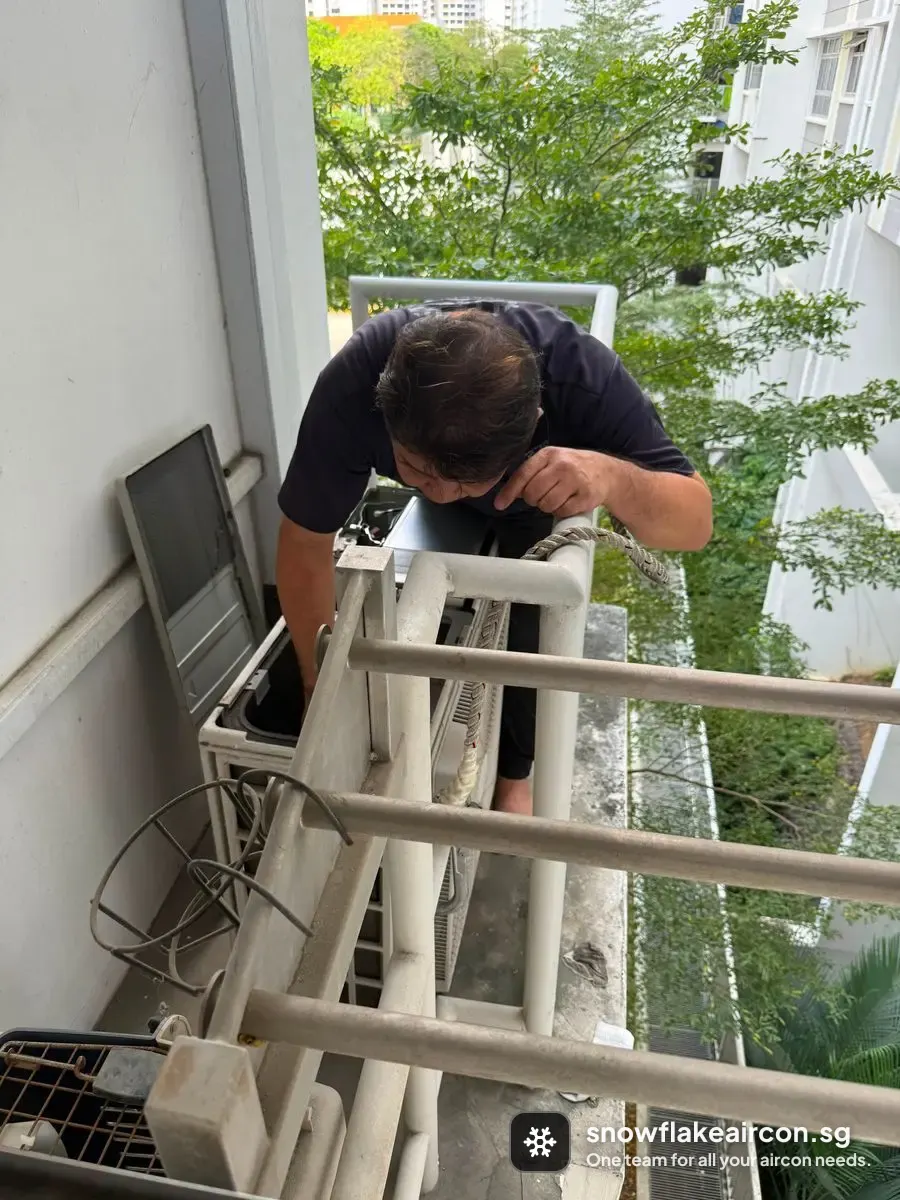
- Accessing the bracket-caged service-yard condenser to inspect the brass service valves for dark oil film and soap-bubble micro-leaks
What Else Produces This
Progressive cooling loss in a single zone after moving into a resale flat points straight toward gradual gas seepage. Inspecting the outdoor service valves inside the bracket cage comes before breaking open indoor trunking.
A manifold gauge on the bedroom line reads low-side pressure far under normal R32 running levels.
Opening the side valve cover inside the caged ledge exposes dark, oily grime coating the 3/8-inch brass flare nut.
Brushing leak-check soap around the brass nut rim lifts a steady ring of fine bubbles within seconds.
Undoing the nut after gas recovery shows a crooked, worn copper flare lip that never sat flat on the valve cone.
Why It Happens
A slightly uneven copper flare or loose brass nut can hold gas long enough to pass a brief resale flat handover test. Under high R32 pressure and daily sun heat on a Choa Chu Kang ledge, that crooked flare face relaxes and slowly weeps gas over a few months.
What Resolution Involves
Leave the hidden indoor bedroom copper run untouched. Cut off the bent 3/8-inch copper end, clean the inner rim, and form a smooth fresh flare cone. Tighten the brass nut cleanly with a torque wrench, pull a deep vacuum to confirm zero leak rise, and weigh in fresh R32 gas.
How to Tell It Worked
Soap-test the newly torqued 3/8-inch service-valve joint under full running pressure and confirm zero bubble formation. Measure steady R32 pressures and crisp cold discharge air inside the Choa Chu Kang bedroom across thirty minutes of continuous operation.
Before You Approve a Quote
Trace oily service-valve flare nuts before blaming buried piping
- Dark oily dust clinging to a brass flare nut is the clearest outdoor sign of slow R32 refrigerant seepage.
- Topping up gas without cutting and re-flaring a scored copper cone lets the same Singapore flat lose cooling again within months.
- Re-flaring the 3/8-inch pipe end, torquing to spec, and pulling a clean vacuum seals the circuit permanently.