On this page
How This Presents
A bedroom wall unit in a Bukit Batok HDB flat slowly loses its chill across six months. Indoor airflow feels strong and front filters are clean, yet night cooling fades week by week. Fears quickly turn toward hacking concealed copper pipes.
- Setup
- Daikin Wall-mounted4-6 yearsHDBBukit Batok
- Misread as
- Bracing for disruptive wall hacking to replace concealed copper pipes when the bedroom Daikin steadily lost cooling over six months.
- Check first
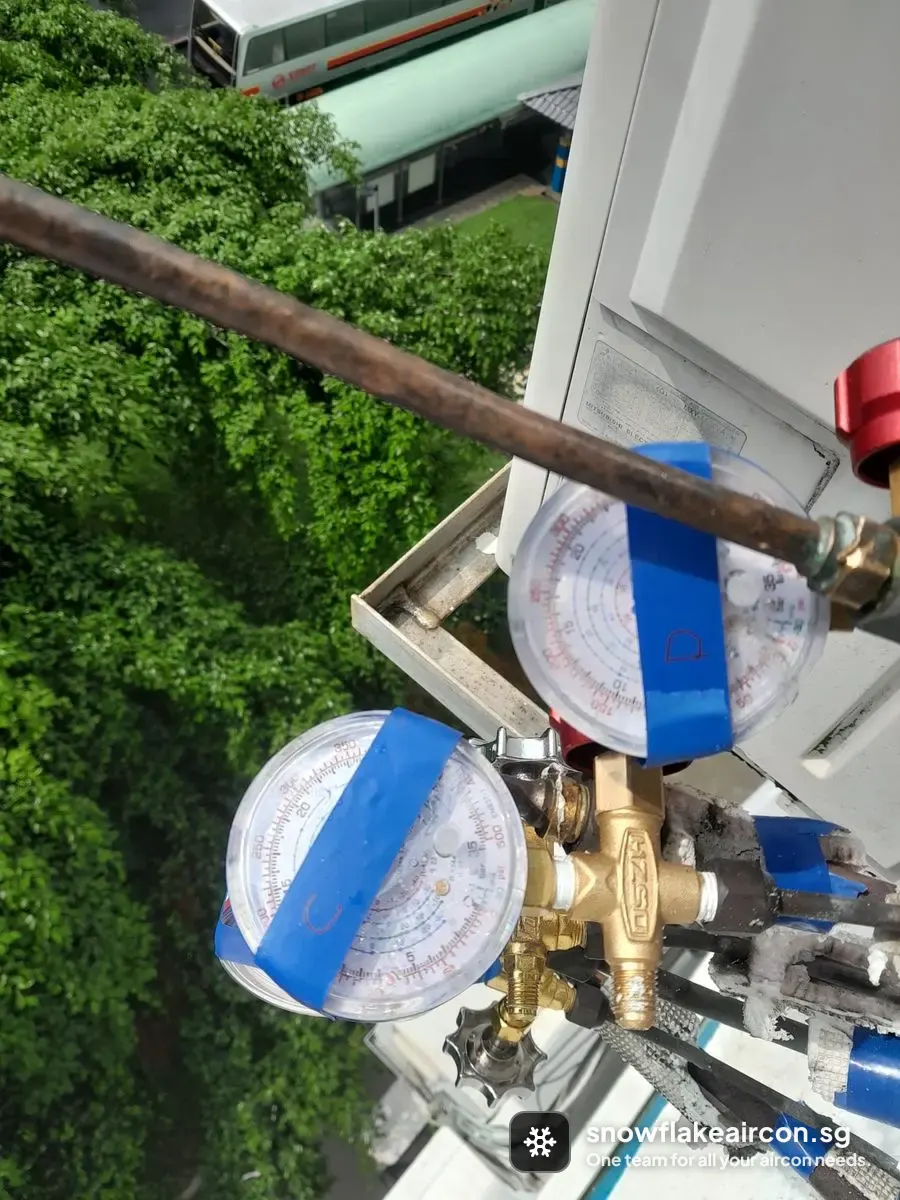
- Connecting manifold gauges to confirm low charge and soap-bubble testing the uncapped outdoor service valve port before suspecting concealed pipes
What Else Produces This
Gradual cooling loss with steady indoor airflow points straight to a slow refrigerant leak. Checking the accessible outdoor service ports first rules out external seepage before blaming hidden pipework.
Stepping out to the HDB ledge shows the brass seal cap completely missing from the outdoor suction charging port.
Faint oily dust rings the exposed brass threads around the service valve stem.
Connecting manifold gauges confirms low running suction pressure and light frost forming along the smaller liquid pipe.
Disconnecting the hose and dabbing leak-detection soap over the Schrader pin raises a steady stream of fine bubbles.
Why It Happens
An earlier gauge hookup had left the brass port cap off on the exposed Bukit Batok ledge. Rainwater, grit, and tropical heat dried out the tiny rubber seal inside the Schrader valve core over four to six years. Without the secondary brass cap sealed tight, refrigerant wept slowly into the outdoor air.
What Resolution Involves
Keep the concealed indoor piping untouched. Recover remaining charge safely, replace the weeping Schrader valve core with a fresh refrigerant-rated core, and soap-test every neighbouring flare nut to confirm no second leak exists. Pull a deep vacuum, charge back to specification, and torque a new brass flare cap firmly over the port.
How to Tell It Worked
Re-test the closed valve core and capped service port with soap solution for zero bubbles. Manifold gauges hold clean operating suction pressure, frost clears off the liquid line, and the Bukit Batok bedroom returns to crisp overnight cooling.
Before You Approve a Quote
Soap-test outdoor service valves before suspecting concealed pipes
- A slow refrigerant drop across several months often escapes right at the outdoor charging port rather than inside HDB walls.
- Missing brass valve caps expose the rubber Schrader seal to Singapore rain and ledge heat until it slowly weeps gas.
- Swapping the worn core, fitting a proper flare cap, and vacuum-charging stops the leak cleanly in one visit.