On this page
How This Presents
A System 3 living room and two bedrooms in a Sengkang HDB flat fade to lukewarm air every few months despite two recent R32 top-ups. Cooling bounces back briefly right after gas goes in, then weakens across all three rooms together.
- Setup
- Mitsubishi Electric Wall-mounted4-6 yearsHDBSengkang
- Misread as
- Paying for a third short-lived R32 top-up or replacing all indoor copper runs across a Sengkang flat when gas keeps vanishing.
- Check first
- Spotting oil sheen at the brass flare nut, pressure-testing the repaired joint, and pulling a deep vacuum with a dedicated pump before weighing in fresh R32
- Actual finding
- Micro-cracked brass flare seat on the outdoor liquid service port leaking R32 steadily after repeated unsealed top-ups introduced moisture
- Scope saved
- Root cause fixed once instead of repeat call-outs
What Else Produces This
Gas vanishing twice proves an active breach in the sealed loop. Inspecting every accessible outdoor service valve before adding another gram locates the real escape point.
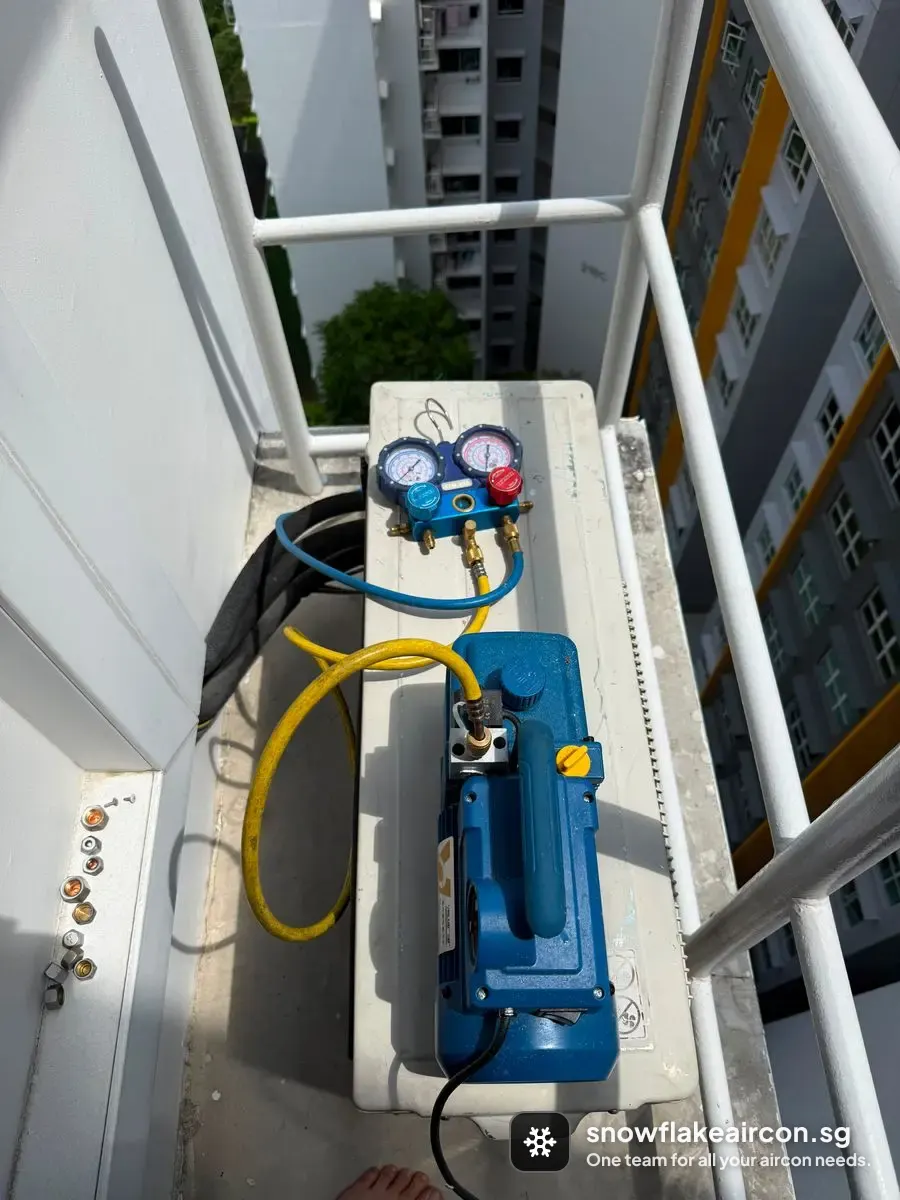
Connecting manifold gauges at the high-rise Sengkang ledge shows suction pressure far below normal R32 operating range across all ports.
Peeling back the foam insulation sleeve by the brass service ports exposes dark compressor-oil staining around one 1/4-inch liquid flare nut.
Applying leak-detection bubbles onto the brass union produces a steady stream of fine foam right along the flare seat.
Inspecting the indoor trunking joints and evaporator coil edges shows clean, dry copper with zero secondary leak signs.
Why It Happens
High-rise wind vibration and thermal expansion on the Sengkang ledge gradually hair-cracked the thin copper flare lip under the outdoor brass nut. Topping up gas twice without cutting a fresh flare left the crack weeping and allowed humid air to contaminate the circuit.
What Resolution Involves
Recover the remaining contaminated charge instead of topping over it. Cut back the split copper end cleanly, shape a fresh cone using a dedicated eccentric flarer, and tighten the brass nut to specification. Pressure-test the repaired joint to confirm zero drop, then connect a dedicated vacuum pump on the ledge to evacuate moisture completely before weighing fresh R32 to the nameplate mass.
How to Tell It Worked
Start the living room and both bedrooms together on cool mode. Check balanced R32 operating pressures on the manifold, crisp frost-free suction line return, and strong cold supply air across all three Sengkang rooms.
Before You Approve a Quote
Fix the leak and pull a deep vacuum before recharging R32
- Repeated top-ups never seal a weeping brass flare joint on a high-rise Singapore HDB aircon ledge.
- Running a dedicated vacuum pump clears trapped air and humid moisture that ruin inverter cooling efficiency.
- Weighing fresh R32 to the Starmex nameplate charge restores crisp cooling across every connected room in one permanent repair.