On this page
How This Presents
A master-bedroom split inside a Bukit Batok HDB block blows cool for weeks after a gas refill, then gradually turns tepid overnight. Other rooms on the system stay chilly, raising doubts about concealed pipe leaks inside the trunking.
- Setup
- Panasonic Wall-mounted7-9 yearsHDBBukit Batok
- Misread as
- Paying for another temporary refrigerant top-up that fades within months or fearing an entire concealed copper pipe run must be hacked open.
- Check first
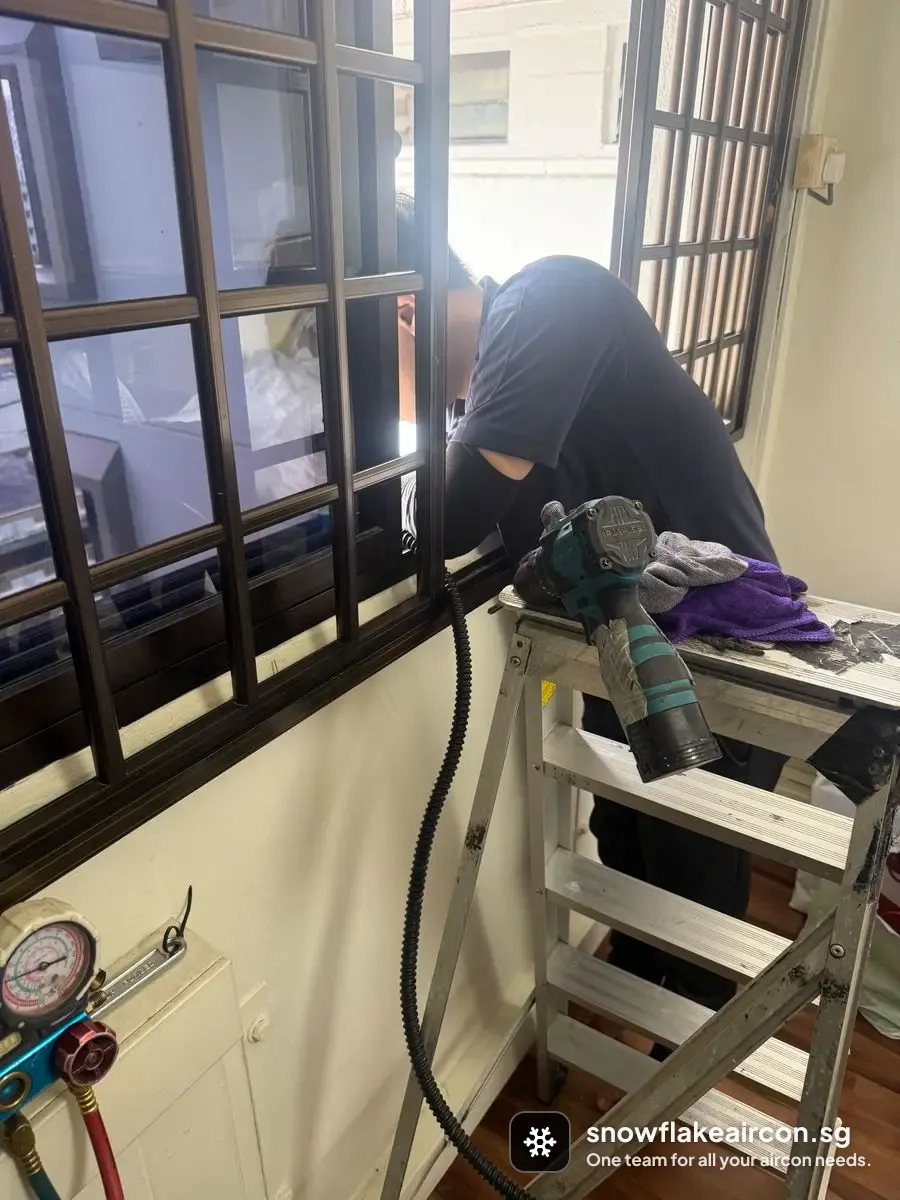
- Connecting manifold gauges from the service-yard window to confirm low standing pressure on one circuit before soap-testing the oily brass flare nut
- Actual finding
- Slow refrigerant weep at a work-hardened brass flare nut on the master-bedroom outdoor service valve, steadily draining one circuit
- Scope saved
- Root cause fixed once instead of repeat call-outs
What Else Produces This
Recurring gas loss on a single bedroom circuit requires pressure verification and joint inspection before adding any refrigerant. Checking the accessible outdoor valve bank comes first.
Connecting a manifold gauge set through the Bukit Batok service-yard window shows low standing and suction pressure on the master-bedroom circuit.
Removing the side valve cover reveals dark compressor oil staining the lower brass flare nut and damp dust clinging to the threads.
Brushing soapy water onto the oily flare nut forms steady tiny bubbles while nearby valve ports stay dry.
Checking the Schrader core and indoor pipe union confirms zero secondary leaks along the accessible line.
Why It Happens
Seven to nine years of thermal expansion and outdoor ledge vibration fatigued the flared copper lip seated inside the brass union. A microscopic gap let refrigerant and trace compressor oil escape steadily under operating pressure, emptying each fresh top-up within months.
What Resolution Involves
Avoid another blind top-up. Pump down and isolate the circuit, undo the weeping brass nut, trim off the fatigued copper end, and form a clean new flare on the Panasonic outdoor port. Pressure-test the joint, pull a deep vacuum, and weigh in the proper refrigerant charge.
How to Tell It Worked
Hold vacuum steady with zero needle rise before opening the valves, then run the Bukit Batok master bedroom at 22°C for thirty minutes. Operating suction pressure sits squarely in spec, the re-flared nut stays dry under soap test, and vent air runs crisp.
Before You Approve a Quote
Test pressure at the outdoor valves before topping up gas again
- Aircon systems run on a closed loop, so cooling that fades twice in the same bedroom always means a physical leak exists.
- Accessible brass flare joints on an HDB service-yard condenser often weep oil and gas long before concealed indoor pipes fail.
- Cutting and re-flaring a weeping outdoor joint plus vacuum-charging solves slow gas loss permanently in Singapore flats.