On this page
How This Presents
A bedroom unit in a Sengkang HDB flat blows lukewarm air six months after a routine refrigerant top-up. Fan throw stays brisk and mesh filters are spotless, yet the room never drops below humid ambient warmth. Frost occasionally forms briefly near the lower coil corner before melting away.
- Setup
- Panasonic Wall-mounted4-6 yearsHDBSengkang
- Misread as
- Paying for another temporary gas refill or ripping open concealed HDB trunking because bedroom cooling faded six months after a top-up.
- Check first
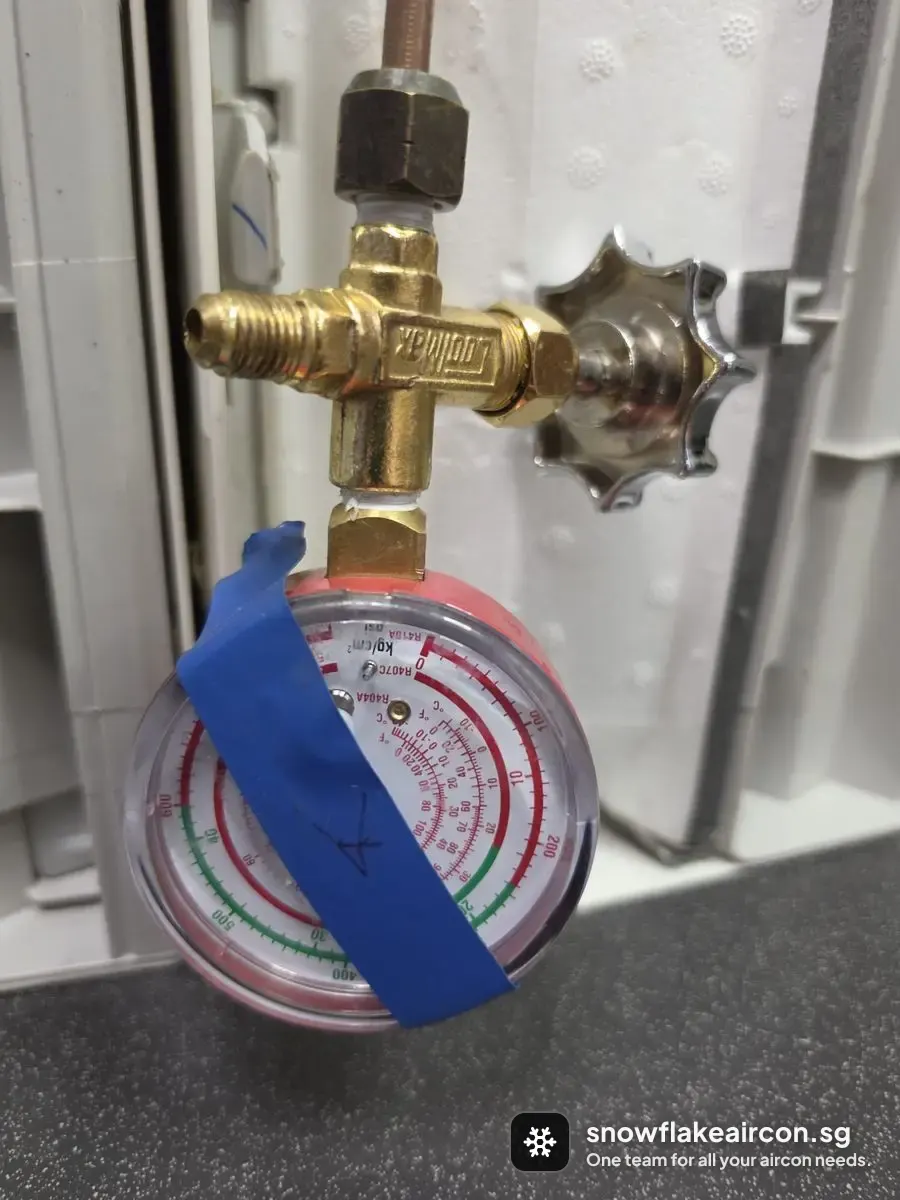
- Fitting a pressure gauge directly onto the outdoor service valve, noting oily residue under the brass cap, and soap-testing the depressed pin seal
- Actual finding
- Weeping Schrader valve core behind a finger-loose outdoor brass flare cap slowly venting R32 charge over six months while the concealed copper pipe run stays intact
- Scope saved
- Root cause fixed once instead of repeat call-outs
What Else Produces This
Losing cooling within half a year of a refill confirms an active leak rather than normal wear. Checking the outdoor service ports first rules out the easiest leak point before tracing concealed pipes.
Removing the brass access cap on the outdoor suction service valve reveals it was only finger-tight with a fresh sheen of compressor oil inside the threads.
Fitting a pressure gauge directly to the refrigerant valve logs standing and running pressures well below normal R32 operating range.
Brushing soap water across the exposed valve pin right away forms steady tiny bubbles around the core seal.
Checking the neighbouring flare nuts and indoor coil joints shows dry, clean copper with no oil staining along the trunking run.
Why It Happens
A fatigued rubber seal inside the outdoor Schrader valve core failed to seat tightly after earlier hose connections. Because the outer brass cap was not nipped snug with a spanner, high-pressure gas seeped past the pin day after day. Over six months, the steady trickle dropped the charge too low to cool the Sengkang bedroom.
What Resolution Involves
Skip invasive trunking tear-outs and repeated band-aid top-ups. Recover the remaining refrigerant safely, replace the weeping Schrader valve core with a rated brass core, and confirm zero bubbles under pressure test. Pull a deep vacuum to verify leak-tight hold, recharge R32 accurately, and snug the brass flare cap firmly.
How to Tell It Worked
Run the Sengkang bedroom unit at 22°C for 25 minutes and confirm cold, steady return-line sweating and strong vent cooling. Recheck the capped service valve with soap solution to verify zero escaping bubbles before leaving.
Before You Approve a Quote
Inspect the outdoor service valve before paying for repeat top-ups
- Aircon gas sits in a closed loop, so losing cooling every few months always means a physical leak is still open.
- A worn rubber seal inside the outdoor valve pin plus a loose brass cap can vent refrigerant slowly without leaving marks inside the room.
- Swapping the tiny valve pin and refitting a tight cap stops repeat Singapore top-up bills without touching hidden wall pipes.