On this page
How This Presents
Both sleeping rooms across a Jurong West HDB flat blow lukewarm air less than four months after an earlier refrigerant refill. Indoor fans run smoothly at full speed all night, yet humidity climbs steadily and bedrooms never reach crisp comfort.
- Setup
- LG Wall-mounted7-9 yearsHDBJurong West
- Misread as
- Paying S$120 to S$180 twice a year for quick gas refills without ever fixing where the cooling refrigerant escapes.
- Check first
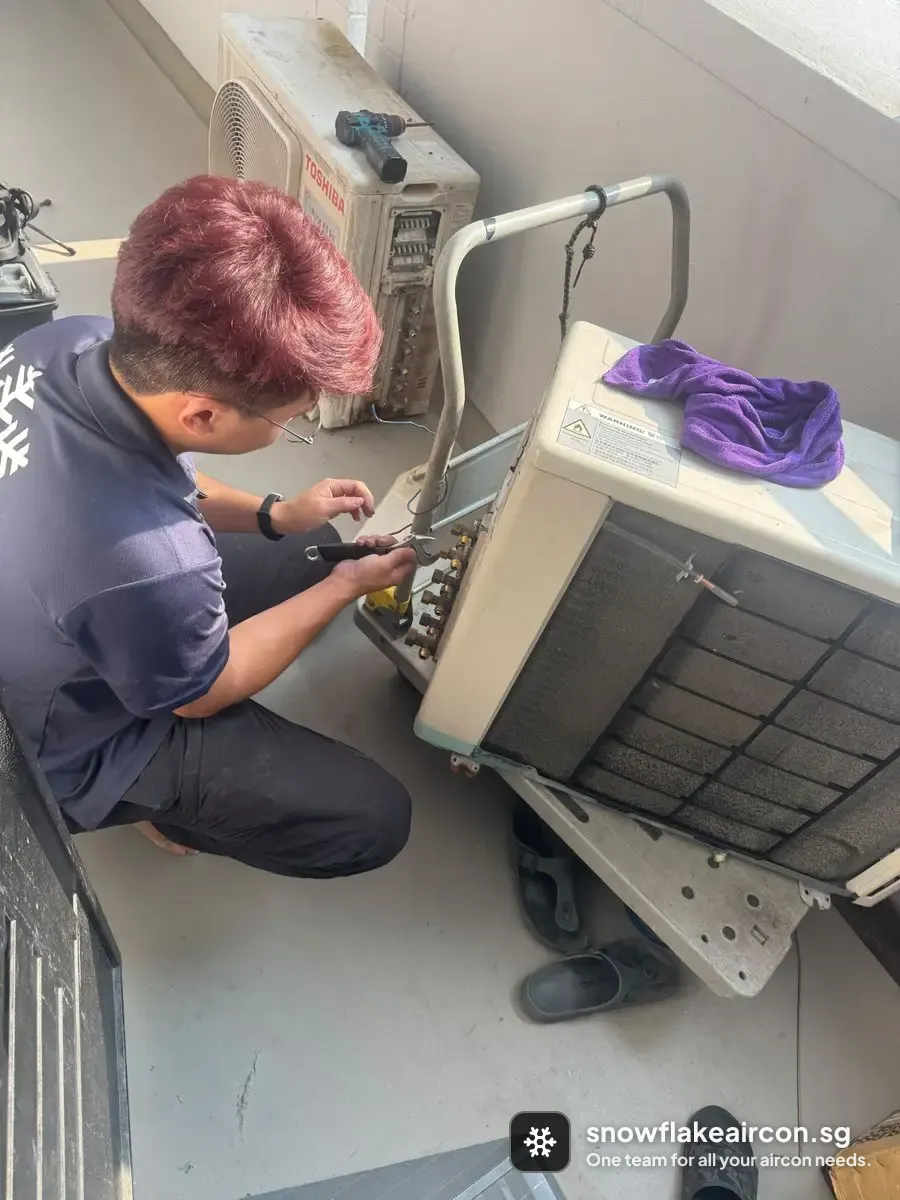
- Removing the outdoor service valve cover on the HDB ledge to spot oily dust rings and confirm slow bubbling with soap solution before adding a single gram of gas
- Actual finding
- Hairline score mark on the copper flare lip at the outdoor LG brass service valve weeping compressor oil and refrigerant slowly after every quick top-up
- Scope saved
- Root cause fixed once instead of repeat call-outs
What Else Produces This
Repeated gas loss never comes from normal wear inside a sealed circuit. Inspecting the outdoor condenser service valves first pinpoints external joint leaks before quoting indoor coil replacements.
Connecting gauges at the Jurong West ledge reads both static and operating levels far under normal LG inverter specifications.
Removing the side valve guard uncovers dark oily grime coating the lower suction brass nut and nearby pipe foam collar.
Brushing soap leak solution across that oily service valve union raises steady pinpoint bubbles right around the copper neck.
Unthreading the brass collar reveals a scored, work-hardened copper lip pressed unevenly during earlier work while indoor connections stay bone dry.
Checking the condenser coil face and electrical box shows clean dry metal with zero oil staining anywhere inside the outdoor chassis.
Why It Happens
Sustained condenser vibration on the sun-baked Jurong West HDB ledge fatigued an imperfectly seated copper flare lip at the LG service valve. Each earlier top-up briefly lifted system pressure without fixing that grooved sealing face, letting refrigerant and oil seep out again.
What Resolution Involves
Stop pouring S$120 to S$180 into blind repeat refills that never seal the leaking union. Recover remaining charge cleanly, trim off the grooved copper end, and press a fresh annealed flare face. Tighten the brass nut with a calibrated wrench, run dry nitrogen leak checks, evacuate moisture under vacuum, and meter in exact factory refrigerant.
How to Tell It Worked
Check the resealed Jurong West LG valve union with fresh bubble solution under full operating load and measure indoor supply temperatures. Zero micro-bubbles form on the clean dry brass nut. Insulated suction lines sweat evenly and both bedrooms chill briskly overnight.
Before You Approve a Quote
Fix oily outdoor pipe nuts before ordering another gas refill
- Aircon cooling gas runs in a sealed loop and never gets used up like petrol, so repeat refills always hide a real leak.
- Dark oily dust clinging around an outdoor brass nut is the clearest sign that gas is seeping past a worn copper cone.
- Cutting a clean new pipe cone and sealing the joint properly costs far less than endless refills across Singapore HDB flats.