On this page
How This Presents
Shopfloor air inside a Rochor retail shophouse turns sticky every three months despite full twelve-hour trading runs and clean washable filters. Previous gas top-ups restore crisp cooling for ten weeks before indoor vents soften again during warm afternoon footfall. Frosting occasionally shows on the narrow liquid pipe behind the display rack.
- Setup
- Mitsubishi Electric Wall-mounted4-6 yearsRetailRochor
- Misread as
- Paying quarterly gas top-up invoices or shutting a busy Rochor retail storefront for full re-piping.
- Check first
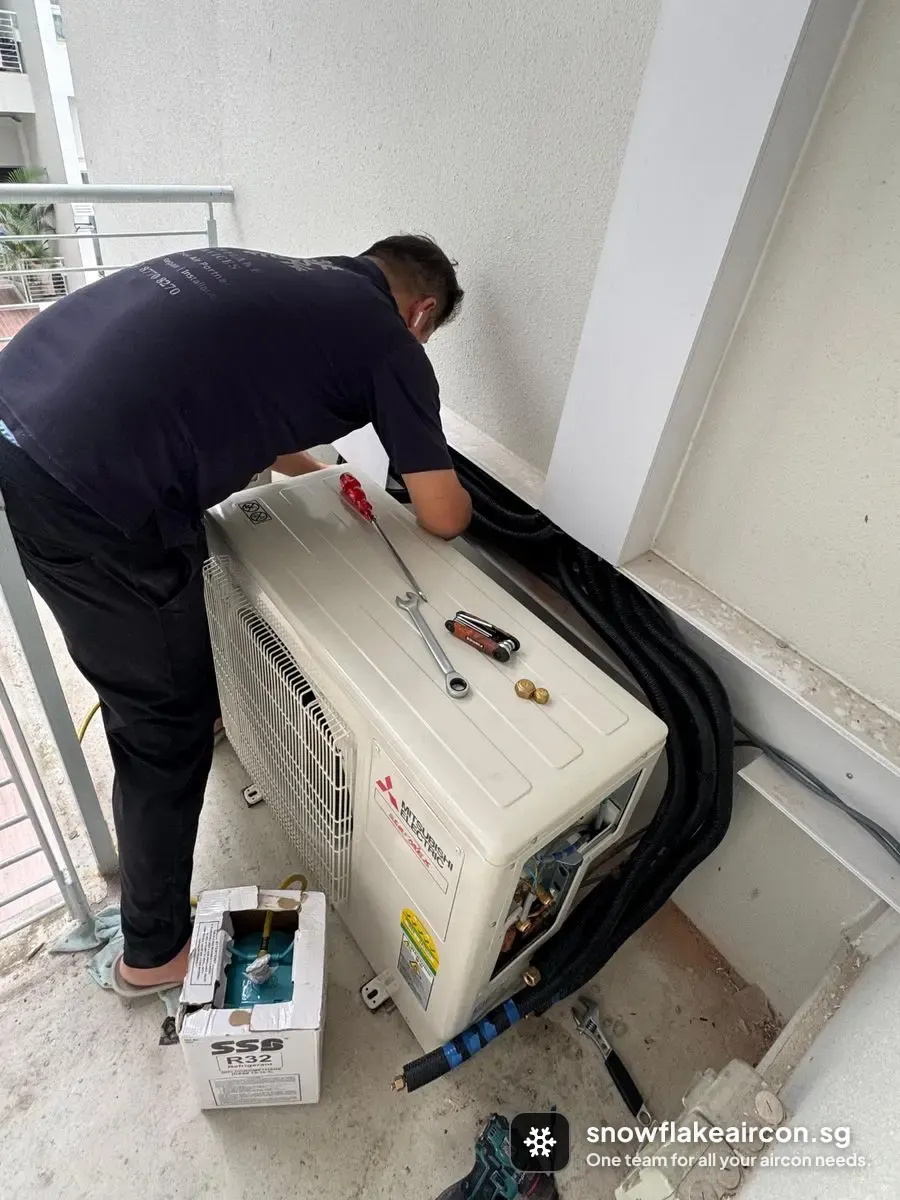
- Stripping back oil-stained pipe insulation at the Rochor rear condenser valve and bubble-testing the 3/8-inch flare collar under dry nitrogen pressure
- Actual finding
- Hairline score across the brass sealing cone of a 3/8-inch outdoor suction flare nut bleeding R32 gradually during daily shophouse retail cooling cycles
- Scope saved
- Root cause fixed once instead of repeat call-outs
What Else Produces This
Recurring quarterly gas loss in older shophouse spaces often gets blamed on inaccessible trunking inside brick walls. Checking the exposed rear outdoor service valves first tests the most vibration-prone joint in the entire circuit.
Peeling back split foam insulation at the Rochor rear condenser exposes tacky black compressor oil ringing the 3/8-inch suction union.
Pressurising the isolated line with dry nitrogen produces a steady ring of fine soap bubbles right behind the 3/8-inch nut shoulder.
Unbolting the suspect union reveals an off-centre, work-hardened copper lip scarred from earlier overtightening.
Checking the indoor evaporator coil and remaining 1/4-inch liquid flare under holding pressure confirms zero secondary leaks anywhere along the shophouse run.
Inspecting the outdoor Schrader valve pin after gauge removal confirms a crisp seal with zero micro-bubbling.
Why It Happens
Heavy daily vibration during steady shophouse retail trading fatigued an unevenly formed 3/8-inch copper flare at the outdoor service valve. Thermal swing in the narrow Rochor back alley widened that tiny seating flaw. R32 refrigerant bled out slowly until shopfloor cooling faded every quarter.
What Resolution Involves
Stop routine top-up cycles and recover the remaining charge safely. Trim off the scarred copper tip cleanly, deburr the tube rim, and form a smooth new 3/8-inch flare cone. Seat the union evenly with a spanner and torque wrench, verify dry nitrogen holding pressure, vacuum deeply, and weigh in fresh R32 to nameplate mass.
How to Tell It Worked
Brush leak solution around both outdoor flare nuts after commissioning to confirm complete zero-bubble tightness. Run the Rochor shophouse Starmex through warm afternoon load for thirty minutes. Outlet air drops cleanly below 14°C while suction pressure tracks factory R32 charts.
Before You Approve a Quote
Inspect oily outdoor pipe joints before paying for quarterly refills
- Dark oily grime around an outdoor brass union is the clearest sign that refrigerant is escaping right at the mechanical flare seat.
- Topping up R32 without fixing a weeping pipe cone wastes money every few months and leaves retail staff working in humid air.
- Cutting a fresh copper cone, pressure testing, and weighing fresh charge solves the leak permanently in one visit.