On this page
How This Presents
Two rooms inside a Newton condo lose cooling steadily within weeks of recharging while the remaining bedroom turns barely chilly. Dark oil mist stains the lower indoor fin edges on both warm units, pointing toward chronic circuit loss across an ageing system. Monthly power bills also climb as the compressor runs nonstop.
- Setup
- Mitsubishi Electric Multi-split10-12 yearsCondoNewton
- Misread as
- Hacking finished false ceilings across a Newton condo or throwing thousands at ageing R410A indoor coils.
- Check first
- Isolating indoor coils from concealed condo piping under dry nitrogen pressure testing to prove existing copper routes could safely carry new R32 equipment
- Actual finding
- Simultaneous hairline refrigerant leaks across two ageing R410A evaporator coils while concealed condo copper lines remained thick-walled and pressure-tight
- Scope saved
- Targeted repair instead of full replacement
What Else Produces This
Stacking twin coil replacements onto a twelve-year R410A setup rarely makes financial sense, yet tearing down condo false ceilings adds heavy carpentry bills. Testing the hidden copper separate from the leaking indoor units decides the cleanest scope.
Isolating the Newton living room and master evaporator coils exposes active bubbles along corroded copper U-bends on both heat exchangers.
Capping the concealed ceiling pipe runs and holding dry nitrogen at 450 psi confirms zero pressure drop over a full holding period.
Measuring exposed pipe ends verifies intact Class 0 insulation and 22-gauge copper wall thickness rated for R32 operating pressures.
Inspecting the outdoor R410A condenser reveals weathered fin corrosion and high amp draw, confirming end-of-life wear across the old set.
Checking the existing concealed condensate lines confirms clear downward slope with no hidden sagging traps above the plaster ceiling.
Why It Happens
Prolonged daily humidity inside the Newton condo pitted the thin copper return bends inside two separate R410A evaporator coils. Meanwhile, the thicker insulated copper risers tucked inside the false ceiling stayed intact and completely pressure-tight.
What Resolution Involves
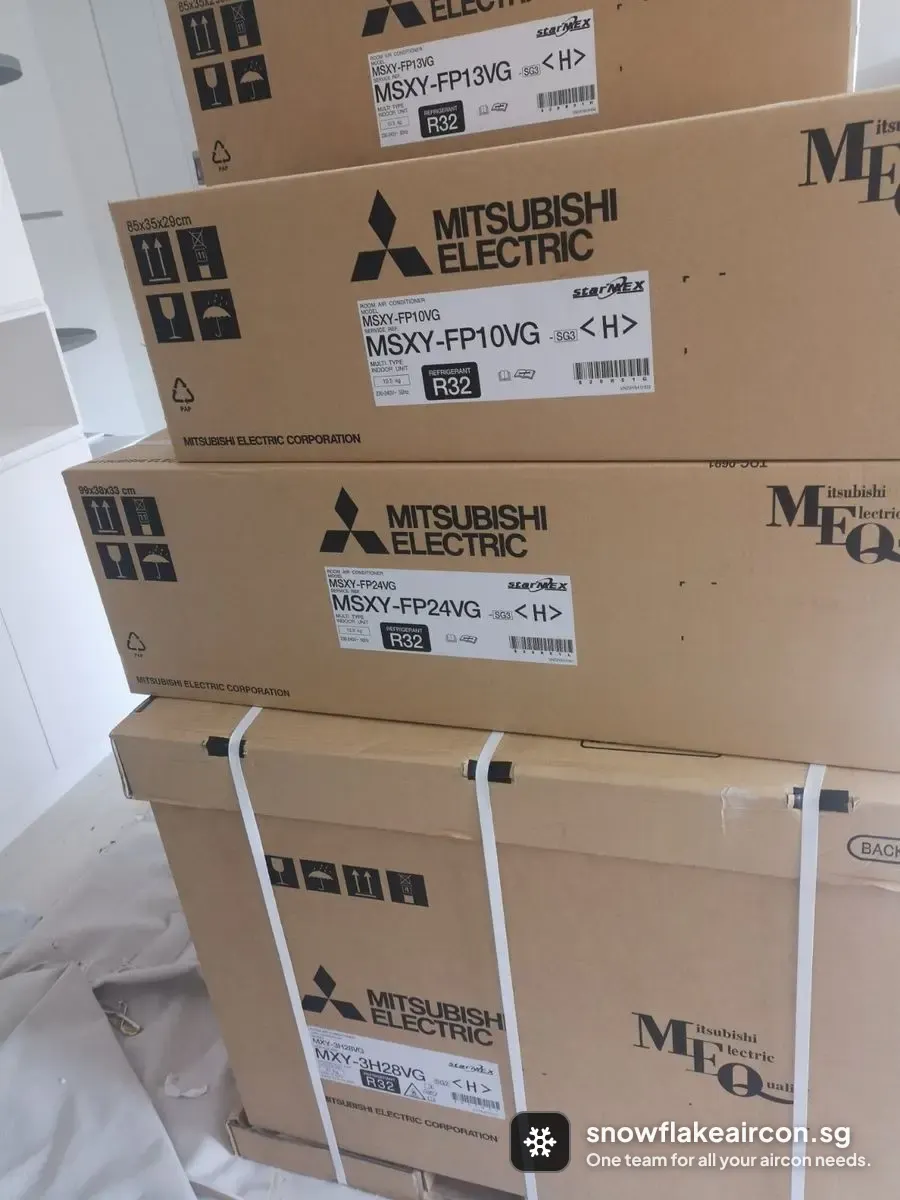
Decommission the ageing R410A set instead of spending heavily on dual coil swaps. Flush every sound concealed copper run cleanly to clear residual R410A oil and form fresh flares. Mount new 5-tick R32 Mitsubishi Electric Starmex indoor units alongside a matching outdoor condenser with zero ceiling hacking.
How to Tell It Worked
Hold a full nitrogen pressure check across all new flare joints, pull a deep sub-500-micron vacuum, and release factory R32 charge cleanly. Run every Newton condo room simultaneously for thirty minutes. Vents settle cleanly at 12°C to 14°C with smooth drainage and quiet balcony condenser balance.
Before You Approve a Quote
Pressure-test hidden condo pipes before hacking ceilings during replacement
- Repairing two leaking evaporator coils on a decade-old R410A system costs close to half a brand-new 5-tick R32 set with fresh warranty.
- Sound concealed copper pipes with adequate wall thickness can often be flushed, tested, and reused safely without tearing open ceiling boards.
- Confirming hidden pipe tightness upfront lets Singapore condo owners upgrade cleanly in one day with minimal dust.