On this page
Quick summary
Warm airflow right after servicing comes from a bumped fan mode, slipped indoor thermistor, hidden blower dirt, or an outdoor fault that washing never cures. Run a five-minute remote and torch check before picking a callback rinse or a S$30 measured check.
Rule Out Bumped Remote Modes and Unclipped Filters First
Technicians often run fan mode after washing to blow stray water off the indoor coil. Leaving the handset on fan or dry mode makes a healthy split unit feel lukewarm later.
Tap Mode until the snowflake cool icon shows clearly, set 22°C on strong fan, and wait ten minutes. That pause lets the outdoor compressor finish its start delay. Next, open the front lid briefly to check that both mesh screens sit flat and the shell clips shut.
Check the 20A wall switch near your kitchen or yard if every room blows warm air together. An isolator flipped off during rinsing leaves the outdoor unit completely silent.
Five Faults That Leave an Aircon Warm Right After a Wash
Post-servicing cooling issues in HDB flats and condos usually trace back to five clear causes:
Scroll to see more columns
| What you feel at home | Most likely cause | Fast homeowner clue | Correct next step |
|---|---|---|---|
| Cold for 2 minutes, then warm wind | Indoor air thermistor knocked onto cold fins | Sensor bead touching chilled metal coil | Re-clip probe cleanly onto its plastic holder |
| Weak, uneven breeze and mild cool spot | Bent coil fins or dirt left inside blower | Grey lint ridge still hugging drum blades | Request a documented warranty re-clean |
| Strong smooth wind, zero cooling at all | Outdoor capacitor, PCB, or gas leak missed | Outdoor ledge fan dead or pipe stays ambient | Book a S$30 measured check instead of a wash |
| Blinking timer or green LED after wash | Water inside sensor plug or loose harness | Flashing begins right after cover reassembly | Turn isolator off and arrange dry-out test |
| Warm draft with gurgling or cover rattle | Kinked drain hose or unseated front casing | Gaps along shell edge or pan water pooling | Have the technician re-seat casing and drain |
Use a Torch and Outdoor Check to Separate Dirt from Hardware
Water hitting an exposed coil probe or pushing the room-air thermistor against cold metal tricks the indoor board. Thinking the bedroom already hit 22°C, the controller shuts the compressor off far too soon.
Switch off the wall isolator first, then aim a phone flashlight up past the front flap onto the blower drum. Clean blades look smooth across the full width, whereas furry ridges show missed sludge behind the front coil.
Restore power and listen safely from indoors near the ledge window. Warm exhaust pushing out of the outdoor fan confirms compressor startup. Total silence after five minutes signals an electrical or communication fault beyond routine washing.
Choose Between a Callback Rinse and a S$30 Measured Check
Buying a second wash rarely fixes an aircon that already blows crisp, strong wind. Pick your next move from your five-minute home clues:
- Call back your servicing firm under warranty if a torch shows dirty blower fins, dripping trays, or loose panels. Snap clear photos before the room dries.
- Stop paying for extra washes when strong wind blows lukewarm. Book Snowflake's S$30 measured check, credited back once repair starts, with a 30-day repair cover.
- Check clear warranty terms on future cleans. Snowflake covers general washes for 14 days (from S$25 each on 3+ units), chemical wash for 60 days (from S$60), and overhaul for 90 days (from S$115).
- Ask for real pressure gauge numbers before approving any gas top-up. R32 top-up ranges from S$120 to S$200, while R410A runs S$80 to S$150 after leak checks.
Diagnostic Cases for This Fault
Singapore jobs showing what we checked on-site before quoting parts or gas.
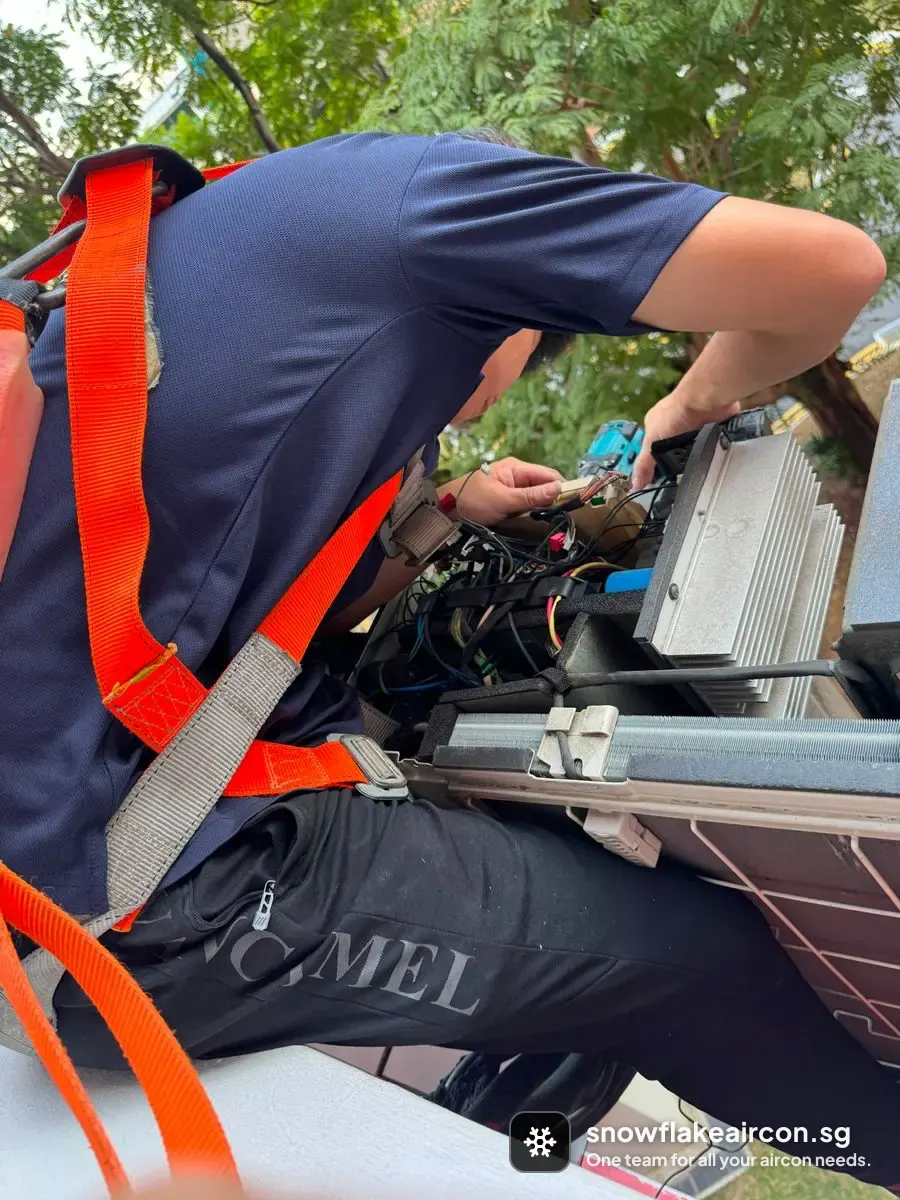
Sembawang HDB · Daikin
Daikin System 4 Storm Outage: Outdoor PCB, Not Compressor
Storm surge blew the outdoor surge protector and inverter control board on a high-floor Daikin System 4 while compressor insulation resistance remained clean
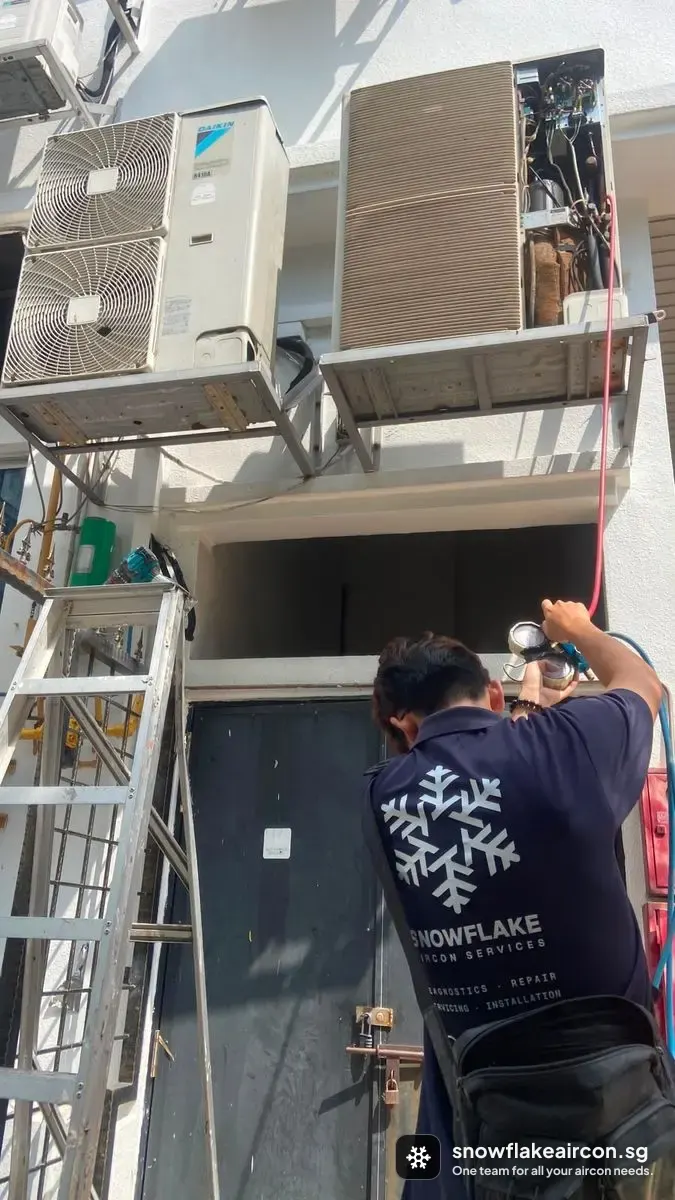
Pasir Ris HDB · Panasonic
Pasir Ris HDB Gauges: Normal Gas, Slipped Bedroom Sensor
Slipped indoor room-temperature thermistor resting against the cold coil alongside a dust-loaded blower wheel while R32 refrigerant charge stays completely normal