On this page
Quick summary
Open-top freshwater aquariums in Singapore living rooms release litres of warm water vapour daily, forcing nearby wall aircons to condense high moisture continuously and accelerating aluminium fin oxidation. Fitting tight glass tank lids, gentle cooling curves, and timely coil cleaning preserves coil metal and efficiency.
Wall-mounted general servicing $25–$50/unit · chemical wash $60–$80/unit · View servicing rates
How Aquarium Tank Evaporation Accelerates Fin Oxidation
Open-top aquascapes with strong surface ripples evaporate two to six litres daily inside closed Singapore lounges. Warm aquarium lighting hoods and ambient afternoon heat raise evaporation further. Nearby split coils work nonstop as room dehumidifiers even on mild evenings.
Lingering moisture carries trace tap minerals, plant fertiliser mist, and room dust across blue-fin lacquer. Bare aluminium soon oxidises into powdery white scale and rusted brackets. SP Group sets late-2026 tariffs at 31.16 cents per kWh (GST-included), so clogged coils inflate power bills.
Compare Aquarium Setups and Indoor Coil Corrosion Risks
Evaluate how tank covers, placement, and dosing habits affect HDB and condo living-room units:
Scroll to see more columns
| Aquarium condition | Moisture and residue impact | Visible coil warning | Practical prevention step |
|---|---|---|---|
| Open rimless tank plus cooling fan | Highest hourly evaporation load | Wet tray lip and chalky fin crust | Fit slotted acrylic lid; calm ripple |
| Tank placed under wall blower | Direct vapour plume into intake | White mineral scale on front fins | Shift tank away or fit low canopy |
| Liquid dosing and leaf misting | Micro-droplets cling to damp fins | Pitted coating and sour tank odour | Switch blower off during plant sprays |
| Tank chillers venting indoors | Warm exhaust raises compressor load | Rusty end-plates and dense biofilm | Vent chiller cabinet away from intake |
Protect Thin Coated Fins from Harsh Sprays and Dry Mode
Never spray hardware-store coil foams onto aquarium-room evaporators. Harsh alkaline chemicals strip protective lacquer, leaving brittle metal that crumbles under rinsing. Even light aerosol overspray landing on water stresses shrimp and plants.
Continuous dry mode worsens fin decay because slow airflow traps condensate inside pleats. Cool rooms near 25 degrees on medium fan instead. Finish with 15 minutes of fan-only airflow to dry coil surfaces.
Choose Tank Vapour Controls, Gentle Coil Washes, or Replacement
Match maintenance intensity to visible fin corrosion inside your living room:
- Coil pitting check: Arrange a S$30 on-site inspection (30-day warranty; waived upon approved repair or replacement) to verify whether rust stays superficial or pits copper loops.
- Tank-safe cleaning: Shield glass tanks beneath watertight plastic drapes before washing. Chemical servicing charges S$80 lone unit, S$70 each on two, or S$60 per blower across three or more units (60-day warranty), while dismantled chemical overhauls stand at S$150 lone unit, S$250 for paired units, or S$115 per unit for three+ (90-day warranty).
- Light routine rinsing: Flats running sealed aquarium lids stay clear through general servicing priced at S$50 for one head, S$60 for two, or S$25 apiece on multi-room sets of three+ (14-day warranty).
- Degraded unit swap: Chalky crumbling fins or leaking hairpins justify replacing aged HDB systems. Verified 5-tick upgrades earn S$400 Climate Vouchers running until late 2027.
Diagnostic Cases for This Fault
Singapore jobs showing what we checked on-site before quoting parts or gas.
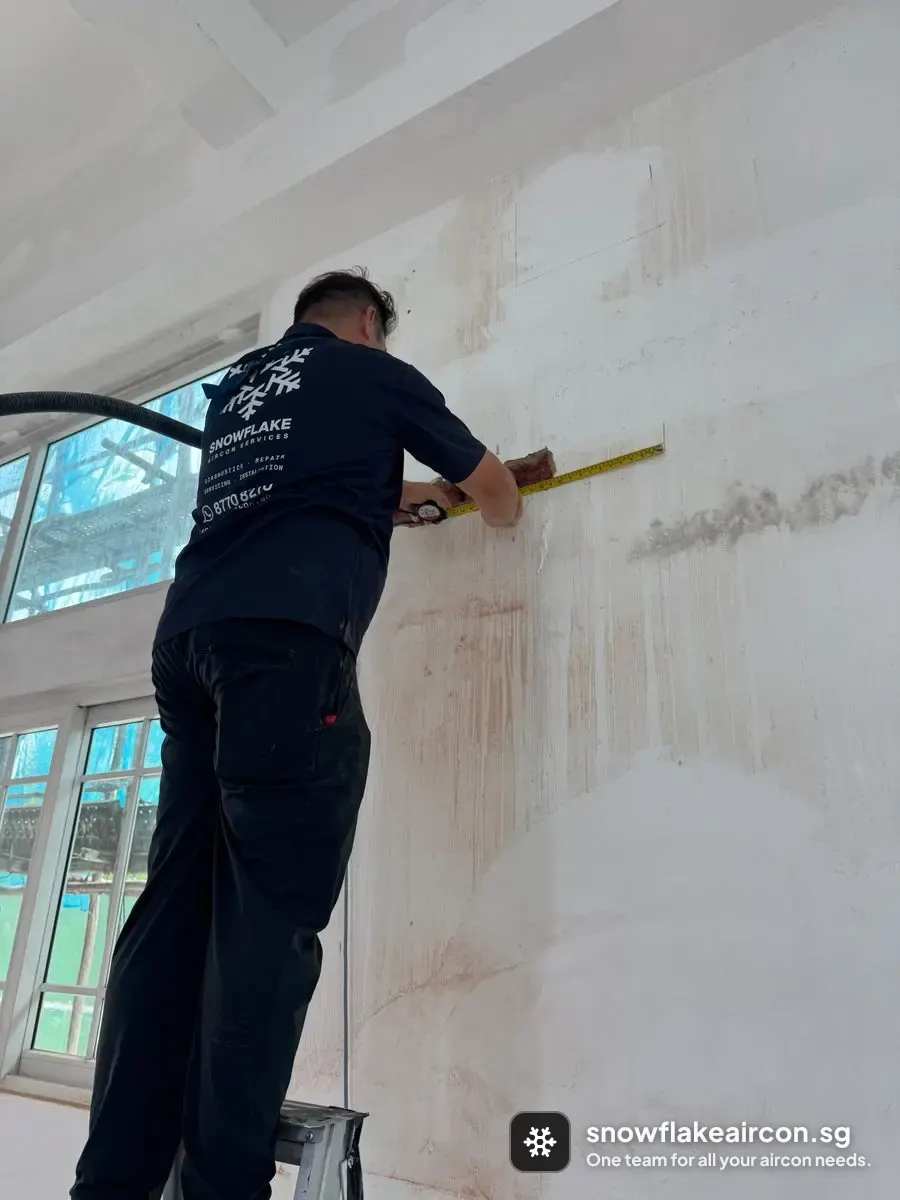
Daikin · Wall-mounted
Water stain down the wall: blocked rear drain trough
Biofilm jelly choking the hidden rear auxiliary drain trough behind the evaporator coil, spilling condensate down the plastered wall while the main trunking pipe stayed intact
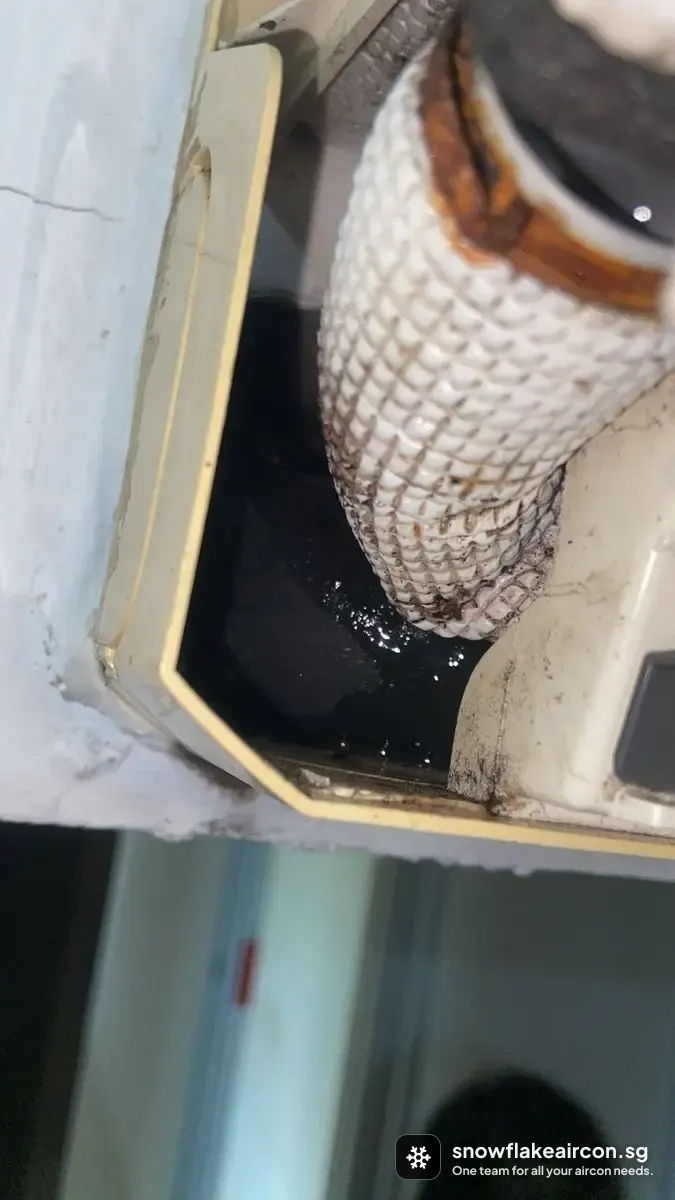
Panasonic · Wall-mounted
Dripping after renovation: fine plaster dust choked the drain
Fine renovation dust bound with moisture into a choke in the drain path